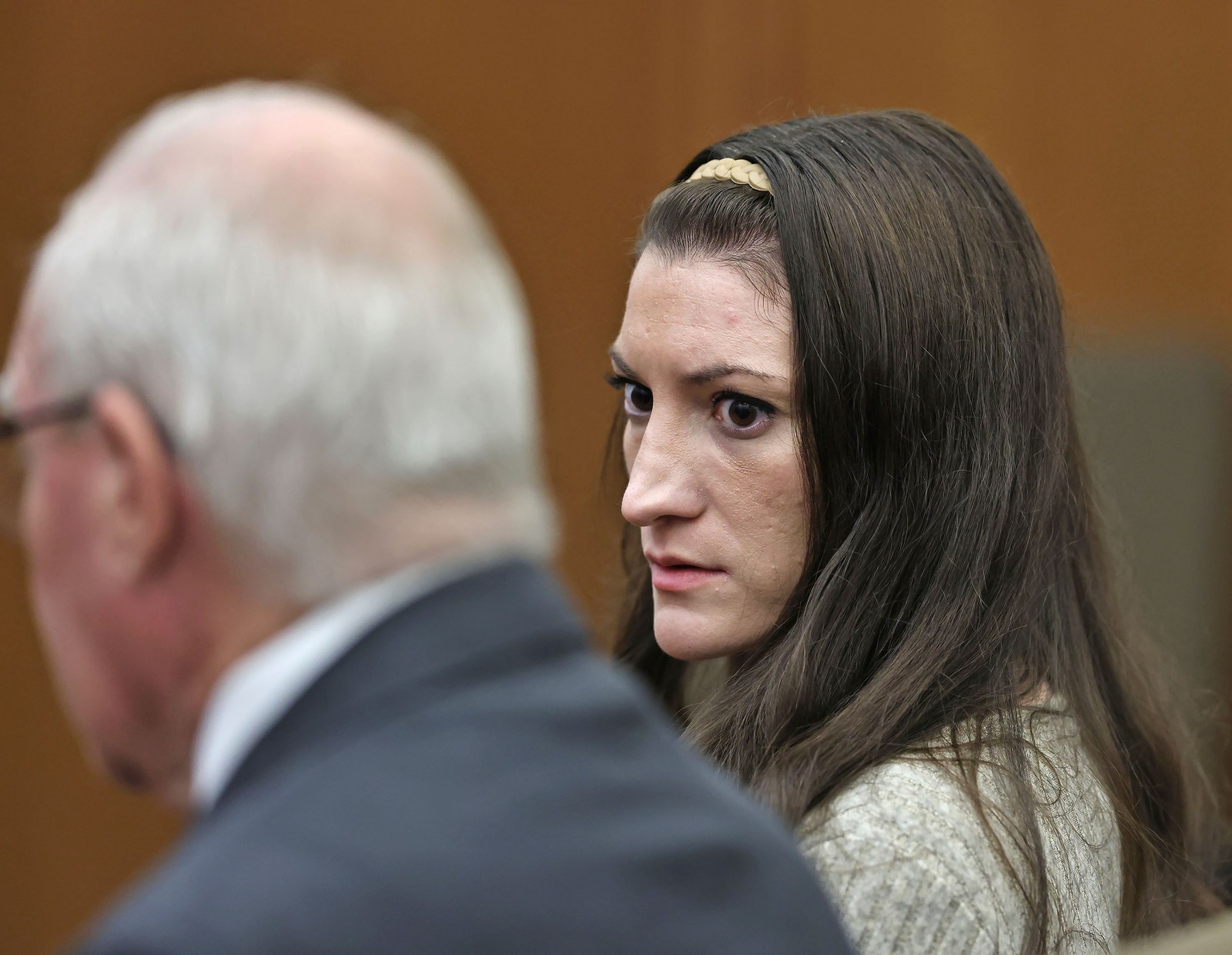
The jury tasked with deciding Lindsay Clancy’s fate has struggled to reach a unanimous verdict, yet deliberations continue. Despite more than 17 hours of discussions across four days, Plymouth Superior Court Judge William Sullivan instructed jurors to persist in deliberating.
The trial, lasting approximately six weeks, involved testimony from over 80 witnesses and over 300 exhibits. The pivotal issue is whether Clancy is criminally responsible for the deaths of her three children in January 2023. Her defense claims she was experiencing postpartum psychosis, while prosecutors assert she intentionally committed the killings.
Lindsay Clancy Jury Deliberation Timeline
Massachusetts law does not impose a time limit on jury deliberations. A jury may continue deliberating so long as the judge believes that further discussion might yield a unanimous verdict. Hence, the jury’s deadlock announcement on Tuesday did not conclude the case. Sullivan sent the jury back to further explore the evidence and legal instructions.
If it becomes evident that a unanimous decision cannot be achieved, the judge may declare a mistrial due to a hung jury. This would end the trial without a verdict on the pending charges and could lead to a retrial.
The current duration of 17 to 18 hours of deliberation is not considered unusually long for a complex case such as Clancy’s.
Historical Comparisons and Precedents
Even if the Clancy jury deliberates for days or weeks, it would not approach the longest jury deliberation on record. The Guinness World Records lists a 1992 California civil case involving Shirley and Jason McClure as the record-holder, with juries deliberating for approximately 4 1/2 months, ultimately awarding $20 million to Shirley McClure and $2.5 million to her son.
A more relevant case is the McMartin Preschool trial, a notable lengthy criminal trial lasting nearly three years, from July 1987 to July 1990. The jury deliberated for about nine weeks and acquitted Peggy McMartin Buckey, while deadlocking on 13 counts against Ray Buckey. Though a nine-week deliberation sets a precedent, it would be extraordinary for the Clancy jury to match that duration.
Some high-profile criminal trials resulted in swift verdicts. For instance, the O.J. Simpson murder trial in 1995 led to a verdict after less than 4 1/2 hours of deliberation, and the 2021 Robert Durst murder trial concluded after roughly seven hours spread over three days.
Conversely, the Scott Peterson jury took approximately seven days in 2004 before convicting him of murder. These examples highlight why there is no definitive timeline for jury deliberations.
Deadlocked Jury in the Menendez Brothers Trial
The first Menendez brothers’ trial in 1993-94 offers another high-profile case with jury deadlock. Separate juries deliberated for around 11 days before resulting in mistrials. The brothers were later retried and convicted in 1996.
The Clancy case illustrates that a deadlocked jury does not mean acquittal. If the judge declares a mistrial due to jury inability to agree, prosecutors may seek a retrial.
Expert Insights on Jury Deliberation Time
Research into jury decision-making advises against placing too much emphasis on the deliberation duration. A study found that the strength of evidence is the most significant predictor of conviction, whereas many variables related to the deliberation process are comparatively weak.
Additional research indicates that longer trials, multiple charges, and greater case complexity correlate with prolonged jury deliberations. Mock jury studies reveal that the link between deliberation length and quality is not straightforward. Lengthy deliberations can indicate thorough consideration but may also reflect repetition or entrenched disagreement.
The Clancy jury’s deadlock is noteworthy but not necessarily predictive. More than 17 hours of deliberation involved extensive evidence and conflicting arguments around mental illness, intent, and criminal responsibility. The current impasse does not specify how divisions are formed or which side is nearing consensus.
Possible Outcomes If Deadlock Persists
If the jury remains unable to achieve a unanimous verdict, Judge Sullivan may declare a mistrial. This would allow prosecutors to pursue a retrial on unresolved charges. A mistrial from a genuinely deadlocked jury isn’t akin to an acquittal.
The jury might reach a verdict, continue deliberations for more days, or ultimately decide they cannot achieve the required unanimity.
Leave a Reply