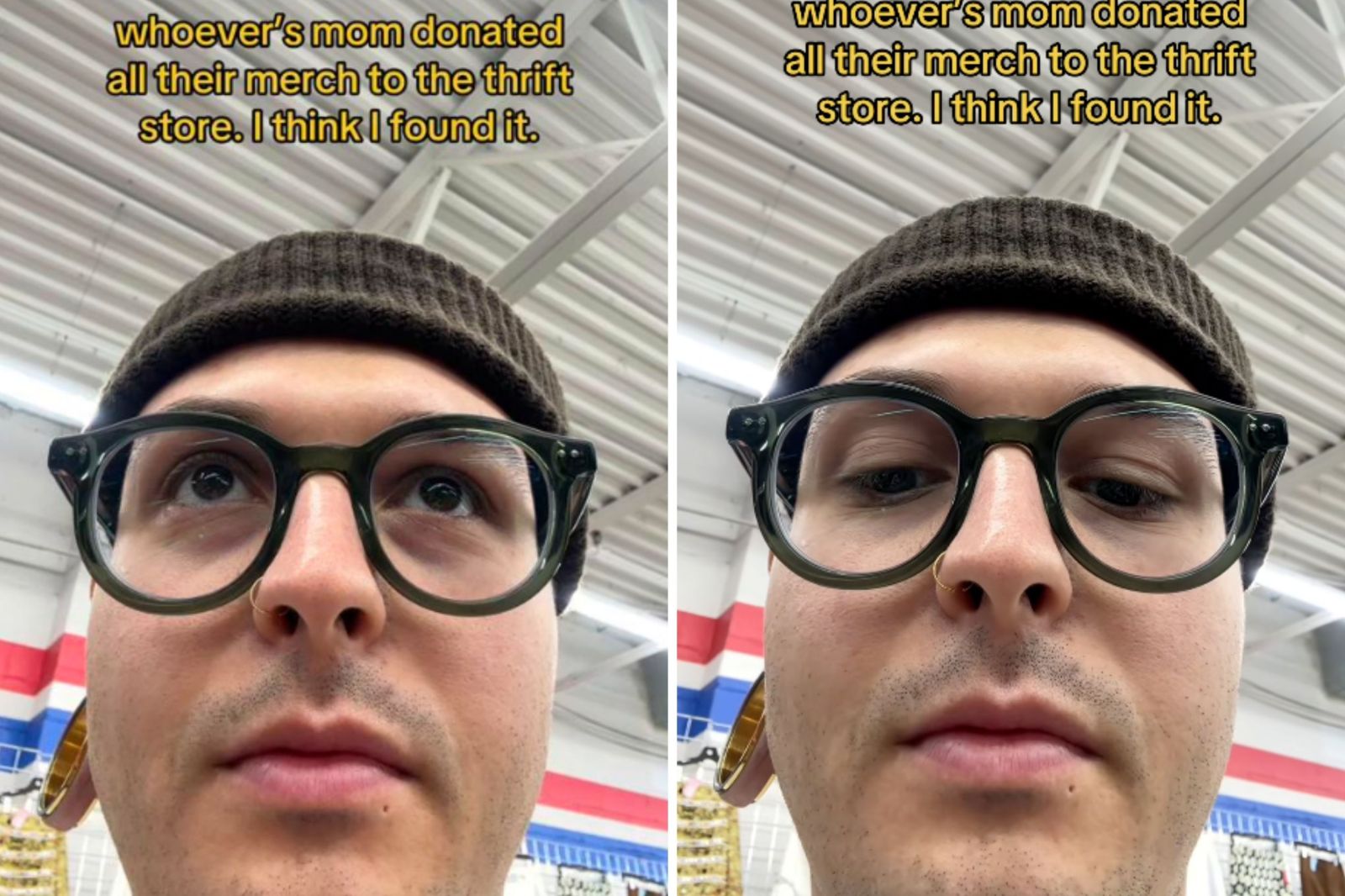
Many thrift shoppers feel lucky to find even one vintage band T-shirt. For Jordan Lee, known on TikTok as @jordanleecorman, it’s a specialty. He revealed to Newsweek that locating band merchandise in thrift stores is his forte. In a TikTok video dated August 18, Lee showcased a haul featuring merchandise from artists like Gwen Stefani, Interpol, and John Cena’s WWE. This discovery prompted viewers to ask: Who donated such a collection?
Instead of finding a single concert tee among other clothing, Lee discovered multiple pieces of band merchandise. He humorously apologized for finding the items someone’s mother might have donated. Such finds are exciting for collectors, as multiple related items can indicate they came from one person’s collection. The appeal lies in the story of how a collection ends up in a thrift store.
Spotting a Collection
Lee explains how he identifies collections by spotting patterns. “When you spend a lot of time in a community, like music, you instinctively recognize things connected to it,” he said. With years of experience in the music world, particularly in emo, post-hardcore, and alternative metal genres, Lee has developed a knack for spotting these patterns while thrifting.
The giveaway is often a pattern. If he finds multiple shirts in similar sizes, from bands within related genres, and from the same period, he assumes they belong to one person. Similar wear and tear add clues, revealing stories behind donations rather than viewing each shirt as a random item.
The Popularity of Band T-Shirts
Band T-shirts have transitioned from concert memorabilia and fan apparel to a significant collectibles market. Rockabilia, a licensed band merchandise retailer since 1987, notes that the market for vintage band shirts has expanded, with rare tour shirts from the 70s to 90s selling for substantial amounts. Even newer limited-edition designs cultivate secondary markets.
Finding an old shirt doesn’t guarantee value. According to Rockabilia, six factors influence a band’s shirt value: rarity, artist demand, tour or album significance, artwork, condition, and authenticity. Lee evaluates many of these details when assessing a shirt’s interest. He examines factors like the blank it was printed on, tags, stitching, tour year, and condition. Certain blanks, such as Bay Island, Alstyle, and older Gildan, signal production dates.
Lee believes that sometimes value goes beyond price, reflecting design, memories, or what an artist meant at a particular life stage.
The Merchandise Lee Pursues
Lee’s passion for band merchandise is evident in past finds and those he’s seeking. A notable haul came from a Goodwill in Washington State, filled with pop-punk and related band tees from groups like The Wonder Years, Knuckle Puck, and Blink-182. Despite the haul, he only purchased a Knuckle Puck and Fireworks shirt, saying, “You don’t have to buy them all!”
There are artists Lee struggles to resist, including Panic! At The Disco and “Weird Al” Yankovic. He has collected vintage Panic! merch from 2005-2011, attending his first concert with “Weird Al.” Lee enjoys finding band merchandise for its design, rarity, or significance.
He advises thrift shoppers to research an artist’s history, merchandise, and shirt specifics. Lee estimates he leaves behind about 75 percent of the merch he finds, regardless of its potential value. His goal is to give old band merch a new life, including finding a specific Panic! hoodie for his girlfriend without incurring high costs.
For more information on this story, contact Newsweek editors Rebecca Flood and Gray R. Thomas.
Leave a Reply