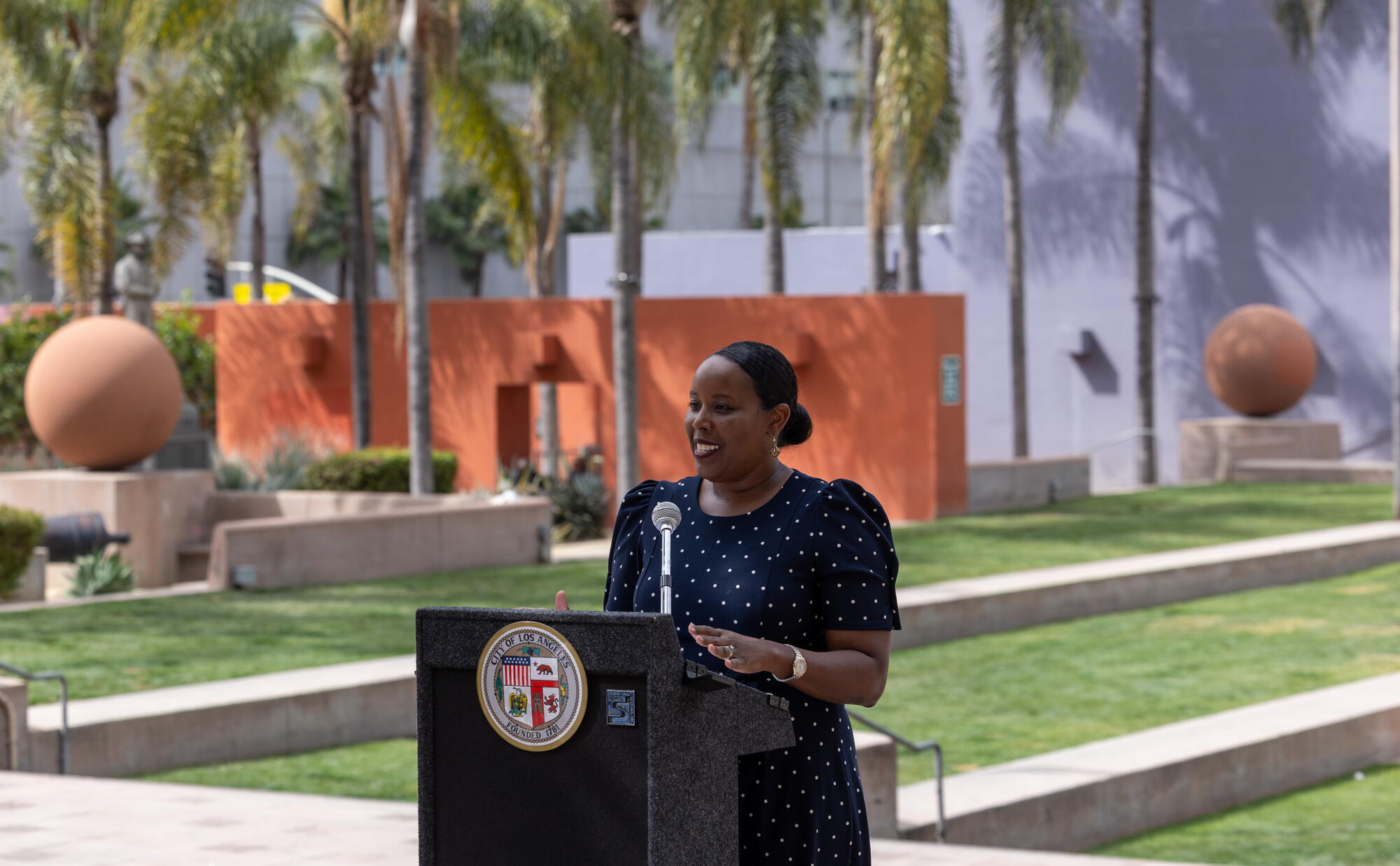
The Los Angeles City Council voted to rename Pershing Square in honor of Bridget “Biddy” Mason. Born into slavery, Mason became a wealthy landowner and was one of the founders of the city’s First African Methodist Episcopal Church, one of the country’s largest Black churches. The council’s unanimous decision directs city officials to start the process of renaming the five-acre plaza near the Biltmore Hotel as Biddy Mason Park. The Rev. Timothy E. Tyler of the First AME Church supported this change and remarked, ‘We believe that this act by the City Council will signal to the world that we in Los Angeles value those who have helped build this city.’
Councilmember Ysabel Jurado stated that the new name better reflects Los Angeles’s spirit of resilience and hope. ‘When we talk about the Angeleno spirit, resilience, hope, and a refusal to let injustice define what’s impossible for us, there may be no better example of that than Biddy Mason,’ she said. Jurado’s district includes the park, and she pushed for the name change.
Pershing Square, one of the city’s oldest parks located between Olive and Hill Streets, was initially dedicated in 1866 as La Plaza Abaja. It was renamed in 1918 after World War I, honoring General John J. Pershing. Courtland Jindra spoke against the name change during the meeting, arguing that the plaza commemorates not only Pershing but also all soldiers and sailors from World War I.
Kim Cooper, who leads historical tours of Los Angeles, criticized the change. She noted the square’s historical significance and the city’s oversight issues. On Friday morning, the park appeared neglected, with litter, visible drug use, and homelessness present.
History professor Kevin Waite from the University of Texas at Dallas supports the name change. He stated, ‘Black civic leaders like Biddy Mason have long struggled for their due.’ Waite found that Mason owned land near the current park location, making it an appropriate site for her commemoration.
Born into slavery in 1818 Mississippi, Biddy Mason won her freedom in court and became one of Los Angeles’ prolific landowners. Her journey to freedom included walking 1,700 miles with a 300-wagon caravan from Mississippi to Utah and then to San Bernardino.
Mason gained her freedom in 1856, setting a precedent for freedom in California. Previously honored in a less visible mini-park built in 1989 on her homestead, opinions on this location’s adequacy vary. Cooper suggested enhancing the existing memorial with more signage instead of renaming the historical World War I memorial.
Robynn Cox, a Biddy Mason descendant, supported the name change. The proposal stems from former councilmember Kevin de León’s 2024 initiative, which initially lacked a hearing due to political factors. Additional discussion surrounded the space, highlighting differing views on its use and historical acknowledgment.
Leave a Reply