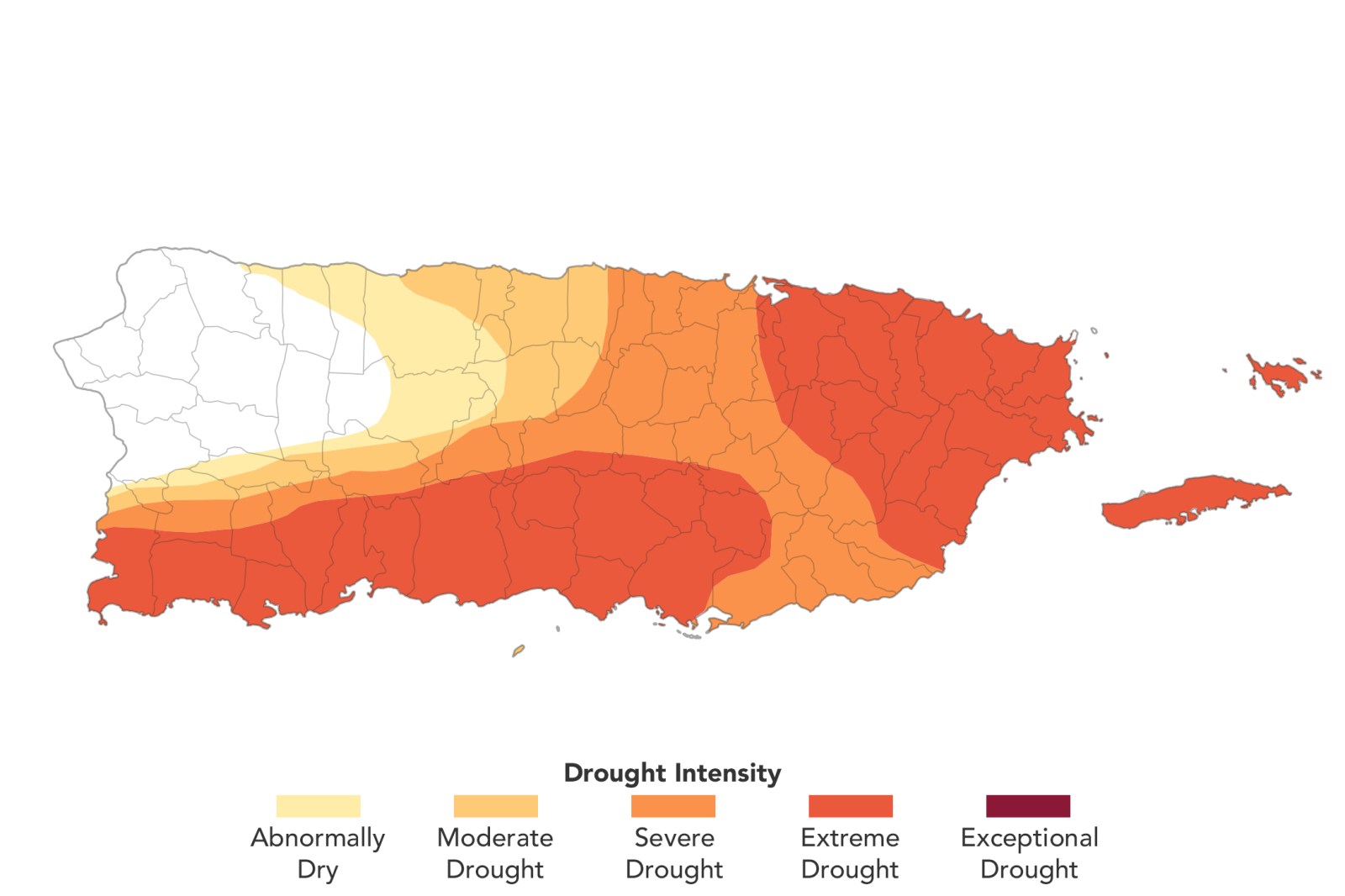
A new NASA map highlights the extensive drought across Puerto Rico, revealing severe water shortages and agricultural challenges. Published by NASA Earth Observatory on September 2, it uses data from the United States Drought Monitor to show conditions as of August 25. This collaboration involves the National Drought Mitigation Center, the U.S. Department of Agriculture, NOAA, and NASA.
Nasa stated, “Rainfall deficits and high temperatures have created unusually dry conditions and have spurred water shortages on much of the tropical archipelago.”
As of Monday’s report, 75.2% of Puerto Rico is experiencing drought. Of this, 41% faces extreme drought, while 21.3% is in severe drought. Over 3 million people are affected, according to the U.S. Drought Monitor.
This is one of the worst droughts on the island since the U.S. Drought Monitor began in 1999.– Brandon Wright, Senior Meteorologist at ICEYE
A White House official stated in early August that no requests for assistance from FEMA had been received, despite close monitoring of the situation. Newsweek reached out to several officials for comments.
A Rapidly Developing Drought
Meteorologist Wright noted the surprising speed of the drought’s development. Three months ago, a third of Puerto Rico was considered abnormally dry; now, around 40% faces extreme drought.
Geoscientist Elena Maksimovich analyzed that summer 2026 was the second driest since 1950, though not as severe as 1994. Her report suggests added heat and dryness risk in coming years.
The Role of El Niño
Wright pointed to El Niño as a key factor. “El Niño is definitely a contributing factor, as it often suppresses thunderstorm activity across the Caribbean and limits Atlantic tropical season activity as well,” he explained. This onset reduced typical wet season rainfall, intensifying drought conditions.
San Juan experienced some of its warmest temperatures on record, compounding the problem. A small dent was made in overall drought by Tropical Storm Dolly, but it wasn’t enough for significant relief.
Extreme Heatwave Risks
Maksimovich’s report warns of increased climate threats. “Forward-looking risk assessment tells that heatwave risk will amplify and become extreme across the island,” her report states.
Additional risks include drought, wildfire, and landslides. Coastal and inland flood risks remain, especially impacting cities like Caguas, Arecibo, Bayamón, Carolina, and Fajardo. Her report emphasizes the need for more water storage to manage rationing impacts on tourism, agriculture, and supply chains.
Leave a Reply