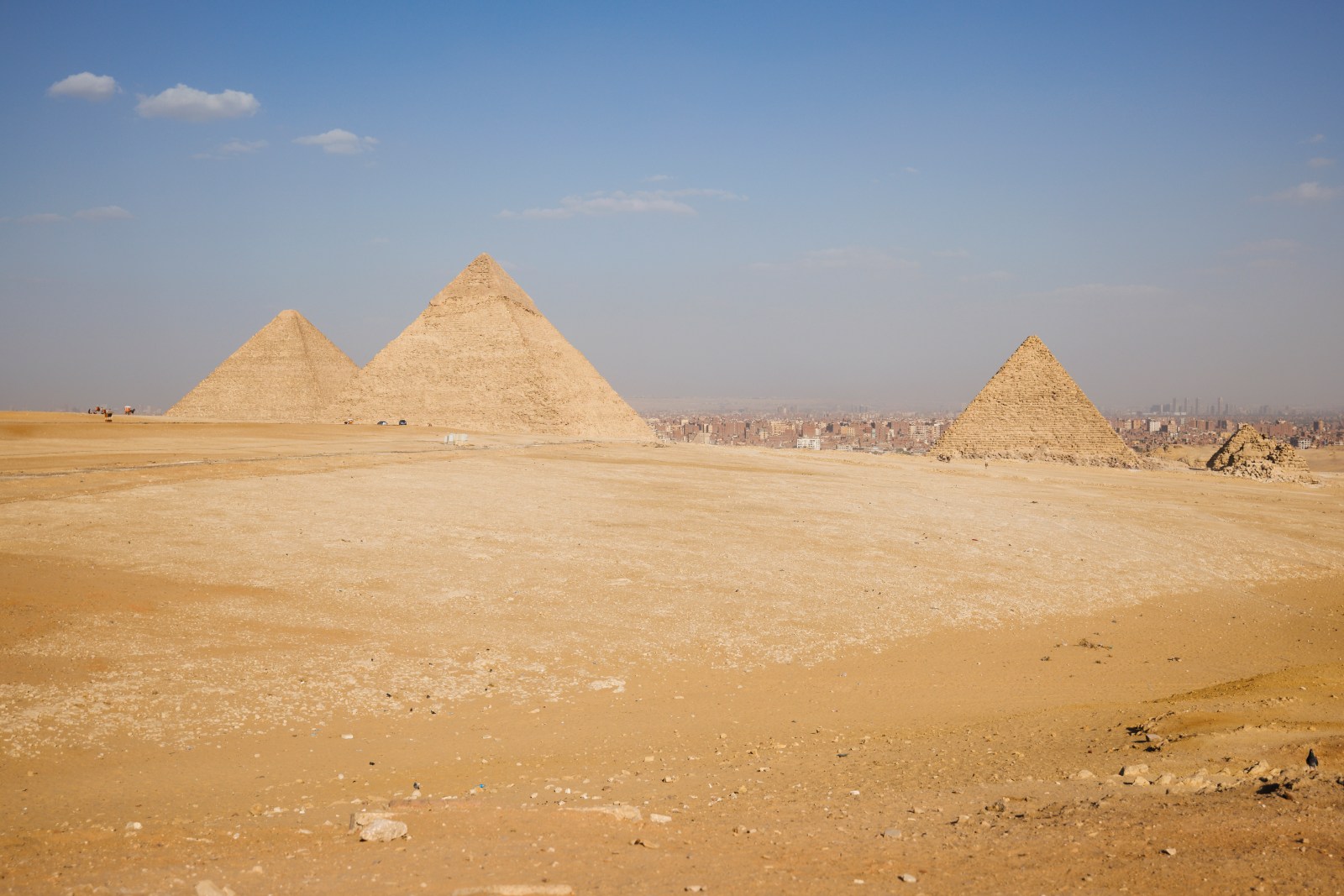
A scientific journal has retracted a study that claimed satellite radar could reveal hidden structures inside the Great Pyramid of Giza. The study was found to have serious methodological flaws and statistical errors, undermining its conclusions. This retraction is significant because the paper supported claims about what might lie beneath one of the world’s most famous archaeological sites.
The Original Claim
In 2022, Italian researchers Filippo Biondi and Corrado Malanga published a paper in Remote Sensing. This journal covers satellite imaging, radar, and other Earth study technologies. The researchers used an imaging method called synthetic aperture radar Doppler tomography. They claimed it could analyze radar signal changes to picture structures within the Pyramid of Khufu, also known as the Great Pyramid of Giza. They argued satellite data could map unseen features like rooms and corridors without physical entry.
The Investigation
Remote Sensing began an investigation after a reader raised concerns, leading to the article’s retraction on August 10. Biondi, Malanga, and others later claimed scans showed vast shafts and tunnels beneath the nearby Pyramid of Khafre. These claims were widely interpreted as evidence of an “underground city.” The controversy attracted international attention, including interest from YouTube creator MrBeast.
Biondi and Malanga disagreed with the journal’s decision to retract their paper. Despite the journal’s notice, they did not respond to multiple requests for comment from Retraction Watch, and Newsweek also reached out to them without success.
How the Pyramid Claims Became a Global Sensation
The paper claimed to have identified 20 hidden features inside and beneath the Great Pyramid. These included corridors, rooms, and ramps. The method used also detected the “Big Void,” a cavity previously found using cosmic-ray scans. They studied tiny pyramid movements caused by wind, earthquakes, and other activities to visualize hidden structures.
Public interest spiked in March 2025 when they applied the method to the Pyramid of Khafre. They announced results at a news conference, claiming five connected structures near its base and additional shafts. These findings encouraged online descriptions of the site as an “underground city.”
Why the Pyramid Claims Became Controversial
The claims drew scrutiny due to their scale. Findings were not peer-reviewed or verified. No fieldwork confirmed these structures. Critics questioned whether satellite-detected surface movements could reveal structures meters underground.
Zahi Hawass, an Egyptologist, rejected the announcement. He stated the team had no permission from the Supreme Council of Antiquities to work inside the Pyramid of Khafre and that there was no scientific evidence supporting their claims. The paper itself admitted that SAR typically cannot penetrate solid bodies. Instead, they claimed that data from surface vibrations could help reconstruct hidden features.
Lawrence Conyers, a radar applications specialist, rejected this explanation. He argued that only direct measurements by radar sensors are valid. The paper’s images lacked physical verification, a central criticism of the project.
Why the Journal Retracted the Study
Four years after publication, Remote Sensing retracted the paper following a reader complaint about research methods. Their investigation confirmed serious methodological flaws and statistical errors, undermining the paper’s conclusions.
The journal did not specify the errors but confirmed their reliability concerns. The retraction applies to the 2022 paper on the Pyramid of Khufu, not claims about Khafre or the Giza Plateau that weren’t in the article. The authors disagreed with the retraction but did not explain their stance.
Biondi continues sharing project material without addressing the journal’s findings. Recently, he shared content related to alleged pyramid structures and noninvasive field measurement plans for Egypt’s Ministry of Tourism and Antiquities. No permission for excavation has been confirmed.
Leave a Reply