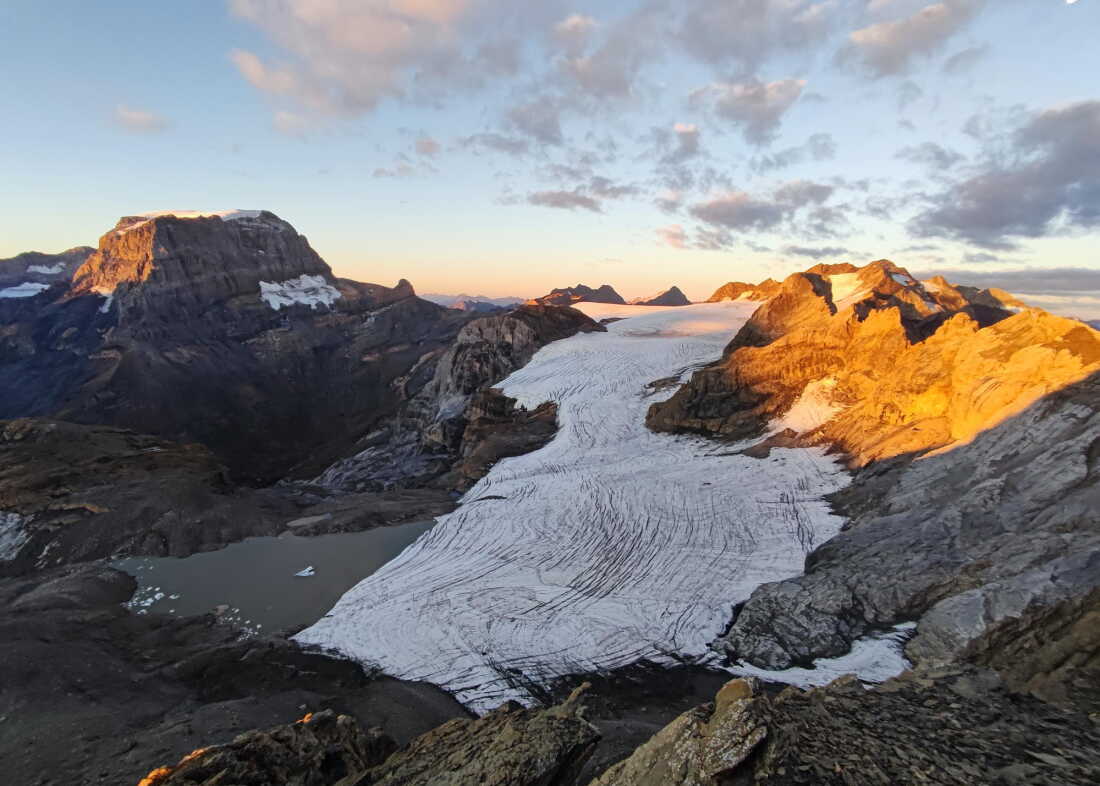
Swiss Glaciers’ Alarming Decline
Switzerland’s glaciers have experienced a dramatic decline, losing more than 5% of their ice in 2026. This trend reflects a global pattern of rapid glacier shrinkage due to global warming. Matthias Huss, who leads Switzerland’s glacier monitoring network (GLAMOS), conducts annual measurements of the country’s ice fields. His research highlights significant ice loss, peaking at a staggering 6% in 2022.
After a prolonged warm summer, Huss found many glaciers severely depleted. “They are completely devoid of ice,” he remarked, describing the barren landscape. In some areas, plants are growing where glaciers once stood meters thick. The 2026 report shows the ice loss at 5.5%, slightly lower than 2022 due to marginally more winter snow.
Implications of Ice Loss
The decline in ice is crucial, particularly because Switzerland’s glaciers, including major ones like Rhône and Aletsch, act as Europe’s water towers. These glaciers store winter snow, releasing it in spring and summer. This process supports Europe’s waterways, such as the Rhine and the Danube, essential for food supply and transportation.
This summer, as river levels fell, freight transport was disrupted, and nuclear power stations faced temporary shutdowns due to insufficient river water. Much of the river water now originates from melting glaciers instead of seasonal snowmelt. With 1,200 smaller glaciers disappearing in the last 50 years, drought poses a significant threat to European agriculture.
Stability and Safety Concerns
Glaciers and alpine permafrost provide stability, preventing landslides and flooding. Without them, risks increase. The Swiss village of Blatten exemplifies this danger, having been devastated by a glacier collapse that destroyed 300 homes. Thanks to monitoring, the village’s population was evacuated in time. However, they still live in temporary accommodation, with their homes buried under ice, rock, and mud.
Additionally, similar disasters occur globally. For example, a glacier collapse on Nepal’s border with Tibet caused devastating floods, resulting in over 1,400 deaths. Huss notes that while climate change acts as a catalyst, mountain environments have always been hazardous.
“Combined with this heat, with the disappearance of the ice, with the warming of permafrost, climate change can be a triggering factor,” Huss says.
Urgency for Action
Huss emphasizes the necessity for immediate action, dismissing claims denying climate change. The deteriorating condition of glaciers serves as a warning sign. “Look at them, it’s not a hoax,” he asserts. Without intervention, the alpine landscape cherished by Europe could vanish. If current warming trends persist, all glaciers might disappear by the century’s end.
Leave a Reply