Ukraine’s military has creatively adapted its armored personnel carriers (APCs) into improvised explosive devices to penetrate enemy lines in the Donetsk oblast. This strategy has been highlighted by one of Kyiv’s commanders, Brigadier General Andriy Biletsky, who leads the Third Army Corps. According to him, Soviet BTR-60s have been transformed into robotic kamikaze vehicles, providing crucial advances in the Lyman sector during a counteroffensive.
The operation, named Operation Vivaldi, has successfully prevented Russian forces from capturing Ukraine’s strategically important ‘Fortress Belt’ in the Donbas region. Efforts to contact the Russian defense ministry regarding these developments have been made.
How Were BTR-60 Armored Personnel Carriers Used?
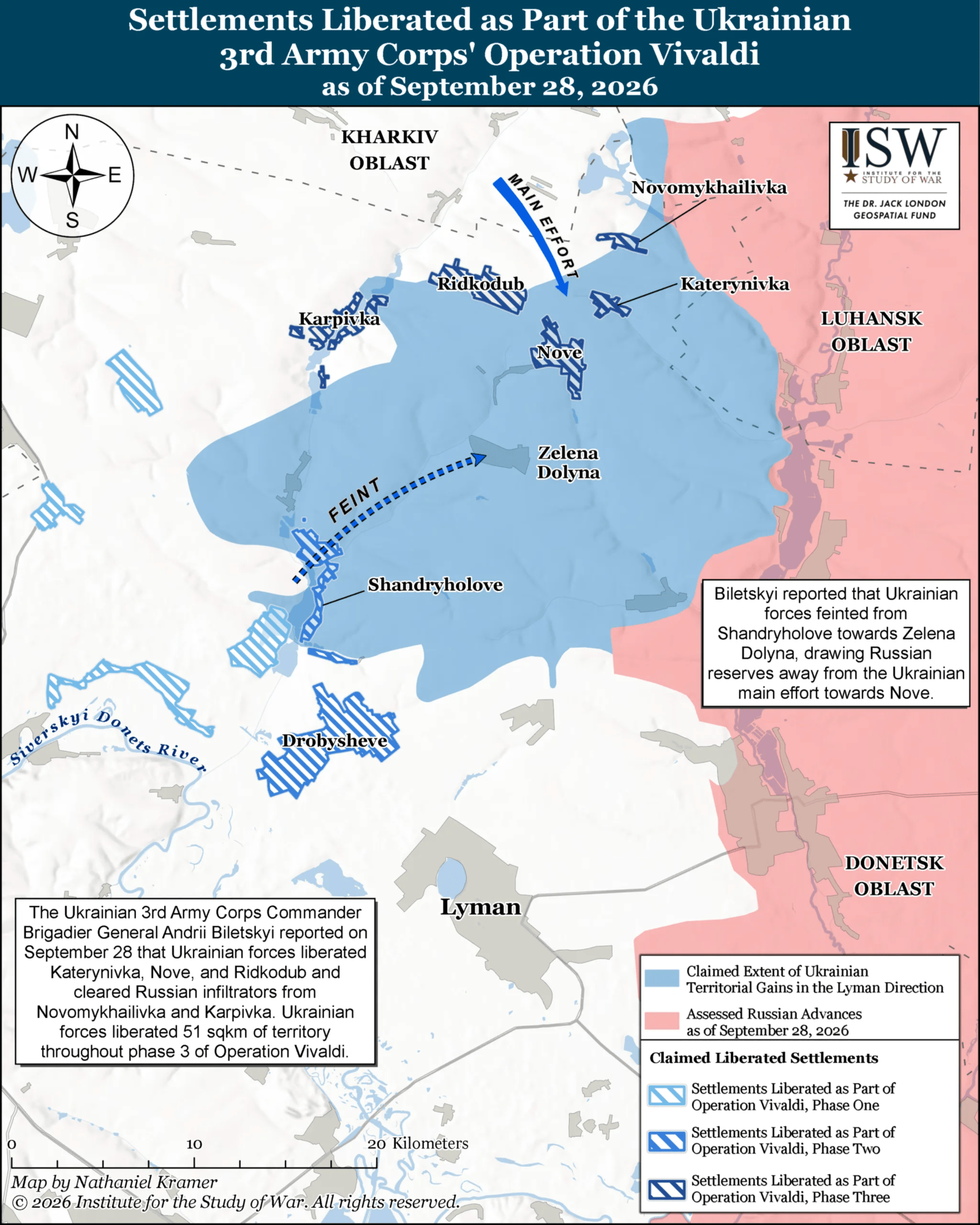
Over the summer, Operation Vivaldi has seen Ukrainian troops execute strategic maneuvers. General Biletsky detailed how forces feigned an attack from Shandryholove, redirecting Russian focus northwest of Lyman, towards Zelena Dolyna. This diversion masked Ukraine’s principal aim at Nove, which is situated on the northern side of the Russian forces. Biletsky stated, ‘The enemy was convinced that the main strike was aimed at Shandryholove—Zelena Dolyna. This made the Russians expend their reserves on counterattacks in that direction, missing the true objective to capture Nove.’
The innovative use of BTR-60 APCs, originally developed in the 1950s as troop carriers and still in use by Russian forces, played a key role in the operation. The conversion into vehicle-borne improvised explosive devices (VBIEDs) enabled Ukrainian troops to breach Russian defenses and dismantle fortified positions. ‘They were used to demolish the enemy’s strongest fortifications,’ Biletsky stated. As a result, numerous Russian soldiers, along with officers, pilots, and artillerymen, surrendered.
In the third phase of Operation Vivaldi, Ukrainian forces liberated 19 square miles, accumulating a total of 67 square miles regained throughout the operation. Analysts have noted that the element of surprise, achieved through strict operational security and effective counter-drone tactics, has bolstered Ukraine’s success.
Major Maksym Zhorin, deputy commander of the 3rd Army Corps, mentioned in September that Ukrainian forces maintained secrecy in their advances by employing a ‘protective drone’ system, enhancing electronic warfare capabilities.
Diverging Narratives
Russian military bloggers have contested the success of Operation Vivaldi, asserting that Moscow’s forces have upheld their positions. They refute claims of Ukrainian forces cutting through Russian territories north of Lyman. Ukrainian observer Yuriy Butusov reported that pro-Moscow channels are disseminating manipulated footage and misinformation to obscure Russian setbacks. Despite this, some Russian sources criticized Moscow’s defense ministry for not properly acknowledging Operation Vivaldi or the accurate positioning of the front lines.
The Institute for the Study of War (ISW) states that Ukrainian forces currently control both Nove and Shandryholove. The nearest Russian positions are at least 10 miles from Shandryholove and five miles from Nove.
For further information, contact Newsweek editors Matthew Robinson and Tony Phillips.
Leave a Reply