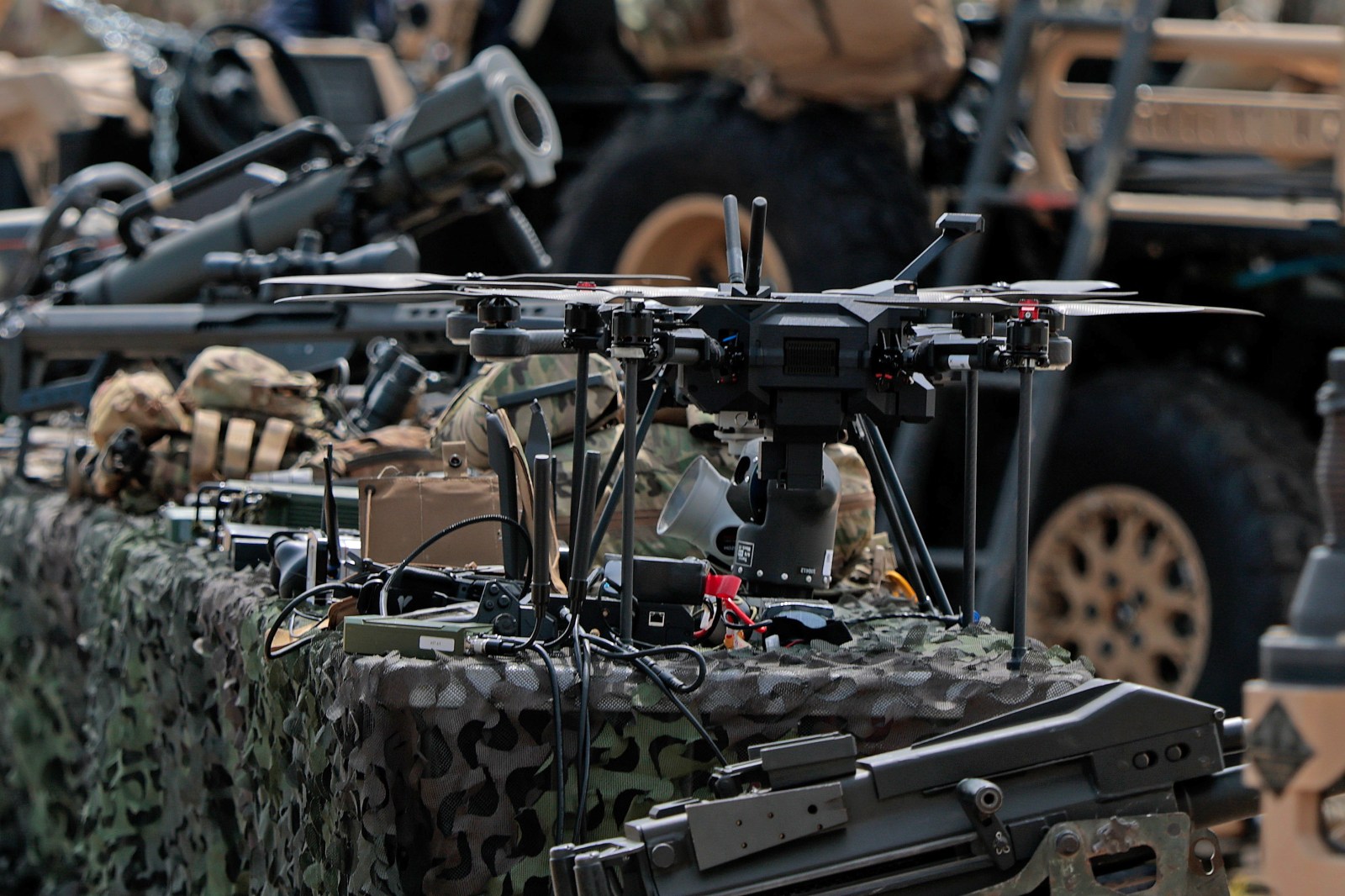
Pete Hegseth envisions a military without those he terms as ‘wimps, weirdos, and radicals.’ Yet, he also aims to center this force around technologies like autonomous weapons and superintelligence. Achieving the first ambition might hinder success in the latter. During his recent State of the Force address, Hegseth outlined initiatives to prepare the US for modern warfare. Project Agincourt aims to establish an Autonomous Warfare Command. Project Meridian tasks leaders like Elon Musk and Newt Gingrich to identify necessary technological capabilities within 120 days.
Hegseth’s push for fewer generals and quicker procurement makes sense. However, his personnel criteria is problematic. He stated, “We are no longer the woke department or the weak department.” His remarks emphasize excluding various groups, insisting on a narrow vision of ‘warriors.’
Military effectiveness relies on diverse skills, not just physical prowess. Engineers behind advanced targeting systems may not fit the warrior mold yet play crucial roles. America thrives by blending elite warfighters with top tech innovators. Constraining the military to a single archetype risks diminishing its capabilities.
Some military and Pentagon entities recognize this. In April, the Department of War launched a Cyber Registered Apprenticeship Program, aiming to cultivate cyber specialists. The Army offers direct officer commissions for civilian experts in AI, software, and drones. Similarly, the Navy seeks engineers and software architects for its Reserve.
The services want ‘nerds’ in uniform, not merely as external tech suppliers. Hegseth’s restrictive rhetoric might alienate talented candidates who don’t fit his rigid criteria. The nation could miss out on innovative minds by enforcing such exclusionary measures.
Meanwhile, Donald Trump gathered tech leaders at the White House to agree on responsible AI development. When conflict arises, strategic thinkers like Elon Musk and Jensen Huang should utilize their expertise, not engage in combat. One specific case is Dario Amodei of Anthropic, involved in AI agreements. Despite restrictions, Anthropic’s technologies played substantial roles in national security operations.
Projects Agincourt and Meridian offer promising strategies for technological advancement. However, incorporating unconventional talents is vital for a comprehensive military approach.
Leave a Reply