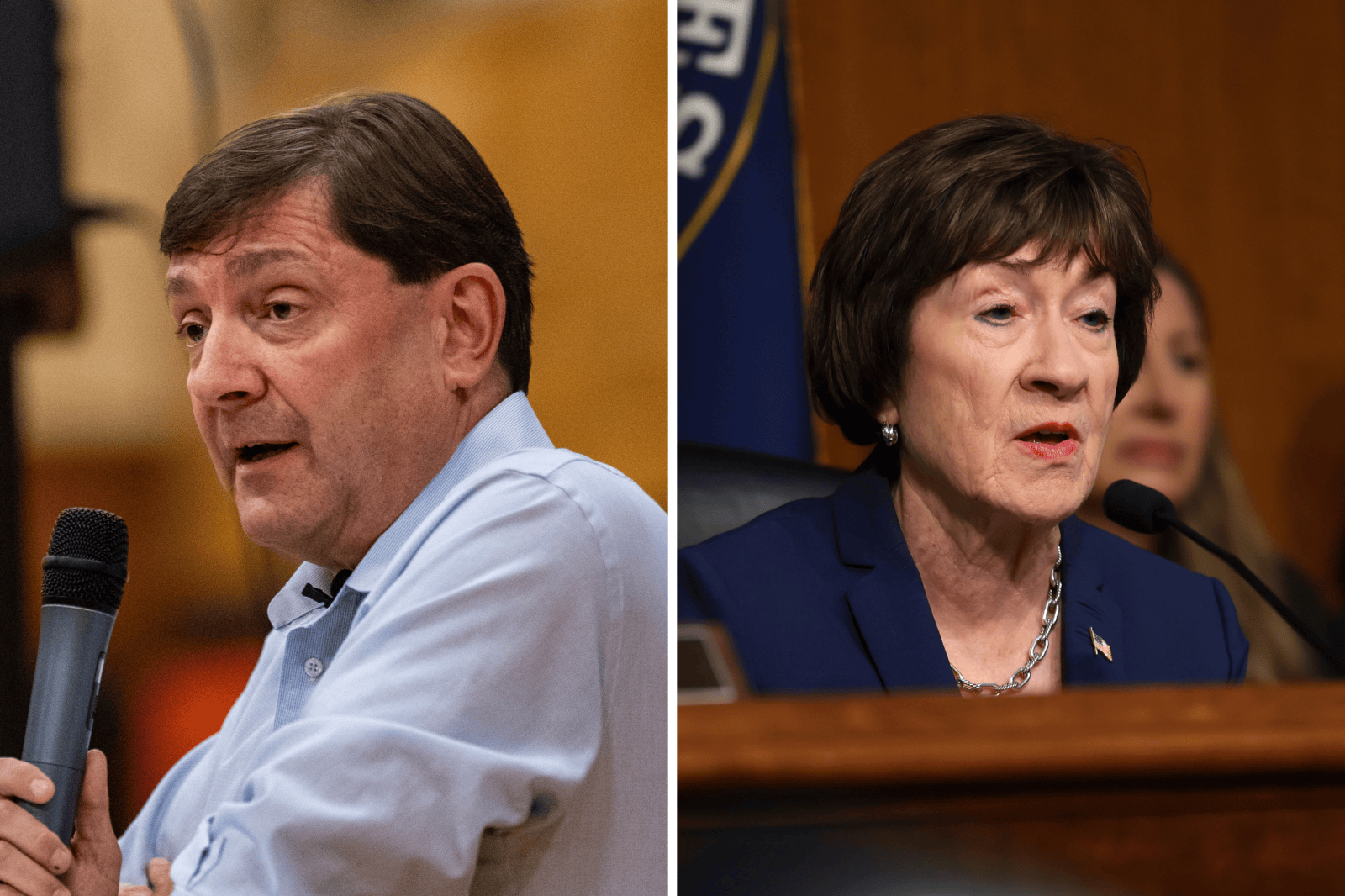
Republican Senator Susan Collins and Democratic challenger Troy Jackson met for the first of four debates in Maine’s critical Senate race. On Tuesday night in Portland, Collins defended her bipartisan record, while Jackson sought to link her with President Donald Trump and counter claims about his inexperience.
Online reactions after the debate showed no clear winner. Both candidates had standout moments, with much anticipated for the next debate on Thursday at 7 p.m.
Importance of the Maine Senate Race
In the 2026 midterms, Democrats hold a slight advantage in Senate polls, but the race remains competitive. Maine’s Senate seat, considered a toss-up, is closely watched alongside contests in Ohio and Texas.
Maine historically votes Democratic and opposed Trump in the 2016, 2020, and 2024 elections. Collins, however, has held her Senate position since 1996, known for her moderate Republican stance and focus on state interests. The 2026 political climate is challenging for Republicans, largely due to Trump’s low approval ratings. Collins has kept a distance from Trump on issues like Canada tariffs.
Highlights from Collins and Jackson Debate
The debate centered on whether Collins is a moderate advocating for Maine or, as Jackson suggested, a Trump supporter at Mainers’ expense. Jackson criticized Collins’s 2018 vote for Supreme Court Justice Brett Kavanaugh and her links to Trump’s Iran and Canada tariff policies, which many Mainers oppose.
Collins countered by highlighting her votes to limit Congress’s war authority and her opposition to the Canada tariffs. She cited securing a tariff exemption for Canadian road salt, prompting Jackson to remark: “We can’t eat road salt.” Collins also questioned the claim that she votes with Trump 96% of the time, asserting the figure is actually 70%. She is noted as a centrist Republican in Congress.
Collins distanced herself from Trump, stating, “I’m not exactly his favorite senator.”
Who Won the Debate?
Reactions to the debate showed a partisan split. Democrats felt Jackson effectively challenged Collins on her Kavanaugh vote and Trump support, with memorable lines like comparing her to an “arsonist.” State Senate President Mattie Daughtry felt Jackson had the upper hand.
Despite this, Collins showcased her congressional experience and bipartisan achievements. Republican commentary praised her ability to distance from Trump while maintaining her legislative record. Predictions shifted slightly, with Jackson’s lead narrowing from 59% to 57% post-debate.
Will the Debates Influence the Outcome?
With a tight race and many undecided voters, both candidates had much to gain from the debates. A CBS News poll recently showed the candidates tied, with 10% of voters considering changing their decision before the election.
Jackson also faced a challenge in gaining visibility, having replaced Graham Platner in the race. Recent surveys indicated a significant number of voters had yet to form an opinion on him.
Despite the close contest, Andrew E. Smith from the University of New Hampshire doubted debates would be decisive unless a major error occurred. Yet, Phil Harriman believed the debates could sway undecided voters, showing who could best represent Maine.
Leave a Reply