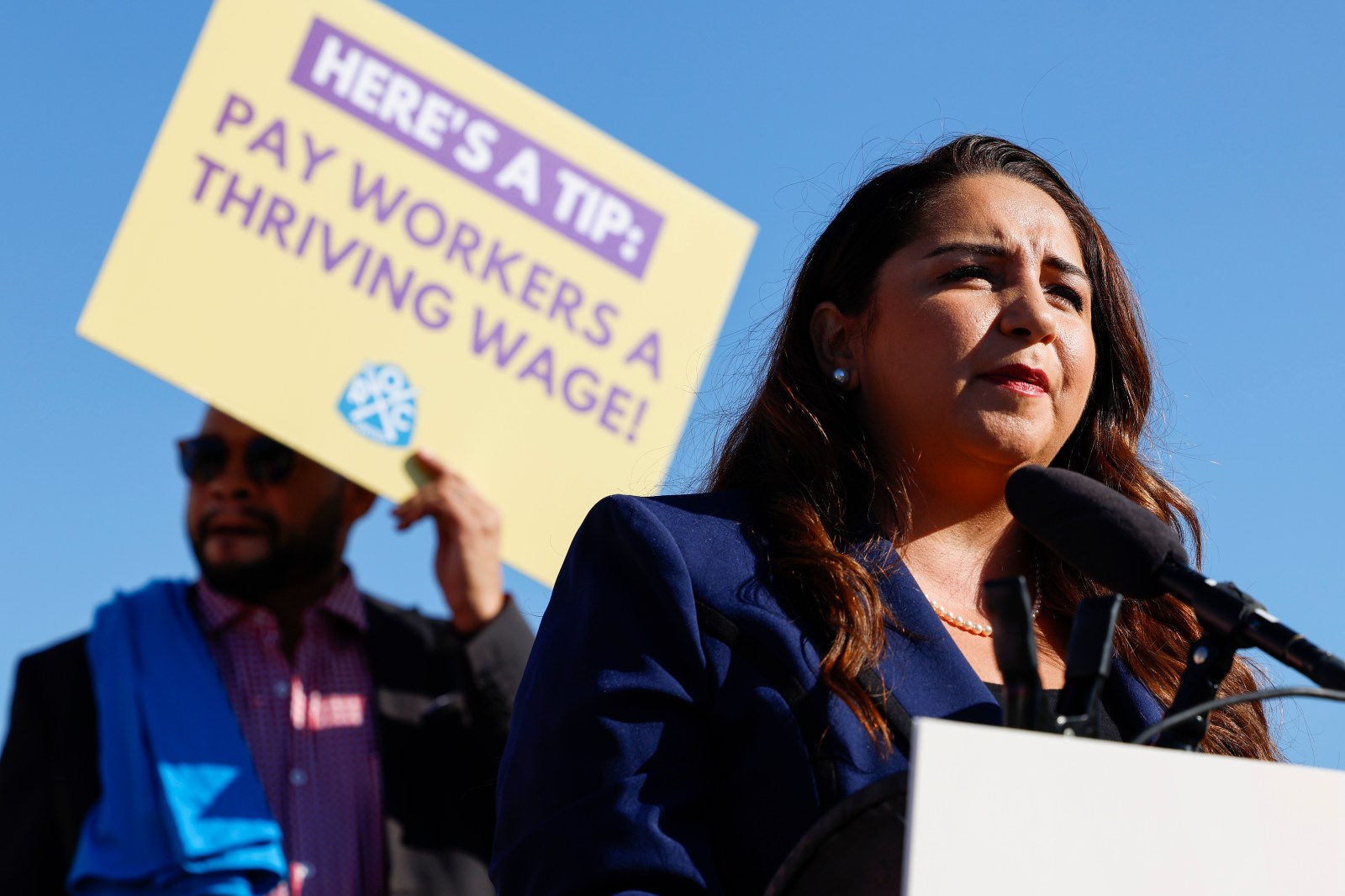
A proposal to raise the federal minimum wage to $25 an hour has been progressing through Congress for almost six months. With the legislative session ending soon, the window to advance the bill narrows. The Living Wage for All Act, or H.R. 8555, was introduced by Illinois Democratic Representative Delia Ramirez on April 28. It aims to gradually increase the federal minimum wage over several years, setting different deadlines for large and smaller employers.
Details of the Proposed Legislation
Senator Chris Murphy from Connecticut mentioned his plan to propose a Senate version of this bill. The federal minimum wage has remained at $7.25 per hour since 2009, and the lawmakers introduced the bill as a necessary measure to address the country’s actual cost of living. The House Committee on Education and the Workforce received the bill for consideration, but it hasn’t scheduled a committee hearing yet.
The proposed legislation aims to reach $25 an hour by 2031 for large employers and by 2038 for others.
Large employers, identified as those with annual revenues of at least $1 billion or 500 or more employees nationwide, will face incremental wage increase targets and must adhere to annual benchmarks. Smaller companies follow a more extended timeline with slower annual targets.
This legislation also intends to tie the minimum wage to two-thirds of the national median hourly wage, automatically adjusting each year to maintain the same relative position as median wages evolve. Additionally, the bill seeks to eliminate lower minimum wages for tipped workers, young workers, and certain disabled workers, eventually bringing wages to the standard minimum level. For tipped workers, it proposes increasing direct employer payments, phasing out reliance on tips to meet wage obligations.
Support and Criticism
The legislation has garnered 32 Democratic cosponsors, including Representatives Rashida Tlaib, Ro Khanna, and Pramila Jayapal. Representative Ramirez highlighted that despite companies reporting record profits, workers struggle to live on current wages, calling for addressing both affordability and wage issues.
Various labor unions and advocacy groups back the bill, suggesting it would help workers match living costs. Service Employees International Union President April Verrett described the proposal as a substantial stride powered by workers demanding fair compensation and respect.
However, the bill has faced criticism concerning potential economic disruptions due to increased labor expenses. A study from the Employment Policies Institute, shared by The Daily Signal, warned that a $25 federal minimum wage might eliminate around five million jobs, significantly impacting the hospitality sector and young workers aged 16 to 24.
According to Rebekah Paxton, the institute’s research director, excessive wage mandates might worsen affordability issues for numerous Americans.
The last federal minimum wage hike was in 2009, though many states and local governments have set higher minimum wages. By July 2026, thirty states and the District of Columbia had minimum wages above the federal rate.
Uncertain Legislative Path
The future of the Living Wage for All Act remains in doubt as it awaits a committee hearing. Without passage by the end of the 119th Congress in January 2027, the bill would need reintroduction in the subsequent session.
Leave a Reply