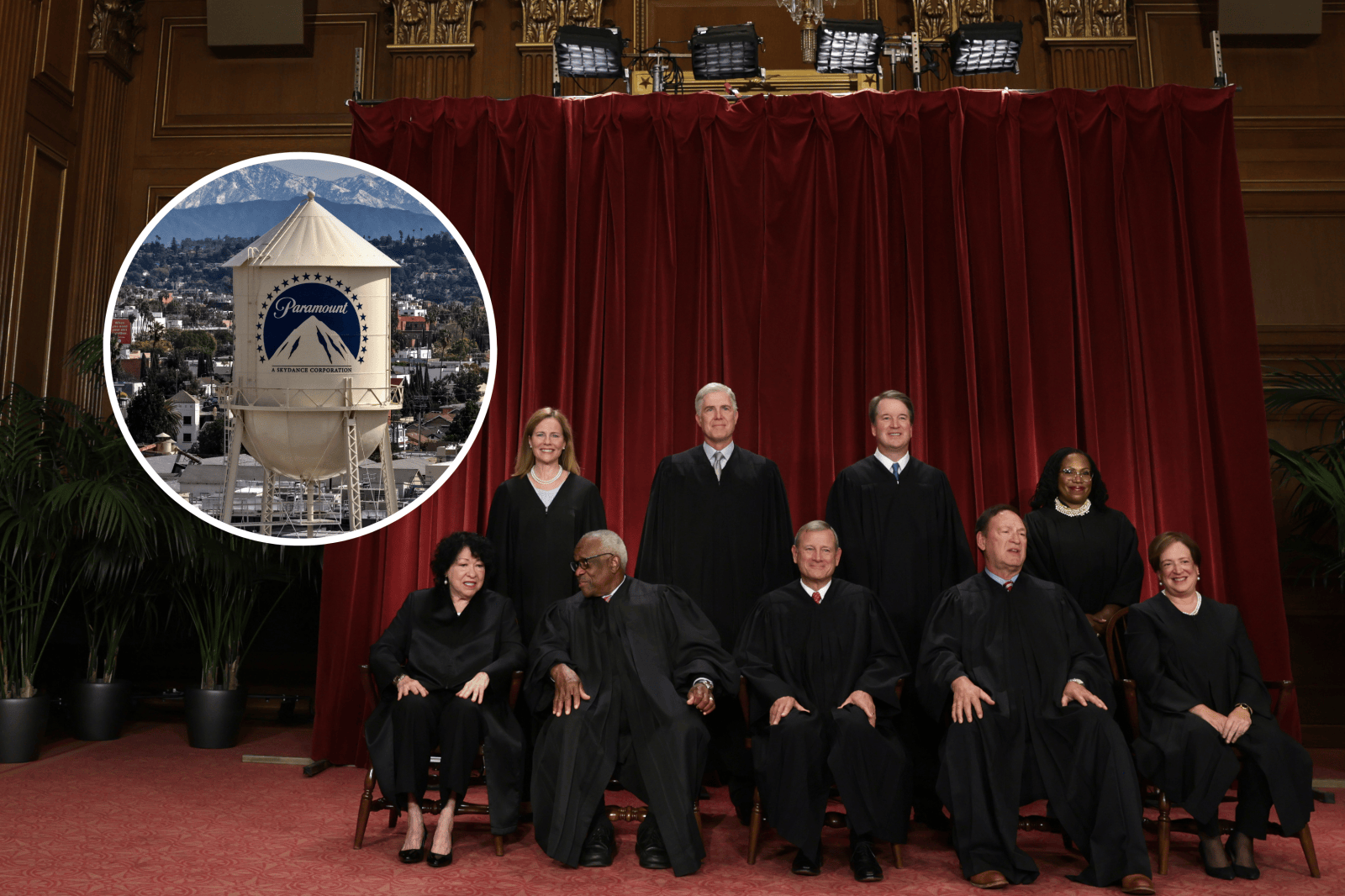
Supreme Court justices recently found humor in a lawyer’s response during the hearing of Salazar v. Paramount Global. This case examines how the Video Privacy Protection Act (VPPA) of 1988 applies in today’s digital world. The VPPA was designed to safeguard consumer privacy by preventing video service providers from sharing personal and viewing information without consent.
The Case Overview
Michael Salazar brought the case against Paramount, accusing it of breaching the VPPA by sharing his viewing history on 247Sports.com with Facebook without approval. Salazar references a 1988 law meant to stop such unauthorized disclosures. Previously, Salazar was involved in a similar case concerning the NBA’s practices.
Paramount contends that Salazar does not count as a consumer protected by the VPPA since he accessed videos via a newsletter subscription, not a direct video service. Interpreting this law in a modern context proves challenging as technology and internet usage have evolved extensively since 1988.
Arguments and Humor in Court
Attorney Paul Clement, representing Paramount, used hypothetical examples, including a scenario where Chick-fil-A’s website automatically plays a video. Chief Justice John Roberts countered these examples, questioning why the focus was on simplistic hypotheticals. Clement wittily replied that his duty was to concentrate on those, drawing laughter from the justices. Roberts humorously remarked that his aim should be evaluating the tougher scenarios.
The Court’s Central Question
The core issue before the Supreme Court is defining a ‘consumer’ under the VPPA. Does the law encompass all services a provider offers or solely audiovisual ones? This determination could significantly influence digital privacy litigation.
Salazar’s Standpoint
Joshua Hammack, advocating for Salazar, criticized Paramount’s attempt to narrow the law’s scope by emphasizing audiovisual services. He believes the VPPA definitions signify broader coverage and that Paramount’s actions fall under its regulation.
Hammack maintains that not every website with incidental video content becomes a video service provider. Only those engaged extensively in video services should be considered under this category, a point Salazar’s legal team stresses.
The Historical Context of VPPA
The VPPA emerged after a 1988 incident where a journalist exposed the video rental records of Supreme Court nominee Robert Bork. Although unrelated to his failed nomination, the breach spurred bipartisan support for the VPPA’s enactment.
Awaiting a Ruling
The Supreme Court will deliver its decision on the Salazar case by the end of its term, expected by June 2027. The Court continues to deliberate on other pressing matters, including issues related to the Second Amendment, voting rights, and climate change litigation in its new term.
Leave a Reply