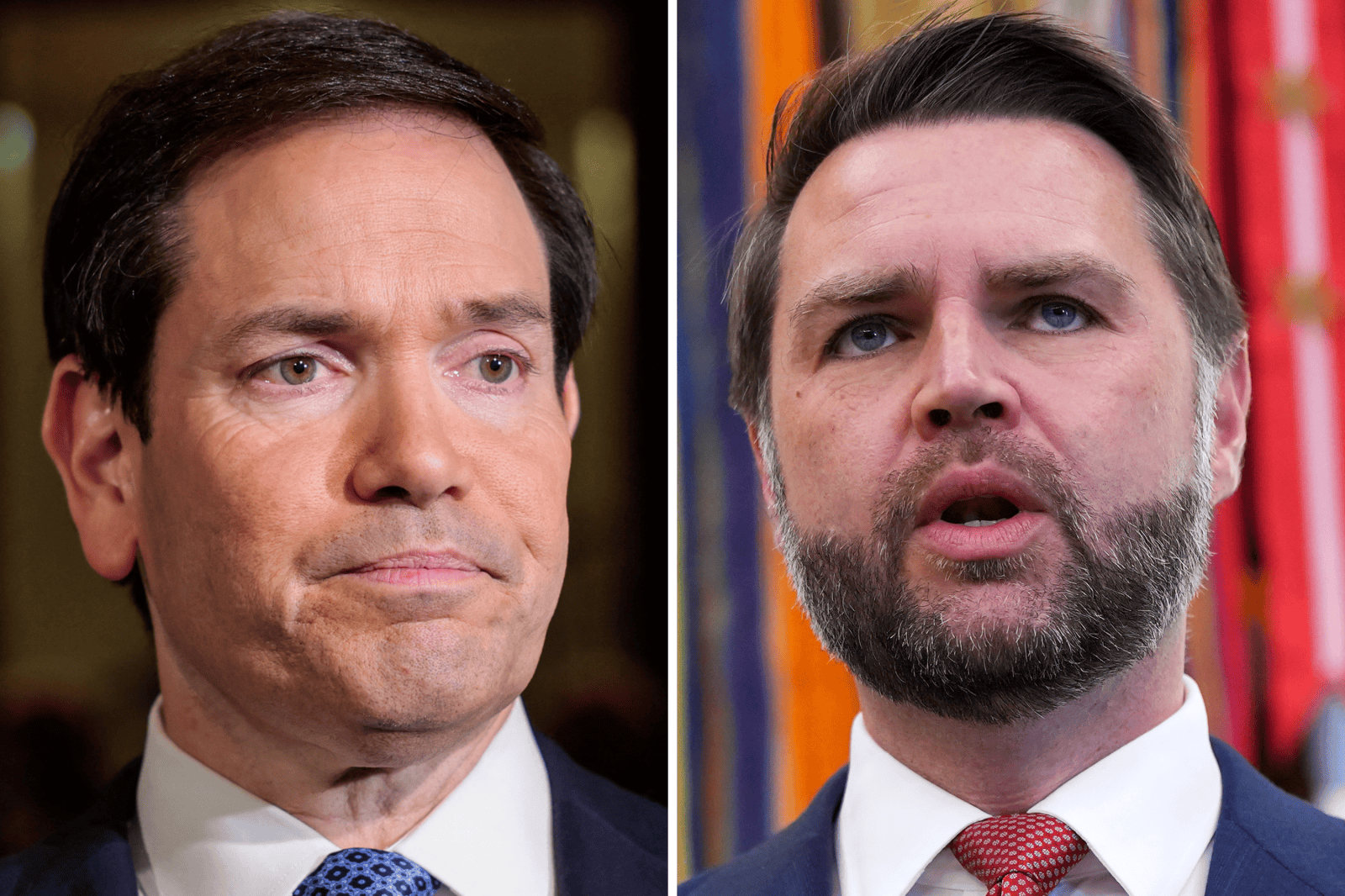
Vice President JD Vance and Secretary of State Marco Rubio are facing declining odds in the 2028 Republican presidential nomination prediction markets. A Newsweek analysis of Polymarket and Kalshi data highlights these changes.
Polymarket’s market shows nearly $714 million in trading, with Vance’s odds dropping from 53% on September 3 to 43.8% by Tuesday. Rubio’s odds fell from 27.8% on August 3 to 15.1%. Kalshi’s market also reflects declines, though less severe. Vance’s odds decreased from 45.8% to 43%, and Rubio’s from 29.5% to 18%, with $70,000 traded.
Marking concerns, Vance mentioned a chance of not pursuing the presidency, citing family and wife’s views on politics.
The movement in prediction markets raises questions about Republican confidence in succession plans post-Trump. Yet, Koleman Strumpf, an economics professor, advises against overemphasizing the shift. He notes Vance’s drop includes only some reaction to his comments.
Strumpf emphasizes that despite Vance’s decline, Rubio hasn’t gained significantly, with alternatives like Ron DeSantis and Tucker Carlson still low in the polls. This suggests Vance’s comments are not decisive for traders.
Midterm Impact on 2028 Republican Race
Professor Costas Panagopoulos from Northeastern University notes potential caution among Republicans linked to Trump’s administration. A poor outcome in the midterm elections could negatively impact successors.
“Trump’s association is crucial, but disastrous midterms could sour his influence,” says Thad Kousser, political science professor at UC San Diego.
Panagopoulos highlights the uncertainty of Republican direction post-2026 midterms, impacting those closely tied to Trump. He suggests that if Republicans falter and Democrats gain ground, scrutiny on Vance and Rubio may intensify.
Simultaneous Declines in Odds
Both favorites, Vance and Rubio, are experiencing declines, counterintuitive to typical race logic where one contender benefits from the other’s doubt.
Political communications strategist Mike Fahey suggests this stems from uncertainty about the broader succession plan among market participants. He points out that association with the Trump administration affects both candidates.
Traders might be uncertain about a clear successor, reflecting varied small gains across several candidates rather than one dominant favorite.
Midterm Results and Republican Coalition
Panagopoulos adds that election outcomes in Republican-dominated states like Texas and Kansas could reveal signs of rejection and concern.
“Republicans need to decide between replicating Trump’s politics or shifting identity,” he says.
Such decisions depend on whether Trump’s agenda faces a wholesale rejection after 2026, potentially altering the Republican landscape.
Market Prices Versus Polls
Keith Gaddie from Texas Christian University warns against viewing market prices as public opinion proxies. While prediction markets offer updated forecasts, they do not necessarily reflect voter intentions.
Strumpf points out that high-profile contracts generate continuous trading and provide valuable ongoing forecasts, despite not being perfect representations.
The distinction highlights the complexity of understanding voter bases. Market prices signal uncertainty around leading names, but broader shifts require evidence from voters, donors, endorsements, and party figures.
Leave a Reply