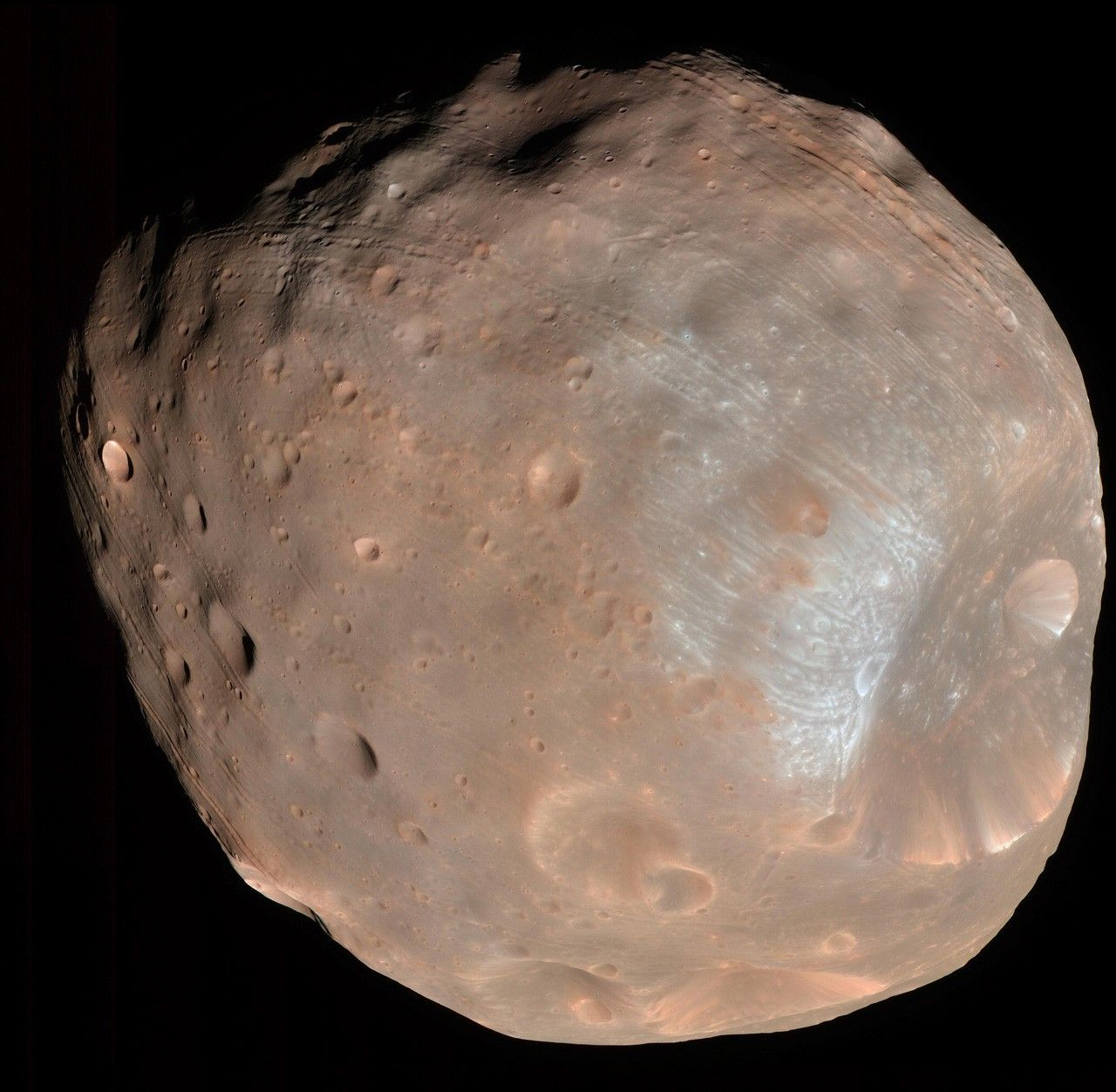
A Japanese spacecraft has embarked on a daring journey to explore Mars’ moons, aiming to return samples to Earth. The mission, involving collaboration among five global space agencies, seeks to land a robotic prospector and a rover on Phobos, Mars’ larger moon.
The Japan Aerospace Exploration Agency (JAXA) is leading the effort, launching the spacecraft from Tanegashima Island. Although NASA and China have successfully landed spacecraft on Mars, Phobos and Deimos remain unvisited.
Successful sample return would mark a significant milestone. Pieces of Phobos could be on Earth by 2031. NASA’s Tom Statler expressed excitement over the project, noting Japan’s prior asteroid sample returns.
Phobos, a rocky and irregularly shaped moon, spans approximately 14 miles across. Studies on it are expected to provide insight into Mars’ moons and moon formation in general.
This mission, named MMX (Martian Moons Exploration), costs $578 million and involves a 5-ton spacecraft expected to reach Mars by next summer.
After aligning with Phobos’ orbit, the spacecraft will deploy the French-German rover, Idefix, named after a character in the Asterix comics. The rover will move cautiously, given Phobos’ low gravity and challenging terrain.
Idefix will explore Phobos for 100 days, assessing the surface to ensure a safe landing site for the mothership, which will collect samples. The mothership will briefly land to gather material before returning to Earth.
During its mission, the spacecraft will also perform flybys of the smaller moon, Deimos. The return journey is planned for 2030, with samples reaching Earth in 2031.
Several countries have faced challenges with Mars’ moons; Russia has struggled in previous attempts. Japan and NASA have had setbacks in exploring Mars, aiming to uncover life-related evidence.
Phobos and Deimos may have formed from a collision with a space rock. Alternatively, they could be asteroids captured by Mars’ gravity. Research on the samples will contribute to the understanding of planetary formation.
NASA’s Lindsay Hays underscores the significance of this historic sample return, foreseeing a profound impact on future Mars missions. Germany’s Markus Grebenstein highlights the unique opportunity this mission represents.
China also plans a Mars sample return mission in 2028. NASA continues deliberating how to retrieve samples from the Perseverance rover.
Japan has invested $350 million in this endeavor, with international contributions from NASA ($87 million), the French Space Agency ($68 million), the German Space Agency ($56 million), and the European Space Agency ($17 million).
Leave a Reply