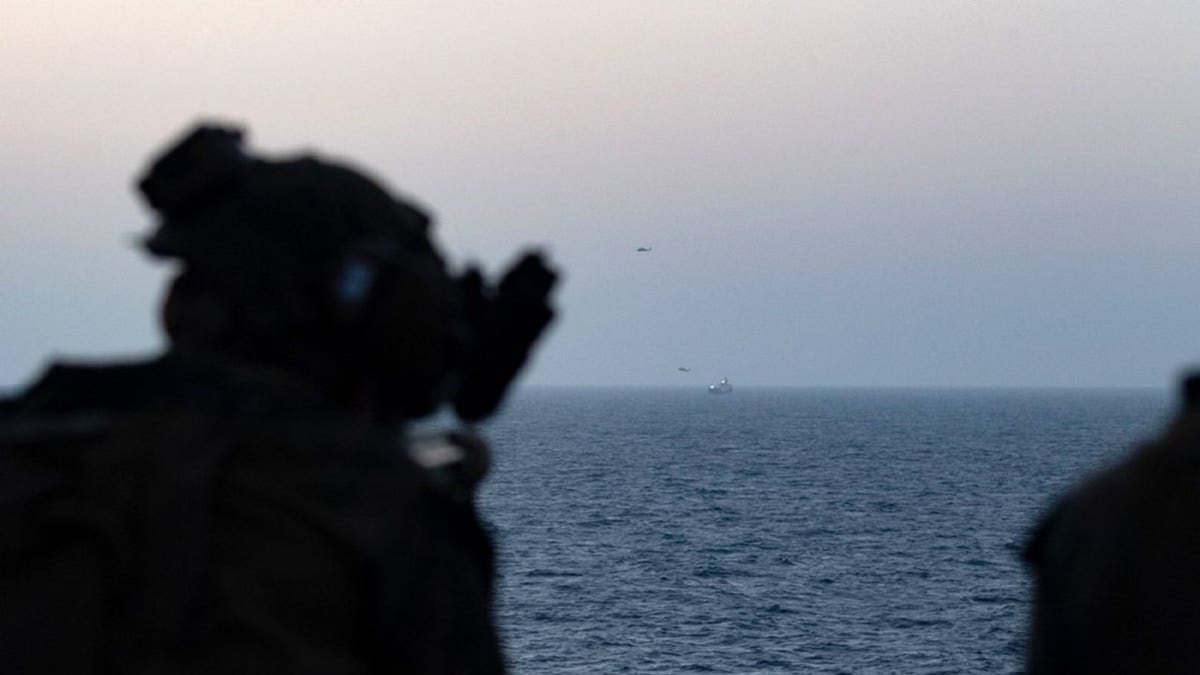
Small Iranian tankers, part of a ‘ghost fleet,’ are successfully bypassing U.S. naval blockades to smuggle liquefied petroleum gas (LPG) to China. U.S. investigators have documented one such vessel evading blockade enforcement in September. United Against Nuclear Iran (UANI) identified these activities, revealing that at least nine tankers have been involved in similar operations since the blockade’s reinstatement in July.
Investigative Findings
The SOGL, a sanctioned tanker, allegedly carried about 500,000 barrels of Iranian LPG, departing Iran in late August. Its journey took it to a maritime hub off Malaysia’s coast, where UANI documented its activity before it proceeded to China to unload its cargo.
U.S. Blockade and Its Impacts
The U.S. enacted a blockade initially in April, lifted it temporarily in June, then reinstated it in July once diplomatic talks failed. The blockade aims to curb Iran’s crude oil and LPG exports, a major national revenue source. Despite some tankers evading the blockade, the U.S. maintains that the operation has minimized Iran’s ability to successfully export crude oil from the Gulf of Oman.
Challenges at Sea
The Malaysian Eastern Outer Port Limits Anchorage is central to this smuggling operation. Vessels gather here waiting to transfer goods, despite U.S. patrols. Smaller tankers exploit opportunities by evading detection through techniques like turning off Automated Identification Systems and using false flags, making them difficult to trace.
The Role of China
China continues to be Iran’s prime destination for oil and LPG, accounting for around 80% of Iran’s liquid cargo exports. This exchange provides economic relief to Iran, bypassing U.S. and other sanctions. China capitalizes on discounted Iranian oil, further cementing trade relations between the countries.
Ongoing Monitoring and Future Risks
In a notable recent event, the SOGL traveled to China without a ship-to-ship transfer, discharging its cargo at Xinzhou Port. Such activities indicate the potential risks of international maritime enforcement and underscore the complexity of global sanctions evasion strategies.
Emma Bussey, a writer with Fox News Digital, reports that despite ongoing tensions, the dynamics of this international trade continue as enforcement mechanisms adapt to new challenges.
Leave a Reply