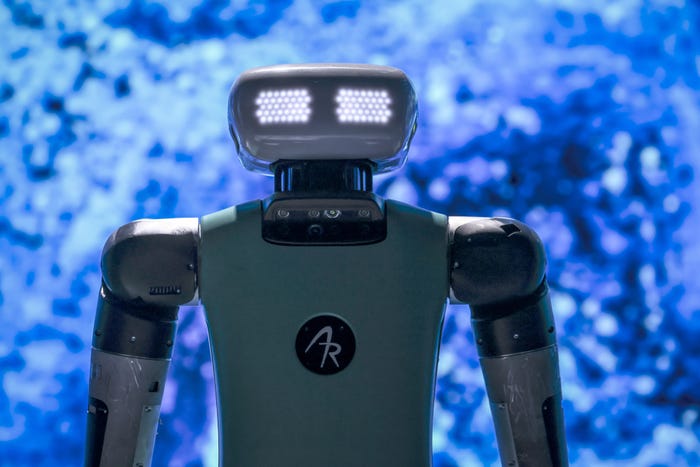
Agility Robotics, an Oregon-based company, is setting a significant precedent in the humanoid robotics industry by going public. This marks the first instance of a humanoid-focused company entering the U.S. stock market. The company, known for its two-legged robots that handle tasks like carrying materials and sorting goods in warehouses, has begun trading on Nasdaq under the ticker AGLT.
The financial situation of Agility Robotics reveals the industry’s ongoing challenges in achieving profitability. Last year, the company generated $1.8 million in revenue but faced a net loss of $138.1 million. A large portion of its revenue stemmed from the sale of five robots to one of its investors.
Agility Robotics is going public through a merger with Churchill Capital Corp XI, a special-purpose acquisition company (SPAC) led by Michael Klein, a former Citigroup executive. This merger was completed recently, allowing them to start trading. The company’s existing equity is valued at approximately $2.5 billion, and it anticipates receiving about $465 million in gross capital, including a prior receipt of $100 million.
“There’s something to be said for being first,” stated Peggy Johnson, CEO of Agility Robotics.
SPAC mergers experienced a surge in popularity in 2020 and 2021 but saw a decline as interest rates went up in 2022. As the IPO market starts to recover, there is renewed interest in SPACs. Agility Robotics chose this route for their public debut, bringing Klein into their fold, as he is known for his effective SPAC sponsorships with companies such as Oklo and Lucid.
According to George Chowdhury, a principal analyst at ABI Research, “Agility is unique to the industry because they’re actually deployed.” Although their deployments are small in scale, this is significant for commercial humanoid robotics.
The company’s losses are substantial. Alongside $38 million in non-cash expenses related to employee stock, they used $99.8 million in cash to operate in 2025. They also reported a loss of $2.7 million on sales, exclusive of additional research and other expenses.
Their latest innovation, Digit 5, is pivotal for their growth plans. Digit 5 is designed to function safely near humans without the need for protective barriers. Agility has orders amounting to over $300 million for 1,000 robots from a single customer, contingent on meeting deadlines and delivering as promised. Deliveries are expected to begin in the first half of 2027, with full availability by year-end.
Agility’s public listing creates a benchmark in the valuation of humanoid-focused companies. Despite being valued less than their private counterparts like Figure AI, Apptronik, and Neura Robotics, Agility’s public debut reflects a broader trend in market valuations for companies with real-world deployments.
This move by Agility comes amidst tightening U.S. regulations on foreign-made robots. Recent restrictions aim to favor U.S.-manufactured robotics, potentially benefiting Agility, which produces Digit at its Oregon plant. The dominant share of the humanoid market is currently held by Chinese companies, with significant presence and market value.
Securing a competitive edge domestically is crucial, highlighted by CEO Peggy Johnson’s view on strengthening the U.S. position in robotics.
Leave a Reply