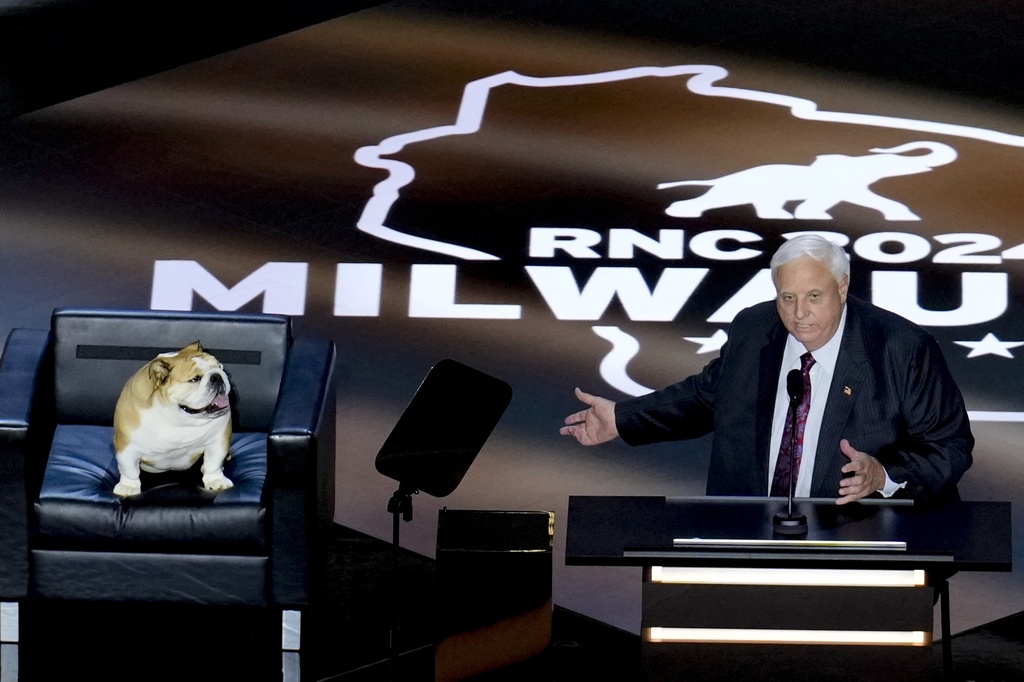
Gov. Jim Justice, together with his dog ‘Baby Dog,’ attended the Republican National Convention in Milwaukee on July 16, 2024. Nearly ten years have passed since a promising move to end greyhound racing in West Virginia was halted. A bill that aimed to terminate the practice had succeeded in passing the state Legislature, resting on Gov. Justice’s desk for consideration. The law suggested repealing the mandate for greyhound racing, which receives $19 million annually in subsidies. These funds could alternatively support critical state needs like road repairs or healthcare.
My motivation stemmed from a lifelong commitment to animal welfare, shaped by my role as president of the Federation of Humane Organizations of West Virginia. Since its founding in 1994, the group has singularly pushed for better animal treatment across the state. The 2017 proposal offered an escape from an industry that breeds thousands of greyhounds each year, leading to many being injured, confined, or discarded when unprofitable. Hopes for ending these tragedies were dashed as Justice vetoed the bill, leaving tracks operational and subsidies intact.
Since the veto, approximately 4,000 greyhound injuries have occurred in the state, including 1,367 dogs with broken bones and 84 dogs that died during races. One dog, GF St Barts, a young red fawn greyhound, tragically died at Mardi Gras in April 2022 after being tripped and suffering a broken skull.
As a new bill to stop greyhound racing advances in Congress, the Senate Agriculture Committee, which includes now-Sen. Jim Justice, will soon debate it. I urge him to make a choice favoring the dogs, inspired by Babydog, his family’s cherished pet. Babydog became part of the Justice household in 2019 and quickly gained fame as a political symbol. In 2021, she was the face of West Virginia’s $23 million COVID vaccine sweepstakes campaign. Justice’s unique gestures, such as featuring Babydog in his speeches and campaign materials, have captured public attention.
However, showcasing a dog for political purposes and implementing supportive policies are distinct actions. Justice’s prior appeal to West Virginians for COVID vaccinations resonated widely, achieving success. The current bill, known as the Greyhound Protection Act, offers Justice a chance to champion safety for greyhounds, akin to the care given to Babydog.
West Virginia’s population appears ready for this transition. Polls reveal that 65% support the Greyhound Protection Act, with only 25% opposing. Independent economic studies from Ball State University reinforce this perspective, showing no enduring job or GDP benefits from the racing industry, which relies on annual state subsidies.
Celebrating nearly thirty years of animal advocacy, I can identify numerous more effective applications for $19 million annually than sustaining an undesired industry. The Greyhound Protection Act presents a rare opportunity for Justice to alter his 2017 stance positively. Despite past decisions granting the industry extra time to reform, resistance to change has resulted in continued harm to thousands of dogs. Justice should endorse the Greyhound Protection Act for the benefit of the greyhounds, West Virginia, and most importantly, for Babydog.
Theresa Bruner serves as the president of the Federation of Humane Organizations of West Virginia.
Copyright 2026 Nexstar Media Inc. All rights reserved. This material may not be published, broadcast, rewritten, or redistributed.
Leave a Reply