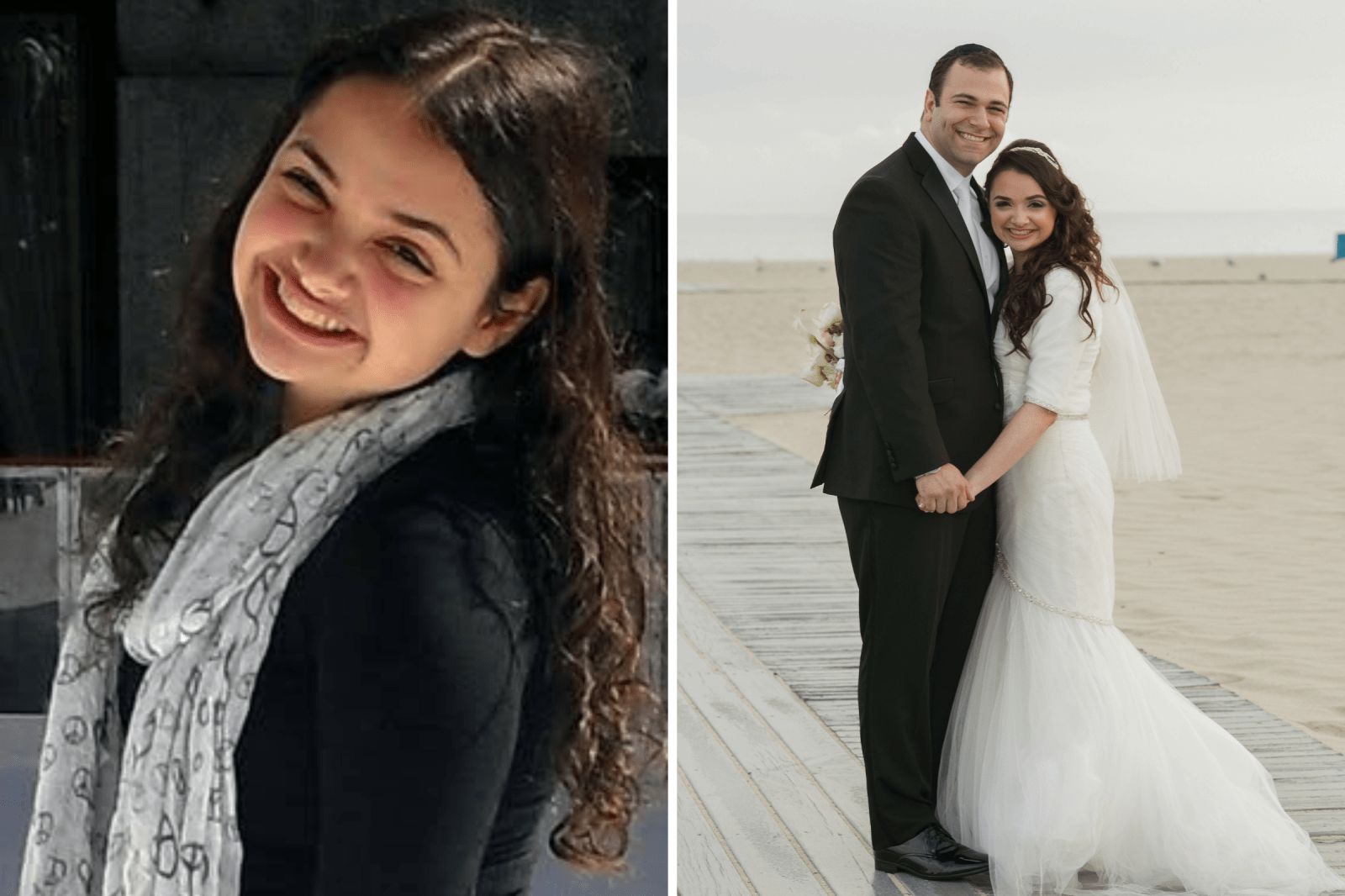
At 16, Michal Sklar experienced a grand mal seizure that changed her life. Despite being terrified for her health, she discovered an unexpected skill: the ability to process words backwards. Sklar humorously calls it her “most useless superpower.”
Sklar vividly recalls the day this happened. It was October 2010, right before her seventeenth birthday. Living in New York, she was preparing to speak at her high school assembly. After introducing the speaker, the next memory she has is waking up in a hospital.
The seizure was idiopathic, to this day, no one knows why it happened,said Sklar, now 32.I spent almost a week in the hospital undergoing extensive testing, including an EEG, an MRI, and several other evaluations.
Despite close medical supervision, none of the tests revealed what triggered the seizure. Several days into her hospital stay, she noticed something unusual: her brain was processing words backwards. Initially dismissed, this skill became undeniable as she mentally reversed the words spoken by medical staff.
Sklar always loved languages, but this new ability took it to the extreme. One morning she found herself mentally singing Taylor Swift’s “Love Story” backwards. Curious readers might wonder what that sounds like: “s’ti a evol yrots, ybab tsuj yas sey.”
Researchers know seizures can disrupt language systems, leading to changes in how people process words. In some conditions related to epilepsy, these changes are more pronounced. MedlinePlus Genetics discusses the epilepsy-aphasia spectrum, where seizure activity affects speaking, reading, and writing. According to the Epilepsy Foundation, seizures in the left temporal lobe can cause issues with word retrieval and naming objects.
Initially reluctant to share her new skill, Sklar eventually confided in a school friend, who found it fascinating. Over time, she began telling her family. Many responded humorously, saying it was “strangely on brand” for her. Sklar didn’t initially tell her doctors about her ability due to focus on understanding the seizure. When she finally mentioned it to her neurologist, the conversation didn’t gain much interest.
Sklar’s skill allows her to reverse words in sentences quickly. For instance, “hi, I’m Michal, and it’s such an honor to be featured in Newsweek” turns into: “iH, m’I lahciM, dna s’ti hcus na ronoh ot eb derutaef ni keewsweN.” Everyday words flip easily, but longer words are challenging. Questions about her ability to reverse supercalifragilisticexpialidocious often arise, to which she admits she can’t.
Despite its quirkiness, Sklar enjoys her party trick, which often breaks the ice. Her seven-year-old son finds it the “coolest thing” and proudly tells friends. Her husband and she have developed a playful couple language using backward words. Words like “spoons” become “snoops,” and they say “doog thgin” instead of “good night.”
Sklar encourages others to embrace their unique traits rather than shy away from them. Her social media presence, @momentsofmichal on TikTok, shares her experiences with this skill, delighting many followers.
The fact that my brain could adapt in this way and create an entirely new way of processing language continues to amaze me, and honestly, still freaks me out sometimes,she stated.
If you have a health concern, reach out via [email protected]. Experts can offer advice, and your story might feature in Newsweek. For editorial contact, connect with Charlotte Nisbet and Emma Lee-Sang.
Leave a Reply