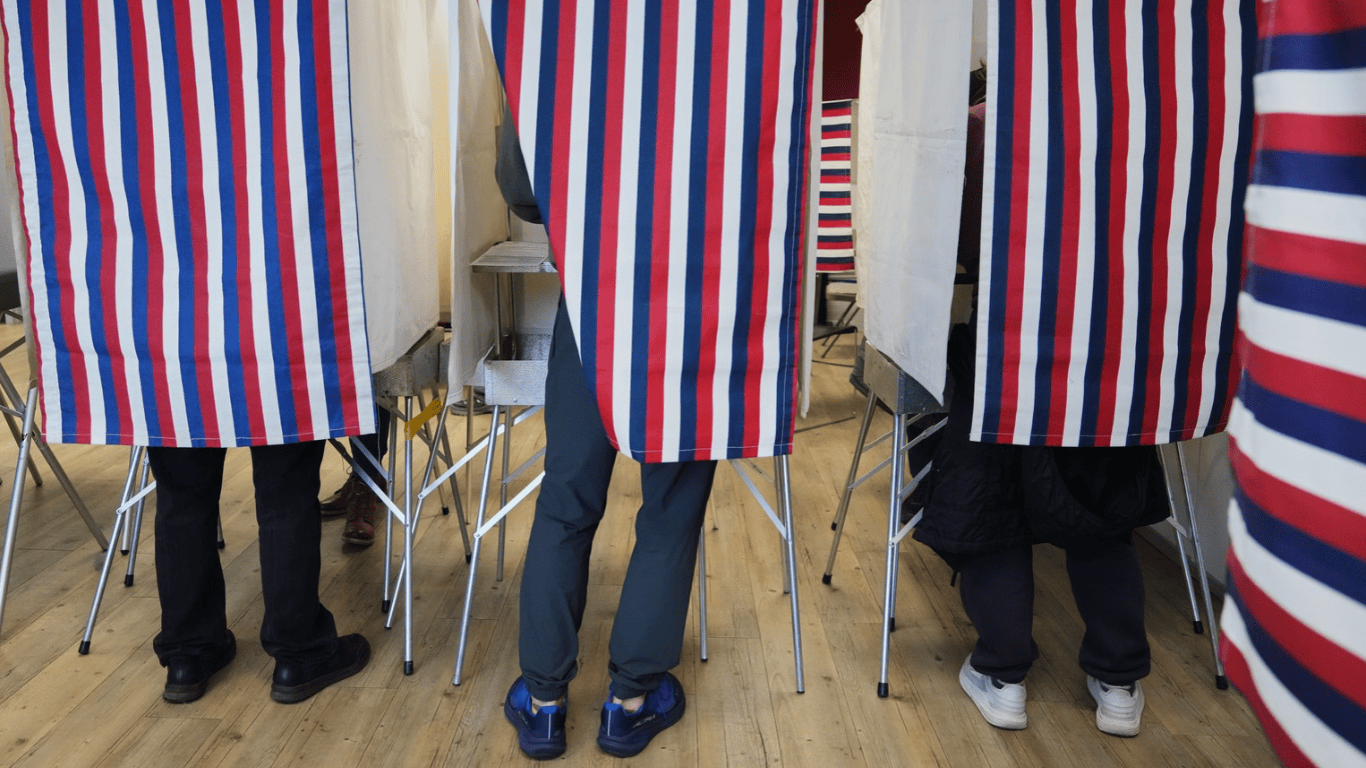
For nearly two decades, Thomas Evans played a key role in setting up voting booths at the community center in Nanwalek, Alaska. His efforts included assisting neighbors as they checked in to vote during the 1980s and 1990s. He fondly recalls witnessing most of the village’s turnout during those years. However, Evans notes that the village currently lacks a regular precinct polling place on Election Day.
There’s no polling place anymore,
Evans shared with Newsweek. The situation has impacted Nanwalek’s ability to present a reliable vote count, reflecting community preference.
A lawsuit filed Thursday names Nanwalek as one of at least 18 rural Alaska villages facing challenges due to advertised polling sites not opening as promised. Most affected communities are Alaska Native villages accessible only by plane or boat. This legal case unfolded less than 24 hours before the opening of polls for a U.S. Senate race, anticipated to have a narrow margin.
The Lawsuit’s Claims
The lawsuit titled Midnight Sun Independence Fund v. Dahlstrom was submitted on October 29 in Anchorage Superior Court. It contests the actions of Lt. Gov. Nancy Dahlstrom, Division of Elections Director Carol Beecher, and the division itself. The suit argues that closing advertised polling sites without notice infringes on voting rights and due process as guaranteed by the Alaska Constitution. It requests the court ensure all listed sites remain open, with Judge Thomas Matthews scheduling a hearing for Monday morning at 9 a.m.
A similar lawsuit was filed by the Alaska Democratic Party and rural state lawmakers, alleging possible violations of a federal consent decree from Toyukak v. Dahlstrom that requires the state to offer Yup’ik language assistance for voters in Western Alaska.
Alaskans may vote in person within the 15-day window leading up to an election. In rural communities, this often involves absentee in-person voting, where voters receive a ballot from a local official, seal it in an envelope, and it is counted later. The complaint states that in 2024, 18,158 individuals voted this way.
The lawsuit claims at least 18 polling sites listed on the state’s website were not operational during the week of October 19. These include villages such as Alakanuk, Chignik Bay, Chistochina, Ekwok, Gambell, Goodnews Bay, Holy Cross, Huslia, Kongiganak, Manokotak, Mountain Village, Nanwalek, Napaskiak, Newhalen, Pedro Bay, Pilot Station, Quinhagak, and Toksook Bay. It reports issues such as local officials not receiving necessary ballots or instructions, while others lacked training despite receiving materials. Residents in the Yukon-Kuskokwim Delta identified five additional closed sites.
In response, the state contested the claim’s scale. Director Beecher, in a letter dated October 26, informed state Sen. Bill Wielechowski that 12 out of the 18 sites had confirmed they were open, three declined opening, and three hadn’t responded. However, Beecher did not specify the identity of these sites when requested by Newsweek.
Beecher mentioned that each site agreed to their location and operating hours, with the division dispatching ballots to absentee voting officials in 109 Western Alaska communities. As of Sunday, three sites were listed as temporarily closed, and three others were also removed from listings.
Voting In Nanwalek
Within the lawsuit, Nanwalek’s lack of a regular polling place for the 2026 general election is highlighted. Should the village’s absentee in-person voting site be unavailable, voters might need to travel to Tyonek, a Dena’ina village located across Cook Inlet.
However, the state indicated on September 22 that Nanwalek would be one of ten Permanent Absentee Voting communities extended through Election Day, November 3. The state’s website points to the Nanwalek IRA Office and Community Center as open from 9 a.m. to 8 p.m. that day.
Nanwalek is notably absent from the Division of Elections’ online polling-place lookup, consistent with the lack of a regular precinct. After redistricting in 2021, Nanwalek and neighboring Port Graham came under House District 37; Nanwalek’s precinct does not appear in results for recent elections.
The lawsuit aligns with findings from the 907 Initiative’s tracker, showing Tyonek as the polling location for Nanwalek voters on Election Day. Evans explained that reaching Tyonek involves a costly and complex journey, including flights and driving, which is beyond many residents’ means.
Evans, residing in Anchorage, recounted how Nanwalek lost a polling location in the early 2000s, causing a significant drop in voter turnout. Residents lacked understanding as to why the polling site disappeared, stating nobody clarified the situation.
State records corroborate his account. In the 2000 elections, Nanwalek had its own precinct under the former name English Bay, with a 60% voter turnout among registered voters. By 2022, only 6% of registered voters from the assigned Tyonek precinct participated, excluding absentee ballots.
Currently, ballots are sent to households, yet can be overlooked in a community reliant on hunting and fishing. Unreliable mail delivery further complicates the situation, as adverse weather can delay mail for over a week.
Evans has shared insights about village life with audiences in the Lower 48, noting the stark differences in accessibility. In Nanwalek, getting to a polling spot equates to time-consuming flights that can be financially challenging.
Though Evans doesn’t reside in the village anymore, he did not know when the absentee site opened for the year. The 907 Initiative’s tracker claims it opened on October 30, enabling voting since.
Meanwhile, the state’s website lists the absentee site as open from October 19, with revisions reflecting operations as of September 25.
Overall, the tracker shows late openings for several sites listed in the lawsuit and others still shut as of October 30.
Impact of Few Votes
Ordinarily, closed village sites would be a local issue. But this year, these villages are part of the closest Senate races nationwide.
Peltola, formerly a congresswoman of Yup’ik descent, challenges Republican Sen. Dan Sullivan. The RealClearPolitics poll average from October 8 to 29 presents Peltola leading with 49.4% compared to Sullivan’s 48.2%, a margin well within polling error. An Alaska Survey Research poll conducted from October 26 to 29 shows Peltola ahead by 51 to 49 in final ranked-choice tabulation.
Alaska repeatedly demonstrates elections decided by minimal vote differences. Two years prior, Republican Nick Begich claimed the U.S. House seat from Peltola by 7,876 votes after ranked choice tabulation. The bid to repeal ranked-choice voting failed by 737 votes.
Separate from this, a federal judge dismissed a Justice Department lawsuit on Sunday, which aimed to block election result certification on potential voter confusion due to a similarly named candidate on the ballot. An appeal is planned.
Upcoming Actions
Newsweek sought answers from the Division of Elections on Sunday about the status of the 18 sites, Nanwalek’s voting setup, and assigned Election Day voting places. The Division’s spokesperson, Steve Kirch, declined to provide detailed answers, citing non-commentation on pending litigation.
The Division directs voters to its lists of voting locations and encourages voting through methods such as mail, electronic submission, early voting sites, or in-person on Election Day.
Judge Matthews will oversee a hearing for the Midnight Sun case at 9 a.m. Monday. Even if he mandates immediate opening of all sites, villages would have limited Election Day usage.
Efforts to contact Nanwalek residents for updates on the absentee site had not yielded responses by publication time.
For further information, contact Newsweek editors for this story: Steven Frank.
Leave a Reply