In rural North Dakota, small farming towns like Hebron and Glen Ullin face numerous challenges. Despite these, 98-year-old Mae Buchli remains determined to stay in her community. “We decided we’re not going to move, ’cause we want to stay home,” she expresses.
Rural America is aging faster than urban areas. The USDA reports that counties with at least 20% of residents over 65 have tripled since 2010. This older population faces health risks related to loneliness and social isolation.
Lynda Hoerauf, aged 88, has always known rural life and doesn’t wish for any other. She notes, “It’s so opposite, these little rural towns, from cities.” Yet, she admits Sundays are difficult due to the lack of activity.
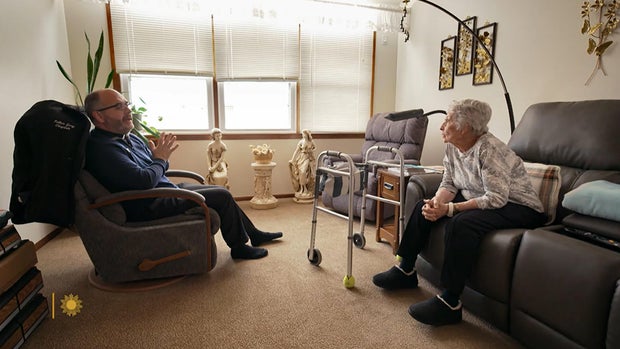
Father Gary Benz, having grown up nearby, understands this scenario well. He visits parishioners unable to attend church, like 96-year-old Viola Weinhart. Father Benz says, “It’s helped me, because it’s made me more compassionate.” Weinhart appreciates his visits, explaining, “He spends a little time with me each week and fills me in on the latest news.”
In rural counties, one in five adults is over 65. Moving to urban areas with more resources is often financially challenging. The Rural Health Transformation Program, initiated by President Trump’s “Big Beautiful Bill,” aims to address this with $50 billion to enhance access to medical care. However, non-medical needs are still unmet.
Jane Strommen, a gerontology specialist at North Dakota State University Extension, addresses these overlooked needs. “People are good and they want to help their neighbor,” she explains. Her grassroots approach led to the Aging in Community program, funded by Margaret A. Cargill Philanthropies. It encourages neighbors to support seniors, forming a community watch.
Kyla Sanders, a retired nurse from Montana, coordinates the program. She visits elderly residents in rural North Dakota, bringing practical aids like a talking calendar for Mae Buchli. Sanders focuses on human interaction, stating, “They want to be around other humans and have that sense of belonging.”
Sanders manages various tasks, from fixing watches to organizing social activities. After five years, the Aging in Community program has expanded to 12 counties. This includes some frontier areas with sparse populations.
At Lynda Hoerauf’s home, visits linger, underscoring the importance of place. As Hoerauf expresses, “There’s no place like home.”
For more information:
- Rural Health Transformation (RHT) Program
- Jane Strommen, Gerontology Specialist, North Dakota State University, Fargo, ND
Editor: Remington Korper
Leave a Reply