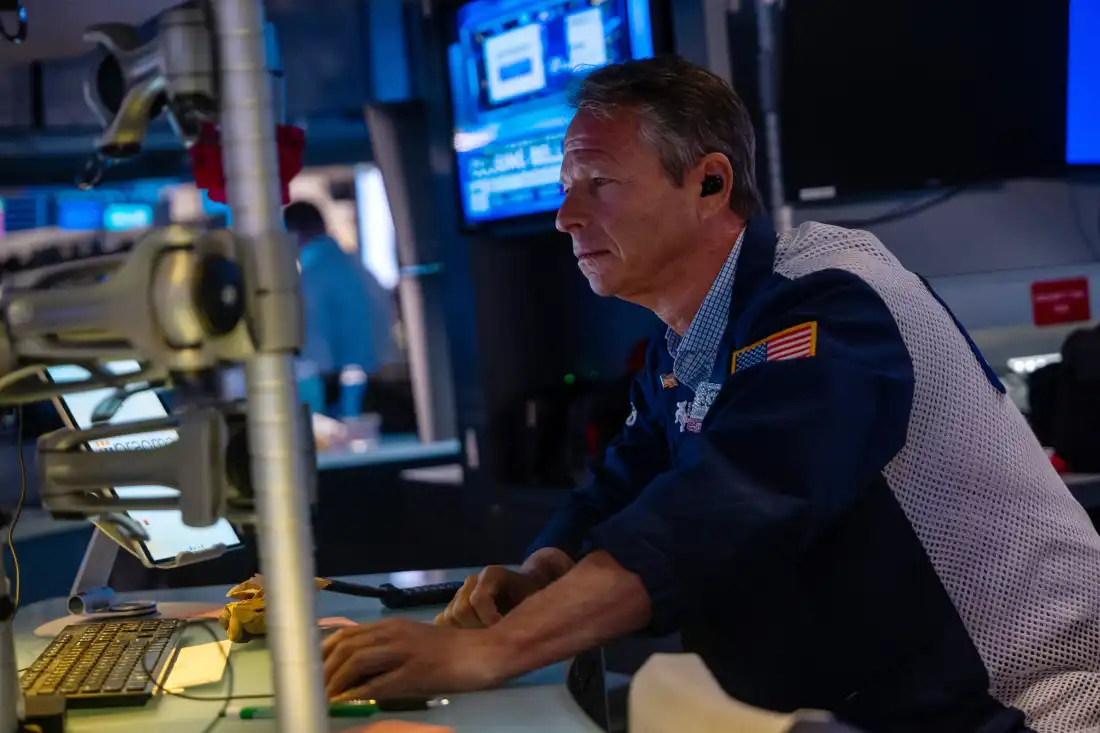
This week, the stock market experienced significant losses amid growing concerns about the stability of AI-related investments. For years, these stocks have elevated markets and played a role in supporting the broader economy. However, fears are mounting that the sector may be on the brink of a downturn, potentially leading to wider financial implications. Here’s a breakdown of what occurred and the reasons behind the current alarm.
Market Turbulence This Week
Investors anticipated that the public offering of the AI company Anthropic would positively impact markets. Instead, it did not prevent a sharp market decline on Friday, marking one of Wall Street’s worst weeks in recent times. The Nasdaq, known for its tech focus, fell by 10%, a decline unseen since March 2020 during the early pandemic lockdowns. Anthropic itself, despite a 17% gain at its debut, saw its stock fall over 8%, closing around its initial public offering price by Friday. Moreover, both the S&P 500 and the Dow Jones Industrial Average reported a correction, signifying a 10% drop from their recent peaks.
Reasons for the Decline
Several factors contributed to the steep drops. Investors have been wary of AI trade sustainability. In September, the Federal Reserve increased interest rates for the first time in over three years. This move is challenging for AI firms that must borrow extensively for data center construction and other growth activities. Elevated interest rates make borrowing costlier. Additionally, with Democrats taking control of both Congressional chambers, there are expectations of stricter regulations on the AI sector. This includes slowing down data center expansions, which face voter opposition. Notably, new Democratic governors in significant states like Texas, including Gina Hinojosa’s surprising victory, could impact these developments. On another front, Nvidia, a leading AI chip manufacturer, faced turmoil when CEO Jensen Huang resigned amid controversial allegations. These events have exacerbated concerns about the AI trade’s future, into which vast sums have been invested.
Implications for Financial Stability
This situation has stirred debate on Wall Street. Many fear AI could resemble the burst of the tech bubble in the early 2000s, where numerous tech companies without solid financials collapsed. Hank Smith from Haverford Trust, however, points out that this scenario differs; industry giants like Meta and Apple will likely withstand the storm. Nvidia, despite leadership issues, reported positive results recently. Smith asserts that AI’s potential isn’t unrealistic. Still, there’s doubt about whether investors will realize their anticipated returns. Another significant concern is the intricate links between AI companies. Nvidia’s role as both a financier and supplier to many firms, including CoreWeave, highlights interconnected financial dependencies. Such a web raises fears that trouble within one company could cascade into a financial calamity.
Economic Impact of an AI Decline
A faltering AI sector could have considerable effects. The U.S. economy has increasingly become tech-driven, with data center projects providing employment despite voter resistance. Recent AI investments contributed to a 3.4% growth rate in the past quarter. AI stocks are now a substantial part of the S&P 500, meaning many investors, including those with 401(k)s, hold them as essential portfolio components. Consequently, a downturn could ripple beyond the tech industry. It’s important to note that Anthropic financially supports NPR.
Leave a Reply