After spending nine months in detention by Immigration and Customs Enforcement (ICE), Jesus Ramirez Ramos was in dire need of assistance. His clothing, retained unwashed in storage throughout his detention, emitted a strong odor. His cellphone, misplaced by ICE at a Michigan jail, severed crucial connections. Arrested far from his home in Salina, Kansas, he pessimistically considered his journey back.
However, upon his release from the North Lake detention center in Baldwin, Michigan, things took a positive turn when Delight Lester was there to meet him. At 66, Lester actively participates in an advocacy group dedicated to aiding ICE detainees by managing commissary accounts, providing legal support, and facilitating transportation. Driving a silver Toyota Prius, Lester escorted Ramos over 900 miles back to his hometown. She greeted him warmly with essentials such as a change of clothes, a snack bag, and a phone for the journey. Speaking of Lester’s assistance, Ramos expressed heartfelt gratitude, saying, “Me ayudó muchísimo. Estoy muy agradecido.”
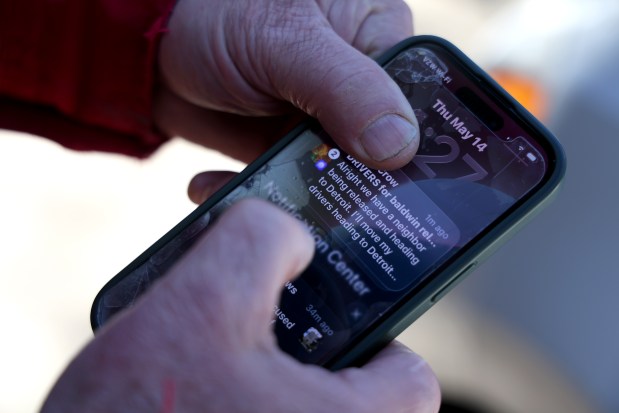
Lester represents a network of individuals across the nation committed to assisting ICE detainees, supporting them during custody, and coordinating their travel home upon release. Thousands of detainees are detained far from their communities in other states. From California to New Jersey and Minnesota to Texas, networks of advocates are innovating ways to return released detainees to their homes safely. Some organizations have dedicated transportation teams coordinating the logistics, often employing encrypted messaging apps to call for volunteer drivers.
In Michigan, organizations like Hope for Neighbors engage in these efforts. Calor Humano operates in Kentucky, Haven Watch in Minnesota, and in Illinois, the Overground Railroad coordinates transportation efforts. Recently, the return of Ricardo Hernandez-Navarrete, a Chicago Public Schools senior, was streamlined by activists, enabling his timely return home to attend his high school graduation event.
The movement originated in response to the Trump administration’s aggressive immigration policies, resulting in significant federal immigration arrests nationwide since the inception of his second term in 2025. For instance, Operation Midway Blitz in Chicago led to roughly 3,800 noncitizen arrests, primarily affecting individuals with no criminal history, sparking legal challenges and drawing humanitarian criticism.
Among the impacted policies is the indefinite detention of immigrants without the possibility of posting bond, encroaching legal boundaries and generating intensified legal efforts through habeas corpus petitions for detainee releases. However, upon release, detainees experience abrupt freedom, often lacking financial resources or contact methods, necessitating organized community responses.
Lester describes her mission inspired by humanitarian values, emphasizing the ease of imparting kindness to effectively address societal adversities. Pastor Dale Dalman initiated many efforts in Michigan, prompted by a personal encounter with a detainee. What started as an individual act of kindness evolved into Hope for Neighbors, rallying about 250 participants providing volunteer support. The group organizes visits, supports legal aid, and coordinates transportation, propelled by volunteers like Lester.
Lester’s daughter, Lillian Khatib, also contributes significantly, coordinating volunteer activities as part of her social work at the University of Michigan. Parallel to this, Larry Gephart participates actively by driving released detainees across travel circuits, highlighting communal transport efforts.
Nationally, similar networks operate, such as in Kentucky, where volunteers like Will Mendoza assist in ICE detainee transportation. In Minnesota, Susan Schultz, under Haven Watch, facilitates relocations for released individuals, supported by volunteer efforts analogous to those led by Dalman and Lester.
Organized groups, echoing sentiments emphasized by volunteers like Robin Valenzuela from Indiana, have sprung up to address immigrant needs brought about by legal and policy shifts. Initiatives have evolved over time, addressing logistic complexities and developing communities equipped to expeditiously address detainee-related challenges.
Through collective efforts, individuals significantly impact ICE detainees’ lives, utilizing shared strategies to streamline the return journey for passengers like Ramos, Hernandez-Navarrete, and others navigating the immigration system, demonstrating resilience and fostering systemic changes for immigrants nationwide.
Leave a Reply