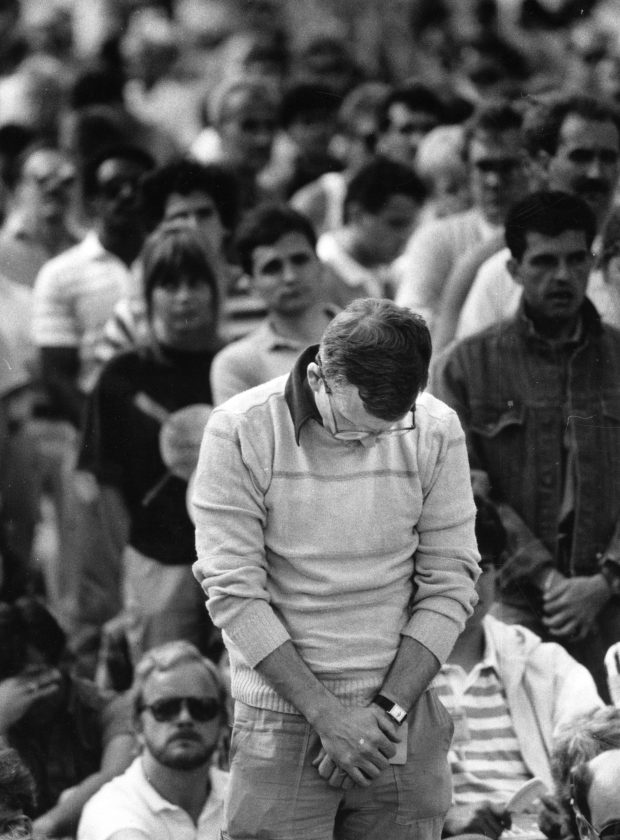
A Reflection on the AIDS Crisis
Forty-five years ago, The New York Times published an article about the mysterious “gay cancer,” marking the onset of one of modern America’s most severe public health crises. By the mid-1990s, I was working as a young lawyer with the AIDS Legal Council of Chicago. We had a small team, and every day, we visited hospitals, apartments, and hospices. Our role was to assist people with HIV/AIDS in completing essential legal documents like wills and powers of attorney.
We often met clients at the end stages of life. One client, Rex, remains vividly in my memory even after 30 years. He was in his 20s when he contacted us to finalize his legal paperwork. On our arrival, his living room had turned into a gathering space, with friends sharing food, stories, and music around him. Grief and warmth intermingled.
Rex carefully reviewed his documents, signed them, and expressed gratitude. He passed away the next day. At the time, we wondered if finishing his paperwork gave him peace. Now, I believe Rex chose that moment to depart, though I can’t be certain. I understood what living with AIDS meant then—the constant pain, fear, and sense that death was imminent. Rex couldn’t have known that lifesaving HIV medications were about to become available.
What I witnessed wasn’t just an individual preparing for death but a community nurturing dignity and agency amid abandonment. Those with AIDS faced terminal illness, family rejection, political indifference, and no effective treatment. They built support systems in varied settings, often overlooked by society. Their solidarity was inspiring, yet it highlighted grave injustice.
Rex died months before HIV therapies transformed AIDS from a death sentence into a chronic illness manageable by millions. Forty-five years later, the lesson of AIDS isn’t only in the deaths but in the care and solidarity people showed while waiting for a broader societal response.
— Julie E. Justicz, Executive Director, Legal Council for Health Justice (formerly AIDS Legal Council of Chicago)
The Impact of Tragedy
Regarding “‘A little respect’ for Flight 191” (May 25), the American Airlines Flight 191 tragedy had a lasting impact beyond Chicago. Coverage in 1979 conveyed the likelihood that passengers saw the crash imminent due to in-flight TV footage. People worldwide mourned those final moments.
The event left a permanent mark on those left behind. Adult children of victims know precisely where the crash occurred, maintaining a permanent bond not just to their loss but also the location.
My mother died in a head-on collision 27 years ago. My family and I witnessed the crash. The trauma kept me away from that road for years, tied as it was to a vivid memory. On one unintentional return trip, I felt an overwhelming connection to the place and my mom’s spirit, a sentiment rooted in human instinct.
— Georgiana Atkins Havill, Winter Park, Florida
Everyday Encounters and Overcoming Challenges
I survived an overdose and reflect on my cousin Lee’s overdose death. Occasionally, I see a man whom I call John Elway, asking for money at a familiar intersection while wearing a Denver Broncos jersey. I don’t have money to give. Still, when I see John, I feel relief that he’s alive. Absent that sighting, I worry about his well-being.
John’s appearance suggests he sustains himself somehow. To me, John symbolizes America and our collective responsibility. I can merely observe his actions and reflect on my own. John’s presence questions if we advocate for others apart from ourselves. America needs to assist John, a fixture in our shared daily lives.
— Jordan McClements, Chicago
American Identity and Resilience
Rabbi Debra Newman Kamin’s and Steven D. Reske’s op-eds in the Sunday Tribune discussed themes of pride amid adversity. Kamin urged Jewish people to confront antisemitism with confidence, mirroring Reske’s analogy of jazz icon Miles Davis. Instead of focusing on discordant notes, Davis saw potential in making subsequent notes harmonious.
This philosophy isn’t exclusive to Jewish or musical communities. Today’s societal discord requires a collective response focused on creating harmony from dissonance. Historical examples including the Civil War and civil rights movements show Americans responding to challenges by fostering unity. Proudly, we should remain visibly and unapologetically American, embracing a journey to unity.
— Margaret Sents, Glenview
Leave a Reply