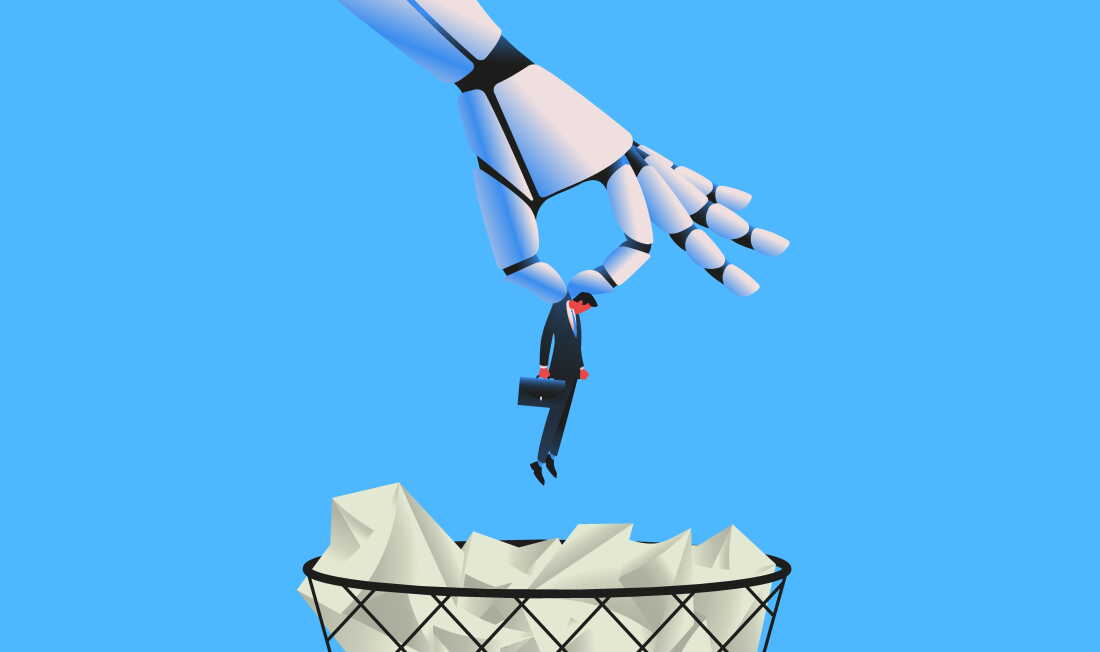
The Planet Money newsletter recently explored an intriguing idea: the potential of an AI bubble leading to a recession, which could further accelerate the replacement of workers with AI technology. The concept of an ‘AI double whammy’ is concerning for many.
The discussion hinges on two key areas of economic research. The first is the history of financial bubbles. The second is how recessions can push businesses towards more automation.
Financial Bubbles and Revolutionary Technologies
The idea of economic bubbles linked to revolutionary technology is not new. In 1978, economist Charles Kindleberger published Manias, Panics, and Crashes: A History of Financial Crises. This work highlighted a recurring pattern: major technological advancements can fuel bubbles as investors become overly optimistic.
An example of this is the railroad bubble. The collapse of this bubble led to the Panic of 1873, causing significant economic disruption. Today, AI significantly influences the U.S. stock market. A recent report by J.P. Morgan noted that a small group of AI-related companies accounted for most of the gains in the S&P 500’s stock prices.
However, AI-related firms are incurring significant debt to fund data centers and energy infrastructure. The question remains whether this scenario will result in a bubble akin to the dot-com era, where a crash could occur without triggering a full-blown financial crisis.
There are concerns about whether all AI companies will eventually generate enough profit to cover their expenses. Analyst Benedict Evans points out that intense competition might reduce prices, impacting profitability as companies heavily invest in AI developments.
The Impact of Recessions on Automation
If an AI bubble bursts and leads to a recession, it could encourage businesses to adopt automation more aggressively. Historically, automation has occurred gradually, with jobs evolving over time. However, studies suggest that such changes can happen rapidly during recessions.
Research by economists Nir Jaimovich and Henry Siu shows that job declines due to automation often coincide with recessions. From 1990 to 2017, a significant portion of job losses in automation-prone sectors happened during these economic downturns.
The scenario is troubling as a recession driven by an AI bubble might hasten job replacement. Companies could face competition driving down prices, which might make AI more accessible but lead to further job losses.
Looking Forward: Potential Policies and Considerations
The outcome of AI’s impact remains uncertain. Despite these uncertainties, policies could mitigate job losses, such as unemployment insurance. Bill Gates has suggested taxing AI and robots to preserve jobs and fund government safety nets.
There is room for hope and ways to minimize harm if these fears materialize. Writing about these concerns can be a cathartic exercise, helping to manage anxiety about uncertain futures.
LIVE VIRTUAL EVENT FOR NPR+ SUPPORTERS: Join a virtual “Ask an Economist” session on AI and jobs with experts like Daron Acemoglu and Ronnie Chatterji on Wednesday, Oct. 28.
P.S. Charles Kindleberger’s life was intriguing. His career included work for the CIA’s precursor and contributions to the Marshall Plan. Perhaps his story could inspire a Hollywood movie.
Leave a Reply