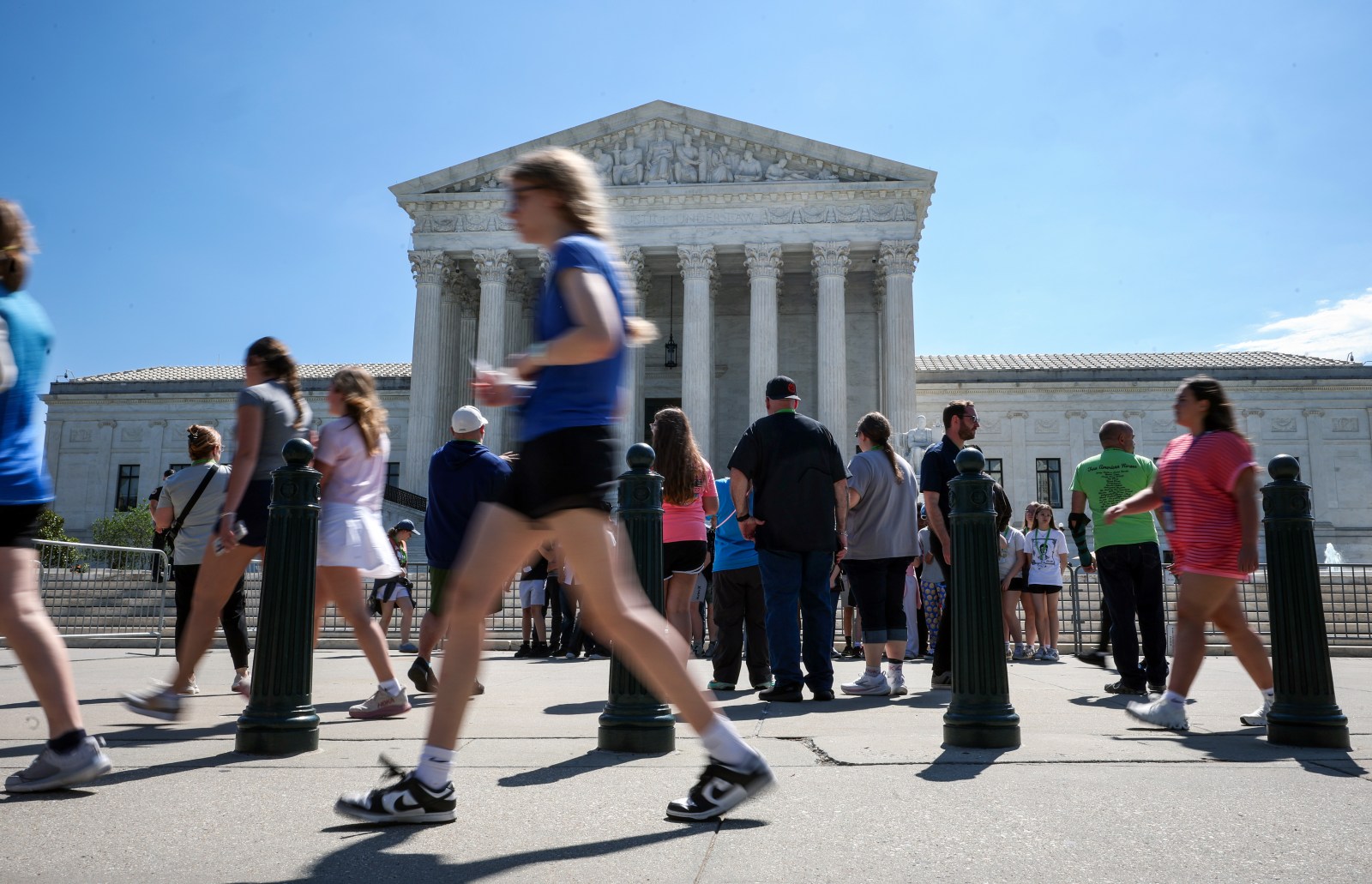
Alabama’s attempt to have its redistricting case reviewed by the U.S. Supreme Court faced a setback when Justice Clarence Thomas declined to grant an immediate stay on a lower court’s block against the state’s congressional map redesign. Thomas, known for his skepticism toward Voting Rights Act provisions in such cases, denied Alabama Republican officials’ request for immediate relief. He also urged those opposing the change to provide their arguments against using the contested map.
Alabama’s Redistricting Efforts
The redistricting issue has been contentious in Alabama. This legal challenge arises amid broader GOP initiatives to establish new maps ahead of the 2026 midterm elections, crucial for President Donald Trump’s party to maintain its hold over the House of Representatives.
Legal Proceedings and Key Arguments
A federal three-judge panel placed a preliminary injunction on the use of the 2023-drafted map. Alabama swiftly challenged this decision at the U.S. Supreme Court. The court has previously ruled on similar cases, such as those in Texas. State Attorney General Steve Marshall, in a statement released on Wednesday, argued that any confusion about Alabama’s congressional district maps resides with the three-judge panel and not the voters. He emphasized that Alabama’s conservative electorate having conservative representation is a representation of democracy.
The District Court combined rulings from two cases, asserting that Alabama must revert to the court-mandated districts used in the 2024 election. Attorneys for Black voters claimed the state’s proposed map discriminated against them based on race. The Court stated, “Ultimately, we cannot see our way clear to requiring Alabamians to cast their votes in the 2026 elections under a districting plan tainted by intentional race-based discrimination.”
This prolonged case has repeatedly moved between legislative, district court, and Supreme Court levels since 2021. A significant ruling in 2023 by the Supreme Court upheld the block against the new map under the Voting Rights Act, a decision opposed by Thomas.
Reinterpretation in Louisiana v. Callais
Reinterpretation in Louisiana v. Callais in April, altering how Section 2 of the Voting Rights Act applies, reopened these issues for further court assessment. Recently, the justices sent the matter back to the District Court.
The Trump administration’s Solicitor General, D. John Sauer, supported Alabama’s Supreme Court challenge. He critiqued the district court for only superficially addressing the separation of race and politics and criticized the injunction issued late in the election calendar. Plans were made to conduct primaries using the contested map. Sauer emphasized that federal district courts shouldn’t interfere with election processes on questionable grounds at the last minute.
Justice Thomas’ Perspective
For decades, Justice Thomas has been critical of using the Voting Rights Act in redistricting cases, advocating for minimal federal influence on how states redraw congressional maps. Thomas champions a “colorblind” interpretation of the Equal Protection Clause, opposing court-mandated race-based districting. He consistently calls for reevaluating the legal framework addressing electoral map challenges under Section 2 of the VRA.
In his legal opinions since the 1990s, Thomas argues against courts misinterpreting Section 2 to tackle “vote dilution” due to district boundaries. In a 1994 Holder v. Hall concurrence, he stated the statute pertains only to voting procedures—not district sketches. In recent cases, Thomas reiterated that Section 2 doesn’t invalidate districts, focusing solely on ballot access and counting processes.
Thomas’ dissent in the 2023 Allen v. Milligan case underscored his resistance against mandatory race-conscious line drawing by states under the VRA. He asserted that Section 2 doesn’t obligate states to create districts based on minority population proportions, which he views as unconstitutional.
Recently, Thomas reiterated these views in the Louisiana v. Callais case, arguing for a ruling declaring Section 2 non-applicable to districting.
Upcoming Proceedings
Attorneys contesting Alabama’s new map must submit their arguments to the Supreme Court by June 1 at 4 p.m. The court will then determine whether to accept the state’s appeal.
Leave a Reply