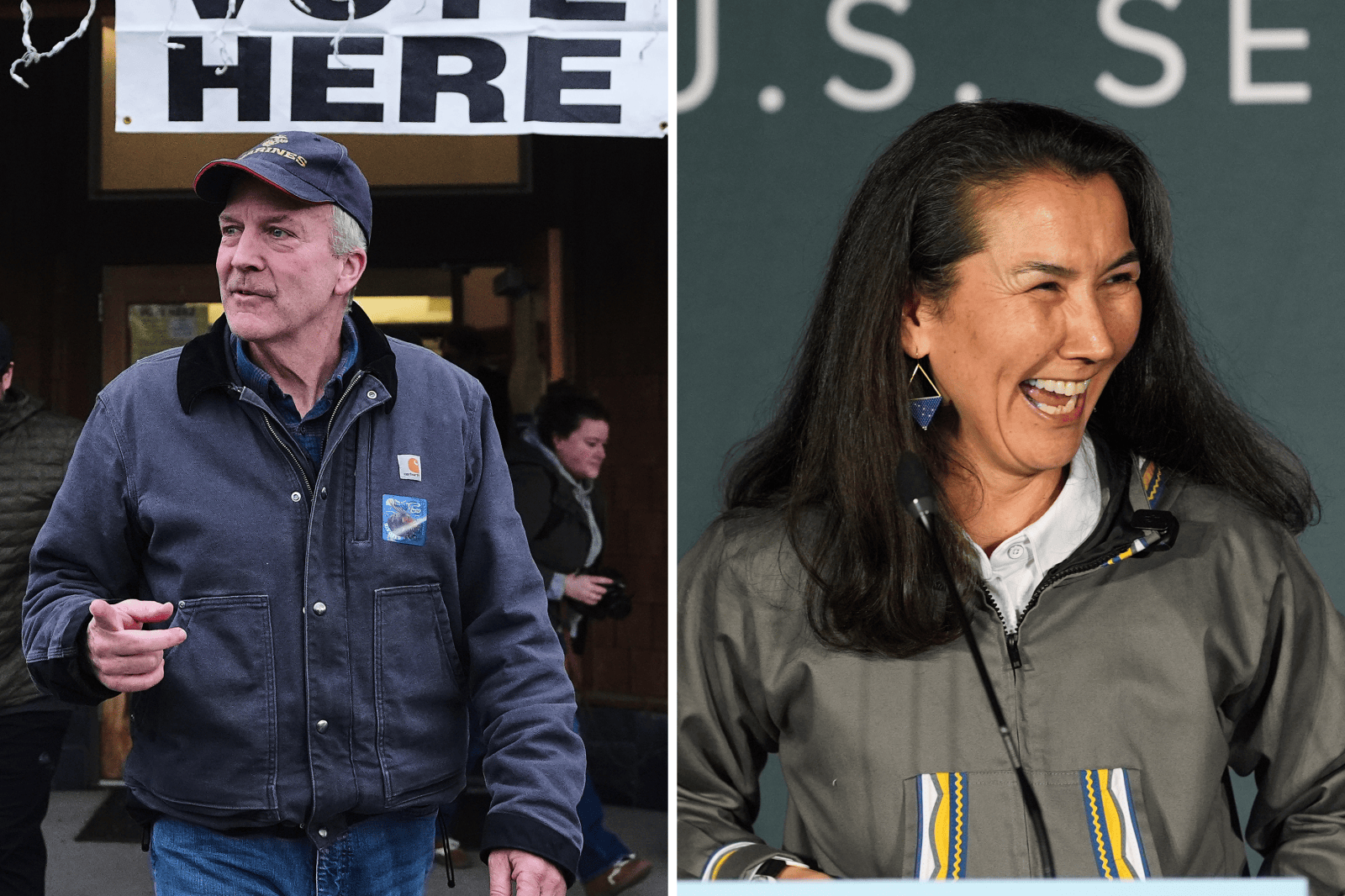
Alaska’s U.S. Senate race remains unresolved, with the outcome potentially influenced by a second candidate named Dan Sullivan on the ballot. As of November 8, the vote count had not progressed since November 4.
Out of 215,906 counted ballots, Democrat Mary Peltola leads Republican Senator Dan S. Sullivan by 637 first-choice votes. Neither candidate has surpassed the 50% threshold. If no candidate reaches this mark by November 18, the state will count voters’ ranked choices.
Daniel J. Sullivan Jr., a candidate from Petersburg with the same name as the senator, received 3,600 votes. This support exceeds Peltola’s lead by more than five times. State data reveals that most of Daniel J. Sullivan Jr.’s voters listed Peltola as their next choice over Senator Sullivan.
The election process has sparked legal disputes in Alaska. On November 1, a federal judge dismissed a lawsuit from the Justice Department aimed at preventing Peltola’s victory, concerned about voter confusion between the two candidates named Sullivan. State officials argued that the ballot was designed to reduce confusion.
Governor Mike Dunleavy has initiated an investigation into allegations that Peltola’s supporters encouraged Daniel J. Sullivan Jr. to enter the race, which both deny. Additionally, a measure to repeal ranked choice voting is still being counted on the ballot.
The state possesses around 51,000 uncounted early and absentee ballots. Additional mail ballots may still arrive. If no candidate reaches 50% after all votes are counted, the state will then consider second-choice votes on November 18.
The Ballots Remaining
Newsweek’s analysis of the ballots as of November 4 indicates that several ballots remain uncounted. The unscanned early and absentee ballot numbers exceed those reported received by the state. Any rejected absentee ballots will be excluded from the count, though the total may increase with more incoming mail.
There are 10,528 absentee ballots dispatched but not returned. Domestic ballots are accepted through November 13, and overseas ballots through November 18.
Understanding the Math
The state has counted 215,906 ballots, with rankings available for 204,530, processed by scanning machines. Approximately 11,400 ballots, mostly from rural precincts, were hand-counted but their rankings remain unpublished. Newsweek estimated second-choice movements based on available rankings, applying these to full totals.
Ranked choice voting works in elimination rounds. The candidate with the fewest votes is removed, and votes transfer to the next preferred candidate. Alaska will conduct this count on November 18. Newsweek’s estimates suggest the following:
- Write-ins, accounting for around 700 votes split evenly, make a negligible impact.
- Daniel J. Sullivan Jr. drops next, with 3,600 votes, directing about 1,040 votes to Peltola, 590 to Senator Sullivan, and 650 to Gerald Heikes. Around 1,320 didn’t rank another candidate.
- Gerald Heikes, placing third, is then eliminated. His 5,500 votes include new picks from Sullivan Jr. to Heikes. This results in approximately 2,380 votes for Senator Sullivan and 960 for Peltola. About 2,160 rank no additional choice.
Estimated final round: Senator Sullivan potentially has around 105,290 votes, with Peltola close at 104,960. This suggests Senator Sullivan leads by about 333 votes. These are Newsweek’s estimates, not official numbers.
With further results anticipated soon, roughly 51,000 uncounted ballots determine each candidate’s needed share based on state counts and estimates. Achieving an outright win requires leading in first choices, making ranked choice unnecessary. Separate percentages apply post-ranked choice to Peltola and Senator Sullivan. If 10,000 mail ballots arrive timely, the thresholds for outright victory adjust to 57% for Peltola and 58% for Sullivan.
In summary, if remaining ballots are split evenly, Senator Sullivan maintains a slight lead. Peltola requires about a 0.7-point margin to change her position.
State data shows that counted early and absentee ballots gave Peltola around 56.5% of first choices, increasing to 58% after ranking. Late-arriving ballots may differ, providing a benchmark rather than a prediction.
For inquiries on this story, contact Newsweek editors: Steven Frank and Oliver Pritchard.
Leave a Reply