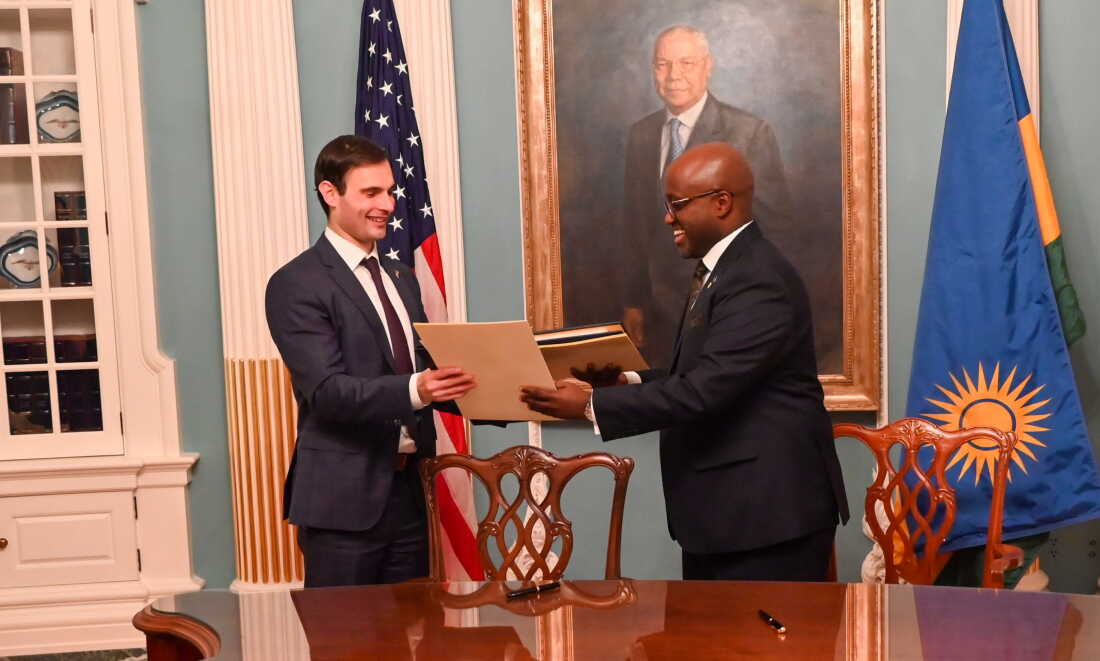
In December, senior U.S. State Department official Jeremy Lewin met with Rwanda’s Foreign Minister Olivier J.P. Nduhungirehe to sign a multi-year Memorandum of Understanding on global health cooperation. This was part of the Trump administration’s ‘America First Global Health Strategy.’ The administration marked October 1 as a new beginning for global healthcare, aiming to change how the U.S. funds health initiatives in low- and middle-income countries.
New Strategy Overview
The ‘America First’ strategy insists that the U.S. should benefit from its health investments. It aims to gain access to local minerals and a commitment from other governments to invest their own resources. Countries must sign an agreement specifying each side’s financial commitments to receive U.S. funds. The goal is increased self-reliance among recipients, leading to reduced dependence on U.S. aid. Policy analyst Jocilyn Estes from the Center for Global Development worries about the rapid implementation of this plan.
U.S. Funding Approach
The U.S. remains the largest donor to global health programs, even after significant funding cuts and the dismantling of USAID. Previously, global health spending was seen as a tool for building diplomatic ties and global influence. Tom Bollyky of the Council on Foreign Relations explains that the new approach focuses on specific returns for the U.S., like preferential access to minerals and foreign patient data.
According to the State Department, this strategy will protect the U.S. by preventing health outbreaks from reaching its shores, strengthen international relationships, and promote American health innovations.
Participating Countries and Challenges
The U.S. has signed agreements with 35 countries for $14 billion in health investments over five years, including Nigeria, Rwanda, and the Philippines. Rwanda, for instance, will receive $157 million while contributing $70 million and sharing patient data with the U.S. However, some countries like Ghana, Namibia, and Zimbabwe have refused due to concerns over sovereignty, particularly regarding control over medical records and drug approvals.
Ghana’s President John Dramani Mahama stated that the U.S. requirements were unacceptable, and the financial offer was insufficient. U.S. funding to Zimbabwe was cut when it declined the agreement for similar reasons. Bollyky questions whether countries that refuse will be entirely cut off from assistance.
Expert Opinions
Experts agree that facilitating local responsibility for public health systems is practical. Yet, Estes believes that the rapid shift lacks the necessary planning. The initial implementation scheduled for April 2026 was postponed to October, but the fund distribution timetable remains uncertain.
Stephen Morrison from the Center for Strategic and International Studies notes the reduced U.S. aid will impact countries heavily reliant on such funds, particularly for diseases like HIV. Despite reduced funding, countries may feel compelled to participate due to the U.S.’s significant position in global health contributions.
Bollyky highlights the concern that countries may struggle to meet their financial targets and adjust to decreased U.S. funding. He observes that countries like Rwanda are already economically strained and unlikely to offset the reduced U.S. assistance.
Critics of the strategy point out the lack of stability given the swift rollout and limited time for countries to transition to self-reliance. NPR contacted the State Department, whose statement emphasized working with nations to build self-reliant health systems rather than perpetuating aid.
Leave a Reply