By Jennifer De Pinto and Fred Backus
Most Americans view a free market system positively, seeing capitalism as preferable to socialism. Despite this belief, many find it increasingly difficult to achieve financial security, purchase homes, and raise families compared to previous generations. Younger people especially feel that opportunities are dwindling.
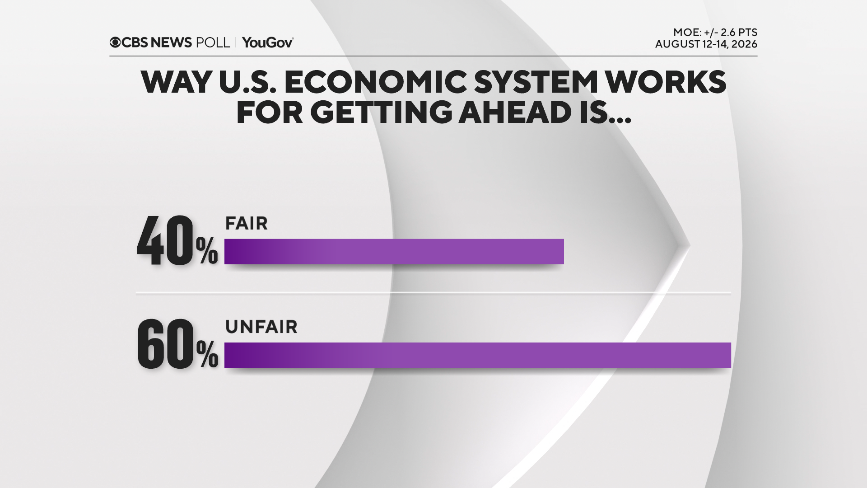
Many Americans consider the current economic system unfair regarding advancement opportunities. This perception is influencing political dynamics, particularly in the Democratic primaries. Democrats generally view socialism more favorably than capitalism. This sentiment exists amid longstanding dissatisfaction with the economic outlook, prompting some to reconsider traditional ideologies.
The broader issues of perceived income disparity are linked to opinions on fairness. Most people recognize capitalism positively more often than socialism. However, socialism is linked to thoughts on fairness within the economic system.
What does “socialism” mean?
Definitions of socialism vary widely. Common interpretations include government control or ownership. However, many associate socialism with ideals such as equality, fairness, and assistance.
Government involvement is frequently cited by Republicans and independents. On the other hand, Democrats often mention equality, fairness, and public services.
Socialism in Democratic Views
Democrats generally view socialism more positively, especially those with college degrees. This group is more aware of income disparities and less likely to perceive the Democratic Party as effective.
Young and White Democrats tend to support socialism, feeling it would improve their finances. On the contrary, capitalism is seen as detrimental.
The term “democratic socialist” resonates positively with half of the party, particularly younger and liberal members. It doesn’t evoke negativity but remains neutral for others.
When discussing the Democratic establishment, the term triggers little negativity. Democrats dissatisfied with this label often question the party’s effectiveness.
Progressiveness in the Democratic Party
Opinions diverge regarding the party’s progressiveness. Roughly half deem the party progressive enough, while others feel it should go further and exhibit more positive views on socialism. These Democrats believe the party inadequately aligns with their economic viewpoints.
In shaping economic policies, Democrats prefer bold changes over incremental shifts to feel supported by the party.
Public Perception of Political Parties
The Democrats, akin to Republicans, need to align better with public views on economic and cultural issues. Both parties find limited agreement with voters but manage at least moderate acceptance.
Republicans strongly favor capitalism, yet many, including Democrats and independents, accept government price controls. Voter agreement with Republicans remains moderate at best.
Voter Opinions on Party Effectiveness
Voters generally perceive the Democratic Party as weak and ineffective, with over a third expressing dissatisfaction with its progressivism. The Republican Party is often seen as extreme and ineffective by voters.
Many Americans, including Democrats, believe having younger individuals in office could improve governance. This sentiment aligns with a trend of younger candidates challenging incumbents successfully.
This CBS News/YouGov survey involved 2,287 U.S. adults between August 12-14, 2026, aiming for national representation across demographics. The margin of error is ±2.6 points.
Leave a Reply