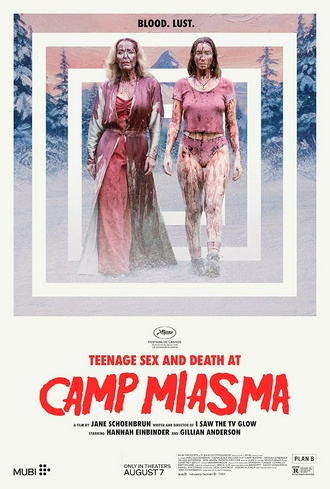
The opening credits of Teenage Sex and Death at Camp Miasma provide a narrative. A 1980s teen slasher film named Camp Miasma became a major hit, leading to several sequels. Some of these went straight to video. The film achieved cult status with character trading cards, an arcade game, a dedicated fan base, and even an attempted Quibi adaptation. Over time, it faced criticism for its portrayals of trans characters and teenage sexuality.
Eventually, the studio decided to reboot the series, selecting a director known as Kris, who identifies as queer. This is handled with wit, echoing the path of many horror franchises that affected millennial audiences, like the Sleepaway Camp series or Friday the 13th. Many cinephiles, including filmmakers, cherish and critique these series for their portrayal of sex, race, and gender, despite their sometimes problematic elements. Discussions by bloggers and critics are prevalent, exploring these films’ impact on personal identity.
Jane Schoenbrun, both writer and director, excels at capturing the influence of screen-based media on individual perceptions. Their prior film I Saw the TV Glow served as an allegory for trans identity and detailed the fascination with long-running TV shows like Buffy the Vampire Slayer and The X-Files. Before that, We’re All Going to the World’s Fair explored internet memes from a bygone era.
With Teenage Sex and Death at Camp Miasma, Schoenbrun ventures into large-screen cinema. The character Kris, aware of the studio’s intent to ease the franchise’s issues relating to LGBTQ characters, aims to subvert expectations. However, Kris’s plan is somewhat vague due to her complex intellectualization of horror themes. Kris’s approach involves engaging Billy (played by Gillian Anderson), who was the ‘final girl’ in the original film and now lives in isolation at the original filming location. The hope is to involve Billy in the reboot or gain insights into the series, driven by Kris’s fascination with Billy’s performance in her pivotal scene.
Leave a Reply