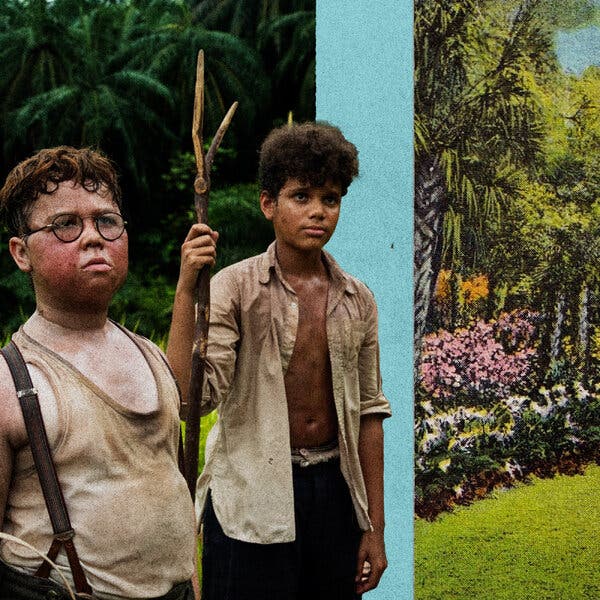
In our school years, Lord of the Flies by William Golding was a constant presence. The novel, backed by its Nobel-winning status and concise length, remains on shelves. However, its influence seems to have waned with time.
Many novels from the 1950s struggle to resonate in today’s fast-paced world. The dystopian view of barbarism in Lord of the Flies struck a chord in 1954. Yet, against the backdrop of modern challenges, its themes might feel outdated. For those growing up with stories such as The Chocolate War or The Hunger Games, Golding’s work may appear too simplistic.
Now, amidst more violent times, Netflix presents a new adaptation by Jack Thorne, known for “Adolescence”. This raises the question: Does Golding’s tale still hold relevance?
The novel’s portrayal of savagery feels less potent today. Its success has spawned countless adaptations that have shaped cultural narratives. As Drew Basile suggests, if Robinson Crusoe inspired many islands, Golding has created an archipelago of darker themes. This saturation leaves it struggling to captivate modern audiences.
Despite not everyone having read Lord of the Flies, its ideas are deeply rooted in culture. This legacy is evident in media across various forms: graphic novels like “Plutona,” video games such as “DayZ,” and numerous shows and books. Stephen King’s works reflect significant influence, with parallels drawn to “The Long Walk” and repeated motifs like Castle Rock, a nod to the fortified position in Golding’s story.
Leave a Reply