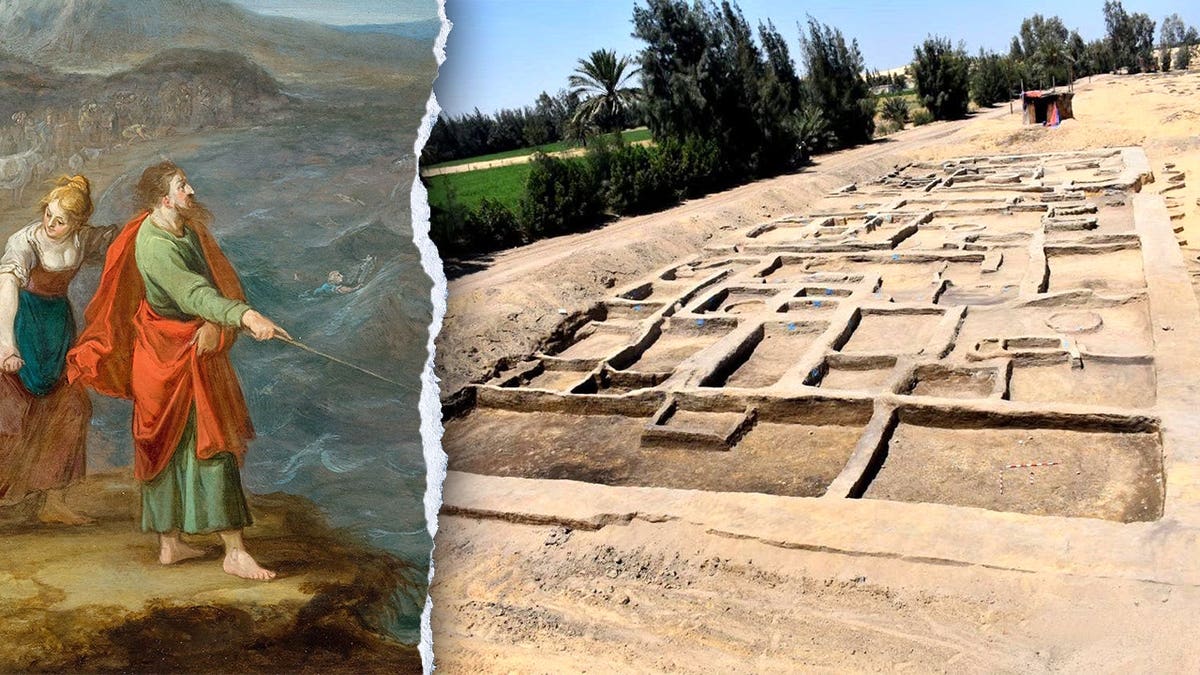
Archaeologists in Egypt have unearthed an ancient settlement from the Second Intermediate Period, a time that has long sparked discussions concerning the historical backdrop of the biblical Exodus. This discovery emerged from the Tell el-Koua site in the Wadi Tumilat region, a historical pathway connecting the eastern Nile Delta to Egypt’s frontier.
The Egyptian Ministry of Tourism and Antiquities announced this significant find in late June. The site includes tombs from the 15th Dynasty and evidence indicating continued occupation into the 18th Dynasty, marking the transition from Hyksos rule to the New Kingdom.
The Hyksos were rulers in northern Egypt around 3,600 years ago, before the Egyptians drove them out.
While the timing and occurrence of the Exodus remain subjects of debate among biblical scholars, some propose that the Hyksos period may provide a historical framework for the biblical narrative. At the site, archaeologists uncovered 10 mudbrick tombs, remains of homes, ovens used for production, grain storage silos, and a walled neighborhood from this era.
Among the findings were scarab amulets, bronze tools, pottery, alabaster cosmetic containers, and human remains, as well as animal bones likely related to meals and funeral offerings. These discoveries, reported by the Egyptian Ministry of Tourism and Antiquities on June 29, followed extensive excavations at the Tell el-Koua archaeological site.
Additionally, a residential complex measuring approximately 98 by 197 feet was uncovered, featuring remains of large halls and rooms, kilns, and grain storage silos just east of the settlement.
For the first time at this location, archaeologists identified human burials outside of the traditional mudbrick tombs. Some burials were in a crouched position, a unique practice warranting further research.
The pottery assemblage analysis indicates the site’s intensive daily use, with tableware being the most prevalent, followed by cooking vessels. Minister of Tourism and Antiquities Sherif Fathy stated that these findings suggest the site operated as a cohesive community with residential areas, storage facilities, production zones, and burial grounds.
This discovery, dating back to a period integral to discussions on the biblical Exodus, showcases the collaborative efforts of Egyptian and international archaeological teams in revealing more of Ancient Egypt’s mysteries.
Moreover, the current find follows notable discoveries from Egypt’s Second Intermediate Period, including a 3,600-year-old pharaoh’s tomb unearthed near Abydos last year.
Leave a Reply