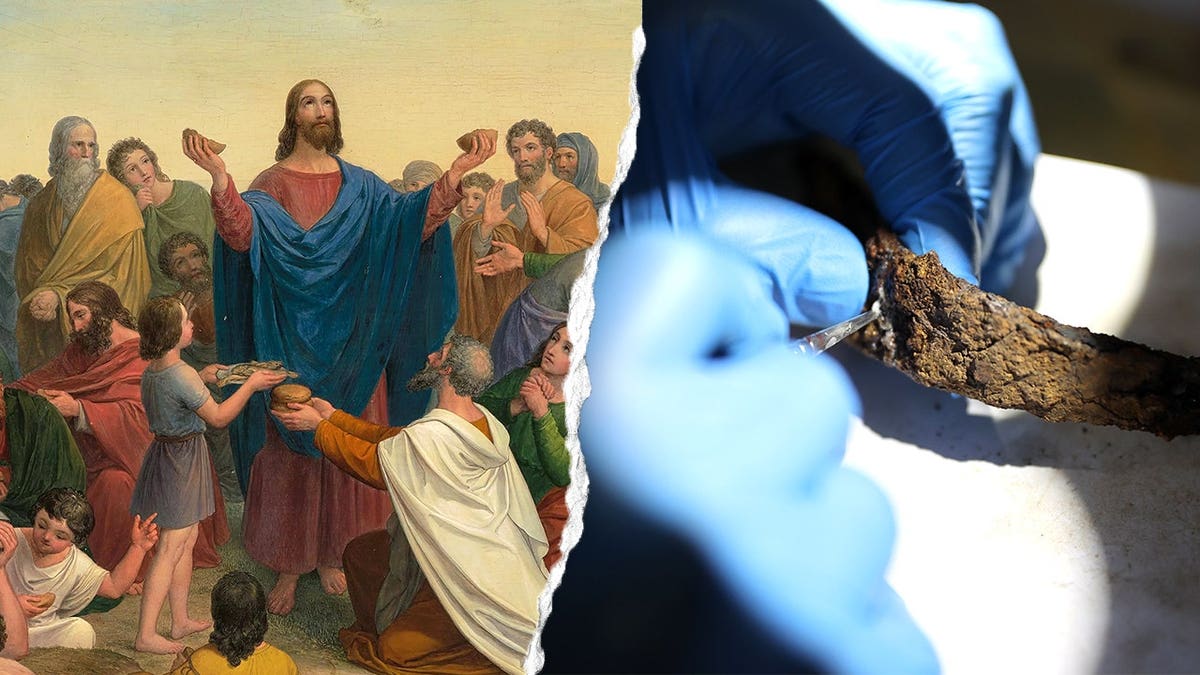
Archaeologists in Turkey uncovered a Christian amulet dating back 1,500 years. This discovery, featuring a paper-thin sheet of gold, occurred at the Türkmen Karahöyük site in Konya, central Turkey, as reported by Turkish state media outlet Anadolu Agency.
An international team of approximately 60 researchers, representing 13 countries, participated in the excavation. This amulet, dating from the fourth or fifth centuries A.D., offers insights into a formative period in Christian history.
The Amulet’s Significance
The copper case of the amulet contains a 0.1-millimeter gold sheet, which likely bears a passage from the Bible, according to reports. However, the specific passage remains undetermined. The amulet is small, dark, and heavily corroded, requiring careful examination and cleaning by researchers.
Michele Rüzgar Massa, co-director of the excavation, noted that such amulets are rare. Only one similar amulet was found in Germany. Massa suggested the amulet might have belonged to a child, comparing it to an evil-eye charm.
Other Findings at the Site
Besides the amulet, archaeologists unearthed older artifacts. These include a stone seal inscribed with hieroglyphic Luwian symbols, dating back to about 1500-1400 B.C. The Luwians were ancient inhabitants of Anatolia during the Bronze and Iron Ages.
Massa explained the seal’s name, “Kurunti-ziti,” connects to Kurunta, a significant deity in the Hittite world. “This person did not hold a very high-ranking position,” Massa noted, indicating a bureaucratic hierarchy.
The team also found two copper seals and a clay seal impression, emphasizing the site’s historical significance as a major administrative center.
The Importance of Türkmen Karahöyük
Deputy excavation director Hüseyin Erpehlivan described Türkmen Karahöyük as an essential site for Anatolian archaeology. Located in Konya, a central region of Anatolia, it serves as a cultural intersection point.
“We are investigating a multilayered settlement,” Erpehlivan stated, “spanning from the Late Hellenistic period through the Iron and Bronze Ages, and even earlier.” This highlights the site’s significance across various historical periods.
Recent finds with biblical connections in Turkey include a 2,500-year-old marble statue from Sardis and an ancient mosaic at İzmir’s Smyrna site.
Leave a Reply