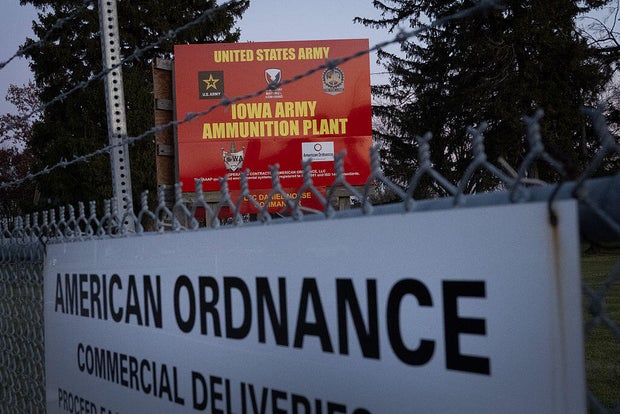
The U.S. Army is moving ahead with plans to detonate several tons of unstable explosives at a munitions plant in Iowa. This decision comes despite a federal court order that halted these plans indefinitely. The Army argues that the potential risk of the explosives detonating on their own justifies this action.
According to recent court records, the Department of the Army plans to utilize an emergency munitions and explosives exclusion from the Environmental Protection Agency’s permit. This exclusion would allow a controlled detonation, which the government believes necessary to avoid unexpected explosions.
Last Friday, a federal court suspended the Army’s planned detonation of explosives containing lead azide at the Middletown, Iowa plant. The suspension followed community concerns over the potential spread of toxic lead particles into Iowa and Illinois.
The Army had initially scheduled two controlled explosions for Friday but delayed them to Monday before the court intervened. The 8th U.S. Circuit Court of Appeals granted an emergency request to pause this plan after environmental groups filed a lawsuit.
Army’s Rationale and Public Safety Measures
The military stated its collaboration with the Department of Health and Human Services and the EPA to carry out the detonation as safely as possible.
“Officials have been meticulously planning for this event since March, and all agencies involved are prepared to take the most extreme mitigation measures available,” the Army’s statement said.
The Army emphasized that a controlled detonation would occur before temperatures drop below 30 degrees. The deteriorated state of lead azide and potential crystal fractures due to temperature drop raise safety concerns.
The government asserts that a controlled explosion limits risks, such as ejected unexploded ordnances potentially exploding later. It also includes measures to reduce lead dust dispersal.
Environmental Concerns and Legal Opposition
Following the Army’s filing, the Iowa Environmental Council and Sierra Club sought to enhance their request to block the detonation. They included expert and local declarations questioning the Army’s risk assessments and potential impacts.
The Army identified 68 drums of lead azide undergoing “recrystallization” in March. These explosives are stored at the Iowa Army Ammunition Plant, a facility established in 1941 that manufactures medium- and large-caliber munitions.
Leave a Reply