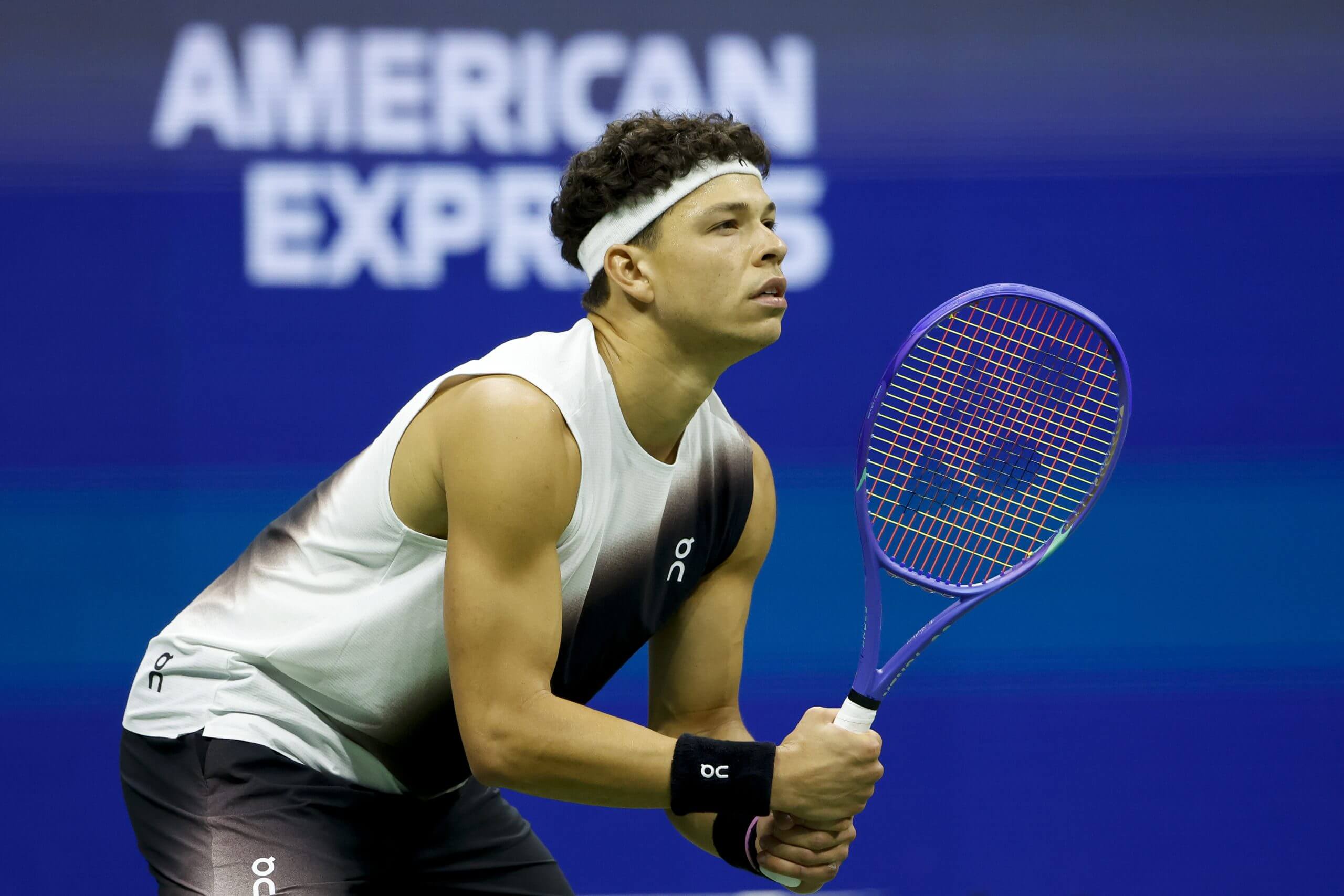
Ben Shelton, the American tennis player, faced a challenging moment during the first round at Wimbledon this year. He was leading against Otto Virtanen in a fifth-set tiebreak, thinking he should have won earlier if not for the 10-point tiebreak rule. Despite leading 8-5, Shelton lost to Virtanen 11-9.
Reflecting on this defeat, Shelton realized there were lessons to be learned. He faced mental lapses, sub-par returning, and poor point construction during key moments. At 23, Shelton showed potential by winning four titles this year, yet also experienced early exits in major tournaments, including the Grand Slams.
Shelton’s father, Bryan, a former ATP player and his coach, emphasizes a long-term perspective. The loss to Virtanen highlighted that mere talent might not suffice for Shelton to become a champion.
“I’m still a raw talent,” Shelton acknowledged, noting his need for refinement to match top players.
Shelton reached his first Grand Slam final after defeating Carlos Alcaraz in a gripping quarterfinal and overcoming Frances Tiafoe in the semis. His vulnerabilities were evident in a third-round win against Denis Shapovalov but reaching the last 16 at the U.S. Open since 2023 was noteworthy.
The Wimbledon loss came after a French Open defeat to Raphaël Collignon. Improving in New York mattered, especially given competitors like Tallon Griekspoor and Hubert Hurkacz, who challenged him early in the tournament.
Shelton’s Performance Development
Shelton believes varied opponents are key preparation. “I’ve dealt with a lefty, a big hitter, a feel guy,” he explained, implying growth in facing different play styles. His returning ability is crucial for advancing further in tennis.
While he won two 500-level ATP titles and a tournament in Stuttgart, deep runs in significant events eluded him outside of his Australian Open quarterfinal appearance. The Virtanen defeat fueled extensive training, revealing mental aspects Shelton needed to address.
After realizing he overlooked early-round opponents, he recognized his returning vulnerabilities. Wimbledon highlighted this, as opponents managed to exploit weaknesses in half of the games.
“It’s weird, but that match helped me. I’m mentally stronger because of that loss,” Shelton stated, emphasizing improved match control even under pressure.
In Montreal, Shelton defended his title, showcasing his strong serve and forehand on slow hard courts. Despite early exits elsewhere, the U.S. Open presented challenges like facing Alcaraz, a player known for resilience.
Understanding he can no longer rely solely on raw talent, Shelton aims for the U.S. Open final to be career-defining, capitalizing on lessons from his earlier Wimbledon setback.
Leave a Reply