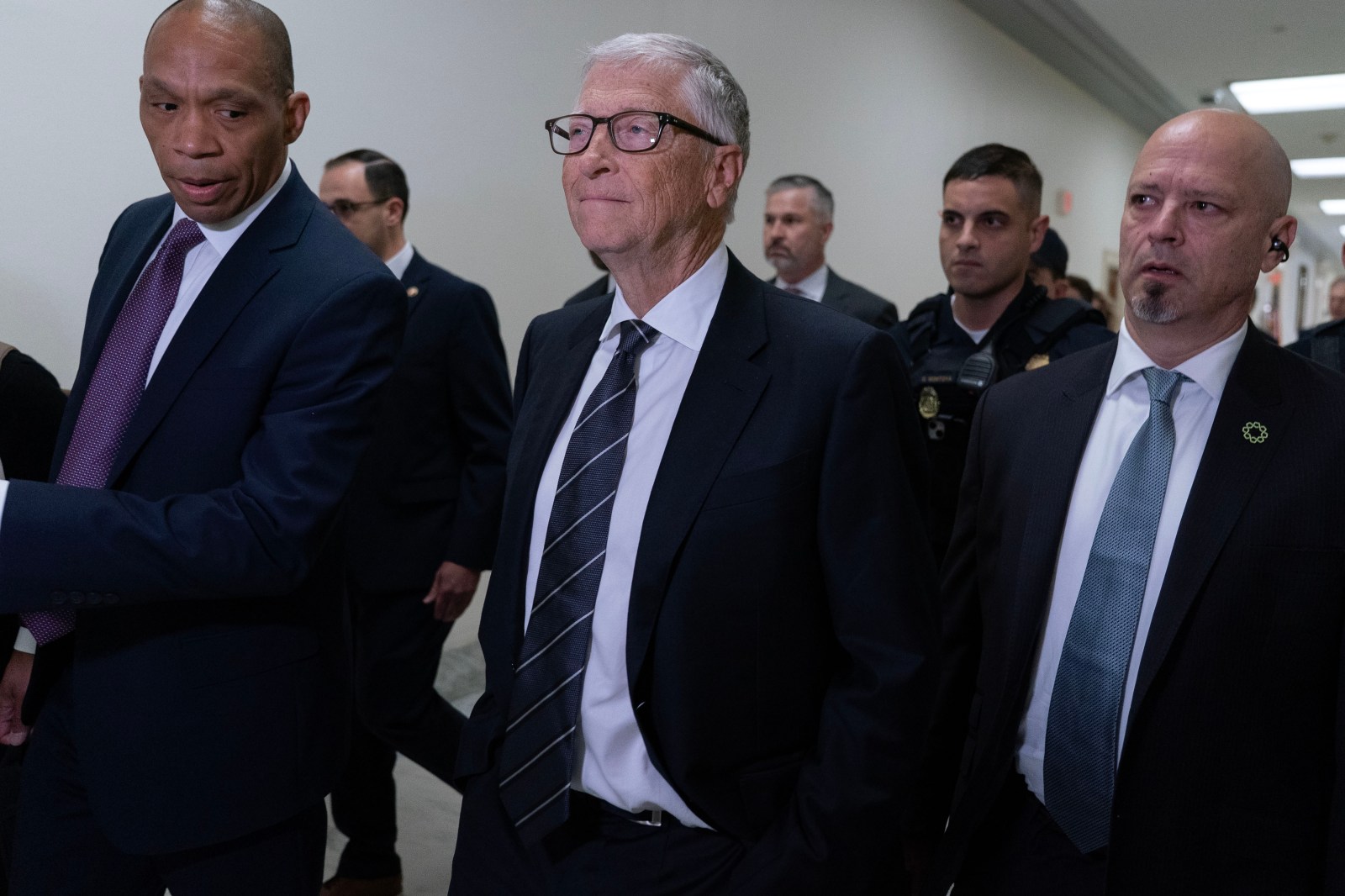
Bill Gates testified on Wednesday before a House Oversight Committee panel investigating the Jeffrey Epstein files. As a high-profile figure, his testimony is part of an effort to increase transparency and accountability in the long-standing probe involving Epstein. Gates attended voluntarily and expressed his hope to assist in achieving justice for Epstein’s victims. The closed-door interview may influence future public information releases, with transcripts and additional testimonies expected to follow.
Lawmakers shared varied perspectives on Gates’ interview. Representative Tim Burchett, a Republican from Tennessee, called the questioning intense. Democratic Representative Raja Krishnamoorthi from Illinois found Gates combative and not forthcoming, while Robert Garcia, a Democrat from California, stated that Gates answered questions but resisted on certain topics.
Bill Gates and Jeffrey Epstein: Details of Their Association
The House Oversight Committee’s review of documents related to Epstein’s network has brought renewed attention to Gates’ relationship with Epstein. Records from the Justice Department reveal that Gates met Epstein several times between 2011 and 2014. Meetings, emails about philanthropic ventures, and event photos are part of these records.
In February, Gates admitted to having extramarital affairs during a town hall at the Gates Foundation, as reported by The Wall Street Journal. He recognized Epstein became aware of these affairs but indicated they were unrelated to Epstein’s victims.
Gates has termed these meetings with Epstein as mistakes and denied awareness of Epstein’s criminal activities during their interactions. Melinda French Gates has publicly expressed her discomfort with Gates’ meetings with Epstein, citing them as a source of marital strain. She suggested these meetings contributed to their marriage’s breakdown and urged that lingering questions be addressed by those involved.
Representative Melanie Stansbury, a New Mexico Democrat, noted Gates’ admission of staying in contact with Epstein to connect with wealthy donors.
Opening Statement of Bill Gates
Mr. Chairman, Ranking Member, Members of the Committee—
Thank you for the opportunity to appear before you today.
I am here to answer your questions about my interactions with Jeffrey Epstein and to help contribute to the Committee’s important work. I support the release of all the Epstein files and sincerely hope that, through your efforts and those of others advocating on their behalf, the survivors of Epstein’s crimes can get the justice that they deserve.
At the outset, I want to state very clearly: I never witnessed nor had any indication that Epstein was engaged in ongoing criminal conduct. I never went to his island, his ranch, or his Florida home. I have never victimized anyone. While he may have sought to foster a personal relationship, I was never interested in that and never reciprocated.
I was introduced to Epstein in 2011 through people I trusted in my professional and philanthropic work. Epstein claimed he could raise billions of dollars for global health from people for whom he provided tax and estate services. I recall being aware that Epstein had faced prior legal issues, but I did not fully understand the extent of the crimes he committed. I accepted the introduction without applying the scrutiny I should have.
For almost two decades, my full-time focus has been global health and education. I have been guided by the belief that all lives have equal value, and that every child should have the chance to live a healthy life, no matter where they were born. I have committed my resources and my time to this effort, but my wealth alone cannot fill the enormous funding gap that remains. This is why trying to encourage others of significant means to invest in global health has become such an important element of my work.
My interactions with Epstein began with a limited number of preliminary meetings—three in 2011 and two in 2012—during which I talked about the goals of my work. We began more extensive conversations in 2013 and 2014. The discussions focused on identifying potential giving structures, such as donor-advised funds, and how to enroll individuals he claimed were interested in making significant contributions. I made it clear to Epstein from the outset that he would never play a role in any of the work or receive any compensation.
In 2014, after Epstein brought together a group he described as potential donors, I realized that our prior discussions—which should have translated into meaningful philanthropic support—were a dead-end. It was clear that no one in the group was interested enough to move forward. At that point, I concluded Epstein would never deliver on his promises. I told him we would go no further and stopped communicating or meeting with him. No vehicle for charitable giving was ever created and no funds were raised. Our interactions ended in December 2014, four years before new reports in the press and unsealed court documents shed light on the extent of his crimes.
It was during the same time period that an employee was in the process of transitioning out of my private office. This employee engaged Epstein to negotiate and advise him on the terms of the separation. I did not ask—nor did I want or need— Epstein to be involved in this matter. His involvement resulted in email exchanges, calls, and meetings with members of my team and me. However, the agreement we ultimately reached was not any different from what was previously agreed upon months in advance of Epstein inserting himself.
It was after this that I learned Epstein had become aware of sensitive information about my personal life, including the fact that I had been unfaithful in my marriage. These affairs had nothing to do with my interactions with Epstein, but they were painful for my family. As the public can now see, based on what has been released in the files, Epstein was working to use information about my infidelities—in addition to many lies that he layered on top—to pressure me to re-engage with him. He was unsuccessful in this effort, but it shows some of the ways he tried to leverage his interactions with me to further his agenda.
I should never have met with Epstein in the first place. Based on what I know now, I understand that even if he had delivered the new donors he promised, it would not have justified associating with him.
I see now that he sought to build an image of legitimacy around himself, using connections to reputable and powerful people to deflect scrutiny and attempt to rehabilitate his reputation. I was so focused on the possibility of raising funds for global health that I allowed that goal to override my better judgment. That is a sobering realization, and it has reinforced for me the importance of being more attentive to how access and reputation can be manipulated by people acting in bad faith.
In the work I do, reputation is the basis for developing partnerships that save lives. Meeting with Epstein was a grave error in judgment and put this work at risk. His behavior was antithetical to all my efforts to contribute to a world where everyone has a chance to live a healthy and productive life. If the time I spent with Epstein lent him any credibility, I am deeply sorry. I have learned a significant lesson and am now far more careful about who I engage with, even in a limited capacity.
I look forward to answering all your questions about my interactions with Epstein—and the topics identified in the Chairman’s invitation to appear today.
This Committee’s work is essential. It is my sincere hope that those harmed by Epstein’s crimes will receive the justice they deserve.
Thank you.
The Financial Path of Jeffrey Epstein
Epstein’s wealth came primarily from finance, working as a money manager for a select group of wealthy clients. Investigations and reports suggest he established investment firms and managed funds, but details about his financial dealings remain scarce.
Connections with influential individuals in business, politics, and finance bolstered Epstein’s status and access to elite networks. Documents from federal investigations highlight his extensive relationships across various sectors, leading to continued interest in how he accumulated and maintained his fortune.
The Circumstances of Jeffrey Epstein’s Death
In August 2019, Epstein died while in federal custody in New York, awaiting trial for sex trafficking minors. His death was ruled a suicide, yet it remains a topic of public and congressional interest as probes into his connections persist.
This article pertains to a developing news story. Further updates may follow.
Leave a Reply