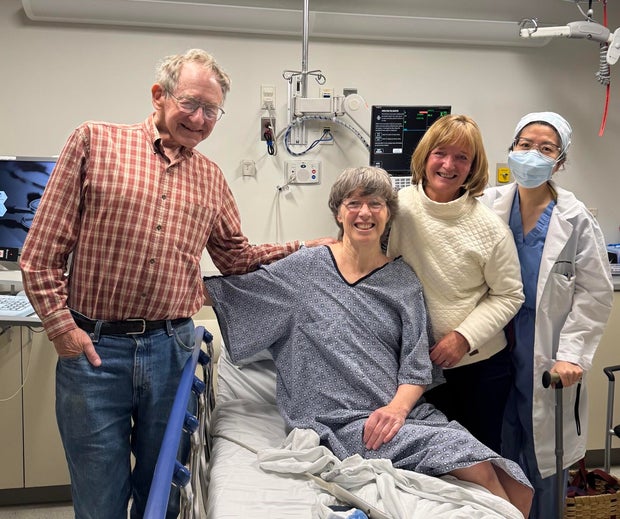
Vicky Titcomb, a 72-year-old Cape Cod bookstore owner, initially faced a routine heart scan at Mass General Brigham in March 2025 without suspicion. Healthy and planning a trip to New York City to visit her son, she viewed the scan as an errand. Yet, on her trip’s last day, a call from her internist changed everything. The scan revealed a pancreatic abnormality, suggesting probable pancreatic cancer, known for its lethality.
“My life switched in that moment,” Titcomb reflected, recalling her 2012 breast cancer diagnosis, which shook her. This time, she aimed to stay optimistic and refrained from exploring the grim prognosis online.
“I saw some terrible, terrible information about it,” Titcomb said. “I shut it out pretty much completely, because it was too much to take in.”
Developing an Aggressive Treatment Plan
Pancreatic cancer’s late-stage detection contributes to its 13% five-year survival rate. Despite medical advances, these statistics show minimal change. Titcomb also dealt with stage 1 breast cancer and an ovarian mass, which proved benign post-removal. The focus turned to the pancreatic and breast cancers.
Experts at Mass General Brigham devised a treatment plan, starting with chemotherapy and radiation to shrink the tumors. “The goal, to me, was trying to make this cancer a raisin,” Titcomb described her visualization process.
If successful, she would undergo a Whipple procedure, a complex operation removing parts of the pancreas, intestine, gallbladder, and bile duct, enabling digestive function. Only 20% of pancreatic cancer patients qualify for this due to early detection.
Coping with Multiple Treatments
Beginning chemotherapy in June, Titcomb endured eight sessions over four months, followed by three weeks of radiation and further chemotherapy. The treatments significantly reduced the tumor size, preparing her for surgery. Dr. Thomas Clancy, her surgical oncologist, praised her tolerance for the treatments and scheduled her for a Whipple shortly after her breast cancer surgery.
Performed on World Pancreatic Cancer Day, the Whipple was a success. This coincidence buoyed Titcomb’s spirits, as she believed the date reflected confidence in her recovery. Post-surgery, she quickly regained mobility and soon returned home.
The Road to Recovery
After recuperating, Titcomb continued precautionary chemotherapy. In March 2026, Clancy confirmed she showed no signs of cancer. Regular scans every three months aim to monitor her health, with hopes of minimizing her worry.
“She’s living her life. I generally tell patients at this point, ‘You’re done with therapy … you go about your days,'” Clancy said.
Resuming her life, Titcomb returned to managing her bookstore, supported by family during her treatment. Staying connected with family through calls and media, she advocates for pancreatic cancer awareness, collaborating with organizations to share her experiences.
“There are advances being made that people who’ve worked a lifetime on pancreatic cancer have never seen. I feel so lucky. The luck trumps all,” Titcomb expressed her gratitude for modern medical advancements and her fortunate timing.
Leave a Reply