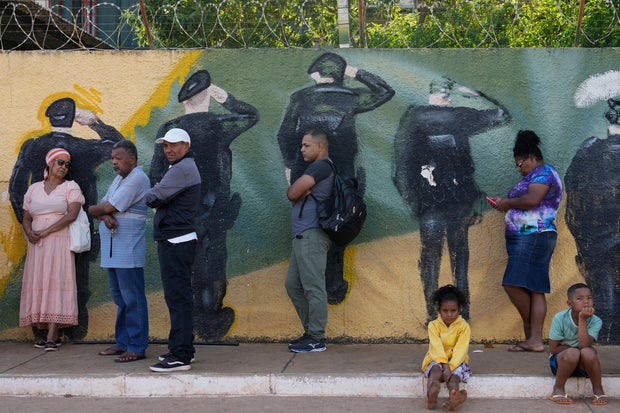
On October 25, 2026, Brazilians took to the polls for a highly anticipated presidential runoff. The contest between incumbent President Luiz Inácio Lula da Silva and challenger Flávio Bolsonaro will decide the leadership of Brazil starting in January. This election also holds significance for the United States’ influence in Latin America.
Tight Race
Both candidates require more than 50% of the votes. Polls indicated a close race. Lula is a veteran left-of-center politician, while Bolsonaro is aligned with former President Trump and is the son of former President Jair Bolsonaro, who is currently imprisoned.
Preceding Election Results
Flávio Bolsonaro had a lead of over 2.2 million votes in the initial round earlier this month. Yet, voter turnout left over 33 million of the nearly 160 million registered voters absent.
Divergent Ideologies
The candidates have differing perspectives on critical issues such as U.S.-Brazil relations, climate change, and social welfare. Bolsonaro’s victory would indicate a shift to the right, echoing recent elections in Chile, Peru, and Colombia. Conversely, Lula’s win would mark Brazil and Mexico with leadership from the left-of-center sphere.
Campaign Challenges
Lula faced difficulty due to security and cost-of-living concerns. During his first presidency from 2003 to 2010, he was well-regarded, but this election landscape is different.
Bolsonaro centered his campaign on a tough stance against crime and reducing food costs. Both candidates faced allegations of corruption involving them and their affiliates.
Bolsonaro’s Campaign Scandals
Flávio Bolsonaro admitted to taking $12 million from former banker Daniel Vorcaro for a film on his father’s life, leading to investigations for corruption, money laundering, and tax evasion.
Electoral Environment
As Bolsonaro voted, his supporters expressed disdain for Lula, chanting, “Lula, thief, your place is in prison,” while Lula’s supporters rallied in his favor.
Bolsonaro called for national change, stating, “Brazil can’t go on for another four years on its current trajectory.” Lula countered by portraying Bolsonaro as a potential threat to democracy, promising to seek amnesty for his father if elected.
Lula’s Strategic Incentives
Lula focused on attracting undecided voters with substantial incentives, such as a debt relief program for small businesses and proposing free weekend public transportation. The Senate’s support for ending the six-day workweek was also seen as a strategic win.
Lula expressed gratitude for his support while voting in Sao Bernardo do Campo, acknowledging his past with deep emotional appeal.
Voter Sentiments
Lula’s supporters value his history of aiding marginalized communities. Luzia da Souza, a bar owner, said, “Lula is a man of the people and he knows what it’s like to be poor.” In contrast, Bolsonaro’s supporters, donning yellow and green jerseys, sought a break from high taxes and mentioned past corruption associated with Lula’s party.
Critical Turnouts
Voters like Kelvin Gomes Pimental, initially in favor of another candidate, played a deciding role. Concerned about past actions by the Bolsonaro family, Gomes leaned toward Lula.
Not all voters were swayed. Diogo Furtado, who abstained in the first round, planned to cast a null vote, expressing dissatisfaction with both candidates.
Transportation Issues
In the state of Bahia, critical for Lula, public transportation disruptions threatened voter turnout. Authorities detained the mobility secretary in Salvador, implicating Workers’ Party supporters.
Lula called for respect for democracy, demanding an extension of voting hours. The Electoral Court was analyzing the situation, but Bolsonaro refrained from immediate comment.
International Influence
Lula criticized U.S. President actions for their potential impact on Brazilian elections and export tariffs, further complicated by U.S. classification of drug-trafficking groups.
Flávio Bolsonaro valued his connections with the Trump administration, emphasizing better trade deals, particularly in rare minerals.
Voting is conducted electronically, with results expected swiftly after polls close at 5 p.m. Brasília time.
Leave a Reply