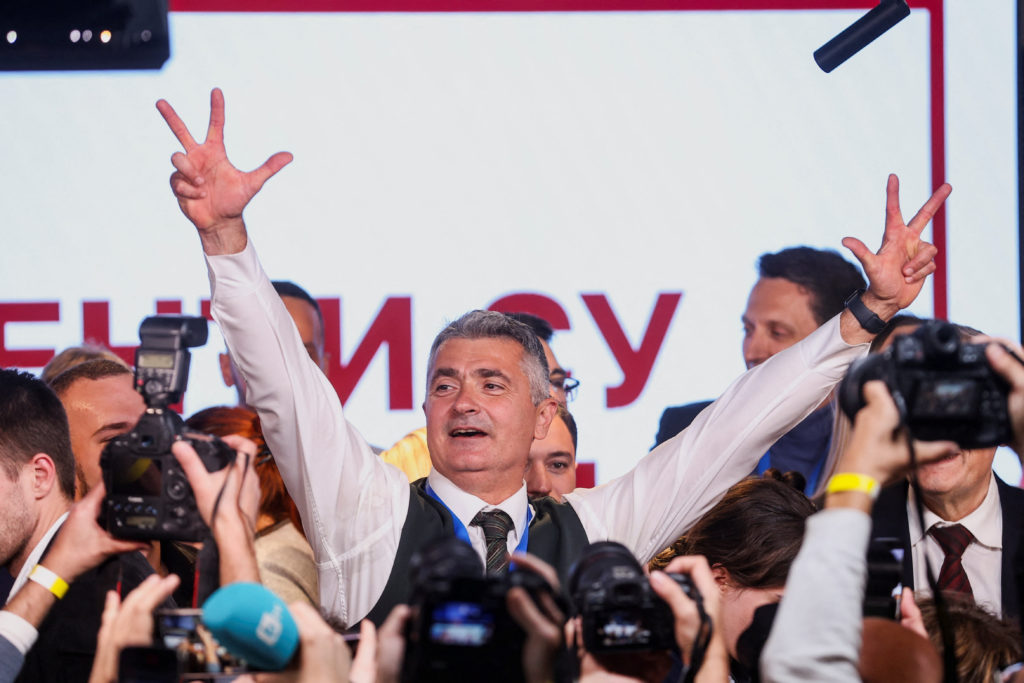
The political landscape in Serbia has shifted, with Aleksandar Vucic, a leader who dominated the country for 14 years, conceding defeat in an election. This election positioned him against a student-led opposition movement that has been challenging his government for the past two years. This marks a significant change in this Balkan nation.
Crowds took to the streets of Belgrade and other cities, celebrating the results. The election featured high voter turnout, reflecting the significant tension between Vucic’s right-wing Serbian Progressive Party and the student opposition. The students accused the government of corruption and undermining democracy. Serbia’s voters were selecting lawmakers for a 250-member Parliament.
Vucic acknowledged the student-backed opposition, the Students’ List, is projected to win between 135 and 140 seats, with his SNS party expected to secure around 105. He attributed the loss to media influence and outside interference by unspecified European countries and an “American deep state.” The Students’ List secured approximately 2.2 million votes compared to the SNS’s 1.7 million.
In Belgrade, supporters of the Students’ List celebrated by driving through the city, honking and chanting, “Aleksandar is gone.” Crowds quickly dismantled tents from a pro-Vucic camp in central Belgrade. The election outcome was announced shortly after the polls closed, despite growing tensions throughout the day. Special police forces maintained a presence around the central election commission headquarters.
Following a concrete canopy collapse at a Novi Sad train station in 2024, protests erupted over alleged corruption, cronyism, and graft, sparking the youth movement. One protester, Dijana Hrka, whose child died in the tragedy, expressed her relief at the election outcome and called for accountability.
While Vucic maintained significant support, seen by some as a leader who could navigate global uncertainties, the student movement’s non-partisan approach resonated with many disillusioned voters. The Students’ List did not include university leaders on the election list. Instead, it comprised candidates from various sectors such as the arts, sports, and agriculture.
Students campaigned vigorously, using direct engagement methods to connect with rural voters, which are typically Vucic’s strongholds. The victory in Serbia mirrors a similar student-driven shift in Hungary against Viktor Orbán’s government and could impact wider European political dynamics.
The election saw a voter turnout close to 70%, an unprecedented level since 2000. Serbians, including those in the global diaspora, showed strong engagement. Elections in recent years have been scrutinized for irregularities, with this vote closely watched by the EU. Observers reported attempts to influence voters through irregularities such as photography of ballots and potential vote buying.
EU monitors expressed concern about election conditions amid reports of surveillance and media control. Violence marked local elections earlier this year, and previous parliamentary votes faced allegations of fraud. A healthy democracy relies on a free press and open discourse, underscoring the importance of reliable journalism.
Leave a Reply