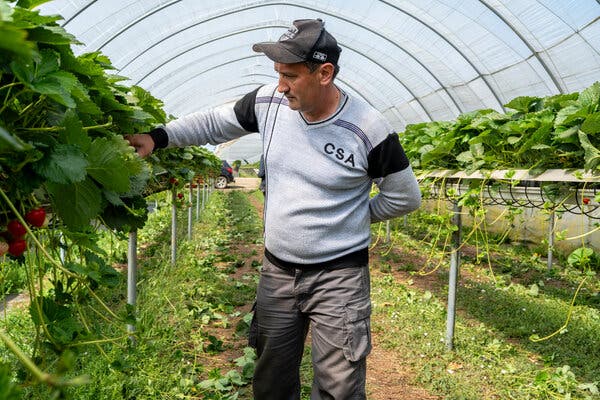
A decade has passed since Brexit, and today, most of Britain’s seasonal farm workers hail from countries like Kyrgyzstan and Tajikistan. Their presence is crucial, as agricultural leaders assert that without them, numerous farms would struggle to survive.
Shukrat Djuraev, working in Homefield Farm located in Kent, England, illustrates this dynamic well. Originally from Bukhara, Uzbekistan, he is among thousands of seasonal workers essential for bringing British produce to market each year. Despite being over 3,000 miles from home, Djuraev finds comfort in his work in a large greenhouse tunnel, expressing his satisfaction with the steady and calm work environment.
Before leaving the European Union, Britain relied heavily on Eastern European workers for farm labor. Brexit changed this, ending the right for many of these workers to work in the UK. Many voters anticipated a reduction in foreign labor, yet British farms adapted by sourcing seasonal employees from Central Asia.
These workers now enter the UK on six-month visas to bridge labor gaps. Immigration was a central issue during the Brexit vote, with proponents assuring that exiting the EU would enable Britain to regain border control. A decade later, immigration continues to be a pressing political issue, now challenging the Labour Party’s governance.
Nigel Farage, a leading Brexit advocate, and his party, Reform U.K., have surged in political influence. They now dominate opinion polls and have made notable gains in recent local elections. Their rise has rattled Labour, culminating in the resignation of Prime Minister Keir Starmer, announced this past Monday.
Leave a Reply