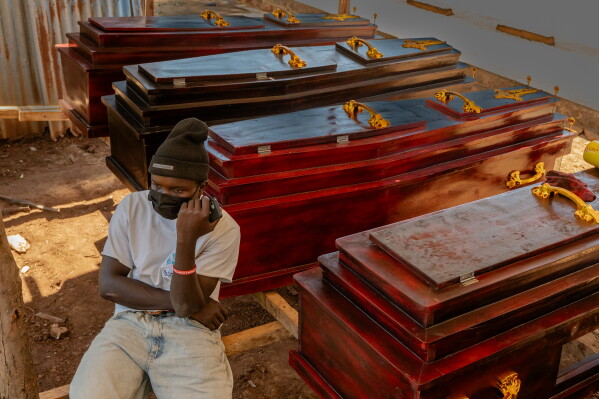
Boon-dee-BOO-joh. Bundibugyo, a mountainous district in western Uganda, is home to roughly 200,000 people. Many are cocoa farmers navigating the steep hills and valleys near Uganda’s border with Congo. Despite its scenic beauty, Bundibugyo is gaining attention for an unpleasant reason. It’s associated with the current Ebola outbreak that has affected hundreds of people in eastern Congo, with 160 suspected Ebola deaths reported in two provinces.
Ebola Virus Type Discovered in 2007
The name Bundibugyo previously emerged in 2007, linked to a unique Ebola outbreak in the district. Unlike the Sudan virus, named after its discovery in South Sudan, or the Zaire virus, first identified in present-day Congo, the 2007 Ebola outbreak was recognized as a new species. This type of Ebola manifested as hemorrhagic fever and remained under-researched, causing concern among specialists. Originally, it spread in Congolese villages before being identified as the cause of illness among increasing numbers of people.
The 2007 outbreak resulted in 37 deaths but was contained by the end of that year. In 2012, a smaller outbreak occurred in northeast Congo. Early detection allowed for swift public health responses. Dr. Tom Ksiazek, a virologist at the University of Texas Medical Branch, played a role in the initial identification of the Bundibugyo virus.
Ugandans Concerned About the Name
Despite there being no current Ebola cases in Bundibugyo, the association with the picturesque district disappoints locals. Ugandan government spokesman Alan Kasujja urged global health authorities to clarify that Uganda is not the epicenter of the latest outbreak. Emphasizing the district’s beauty, he stated, “Bundibugyo is too beautiful to be the name of a disease.”
Although WHO is tasked with virus naming, the trend has been to use the location of discovery. Naming controversies arose similarly during the global mpox outbreak, as WHO aims to avoid stigmatizing communities with descriptors.
Cases in Uganda Tied to Congo
Uganda reported five cases linked to the Congo outbreak. Notably, a 59-year-old Congolese man who was treated in Kampala succumbed to the virus. Ugandan health officials identified a driver and health worker, exposed to this patient, as positive cases, along with two Congolese women who sought medical attention in Uganda.
Ugandan President Yoweri Museveni asserted that Ebola predominantly affects Congo and encouraged combating perceptions of the virus spreading in Uganda. Precautionary measures include stopping handshaking and postponing events that draw large crowds. Measures implemented also involve suspending public transport and flights between Congo and Uganda.
Contact Tracing is Vital
Heightened vigilance at all entry points is crucial, emphasized Dr. Emmanuel Batiibwe, who aided efforts during a previous Ebola outbreak in 2022. Stopping the spread into Uganda relies on contact tracing, isolating those exposed, and equipping health workers with protective gear.
The World Health Organization cites a family of fruit bats as natural hosts for the Ebola viruses. Transmission typically occurs through contact with infected bodily fluids or contaminated materials. While vaccines and treatments exist for other Ebola strains, they are ineffective against the Bundibugyo virus, making strict containment practices even more essential.
Leave a Reply