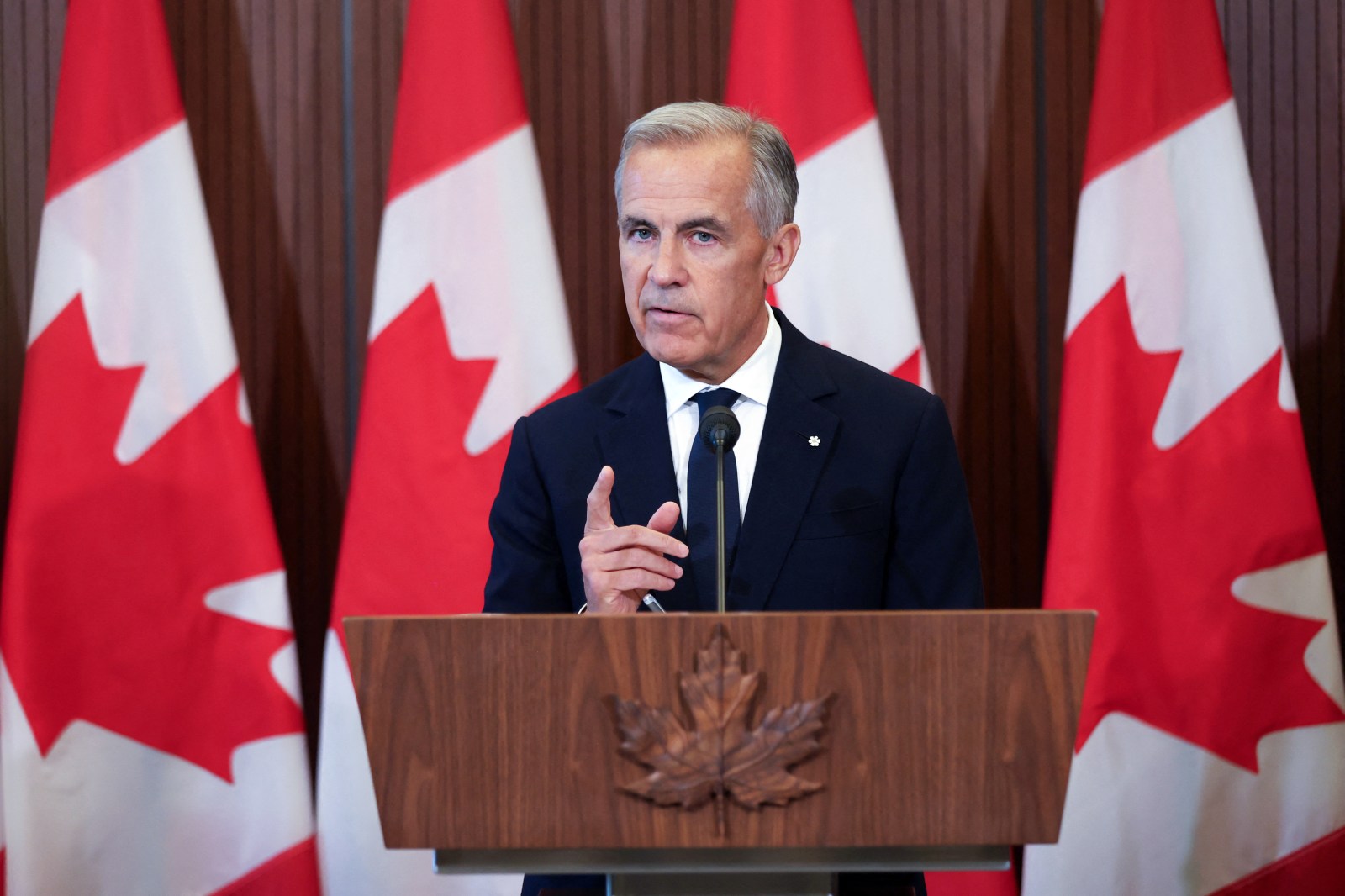
On Tuesday, Canada initiated retaliatory tariffs on U.S goods, escalating tensions between the two longtime allies. This action jeopardizes billions of dollars in goods and affects exports from multiple U.S. states.
The trade negotiations collapsed in late August when President Donald Trump implemented a 50% tariff on $20 billion of Canadian products entering the U.S. This is in addition to existing 25% tariffs on Canadian cars, trucks, metals, and lumber.
Prime Minister Mark Carney responded with a promise to implement a “dollar for dollar” response. His government enacted tariffs between 15% and 50% on approximately $27.6 billion worth of American imports. The tariffs target a broad array of goods, including dairy products, agricultural equipment, and electronics.
Impact on U.S. States
The Canadian Chamber of Commerce reported that U.S.-Canada trade amounts to $1.3 trillion, with $2 trillion in annual cross-border investments, highlighting the close economic ties.
Canada serves as the primary export destination for 26 U.S. states. States near the Canadian border, such as Illinois, are heavily involved in trade with Canada. Illinois exported $75.9 billion in goods to Canada in 2025, with energy resources and raw materials being top exports.
Despite being geographically distant, Texas ranks second in trade volume due to integrated energy sectors and manufacturing supply chains, exporting $14.5 billion of vehicles to Canada out of $69 billion traded.
Overall, “energy resources and raw materials” were the leading exports from 15 states, followed by “machinery and electrical” and “chemicals.”
Potential Risks in Trade War
The tariff escalation led to bipartisan concerns in the U.S. Republican Susan Collins has criticized Trump’s tariffs, labeling them a “mistake.” Analysts from Newsweek predicted a more significant economic impact on Canadian consumers if the tariff dispute persists.
The U.S.’s larger economy allows greater production capability, making it more self-sufficient, noted Andrey Pavlov of Simon Fraser University.
Political vulnerabilities could influence the ability of leaders to endure this conflict more than their countries’ economic strengths. An Angus Reid Institute poll found that 76% of Canadians supported the cessation of trade talks with the U.S., with 62% backing Carney’s counter-tariffs.
Karl Schamotta from Corpay suggested that Canadian Prime Minister Carney might be counting on the outcome of the U.S. midterms to soften Trump’s tariff approach, paving the way for a beneficial agreement.
Midterm Election Impact
Carney’s tariffs could notably affect states considered competitive in the midterms, such as Wisconsin and Maine.
Whit Ayres, a political consultant, remarked that although the trade dispute is not a central issue nationally, it is pivotal for border states like Michigan and Maine. Ayres also said that non-border states like Texas and California, benefiting significantly from trade with Canada, could see an impact.
However, the trade issue might be overshadowed by broader concerns like inflation and national economic growth.
Further complicating matters, a Reuters/Ipsos poll indicated that 46% of Americans believe their country is largely responsible for the dispute. Meanwhile, 57% opposed additional tariffs on Canada.
The tariffs’ effect on personal finances is predicted to be negative by more people than positive. Despite these surveys, Trump intensified pressure on Canada by threatening to block Bombardier’s aircraft sales in the U.S. unless the company relocates its manufacturing facilities.
In Kansas, Bombardier’s U.S. headquarters, Republican Senator Jerry Moran expressed concern about the potential ban’s impact on his state’s economy.
Further reactions came from the International Association of Machinists and Aerospace Workers (IAM), representing numerous U.S. and Canadian Bombardier workers. The union declared opposition to the suggested ban, highlighting the economic significance of Bombardier’s aerospace supply chain.
Leave a Reply