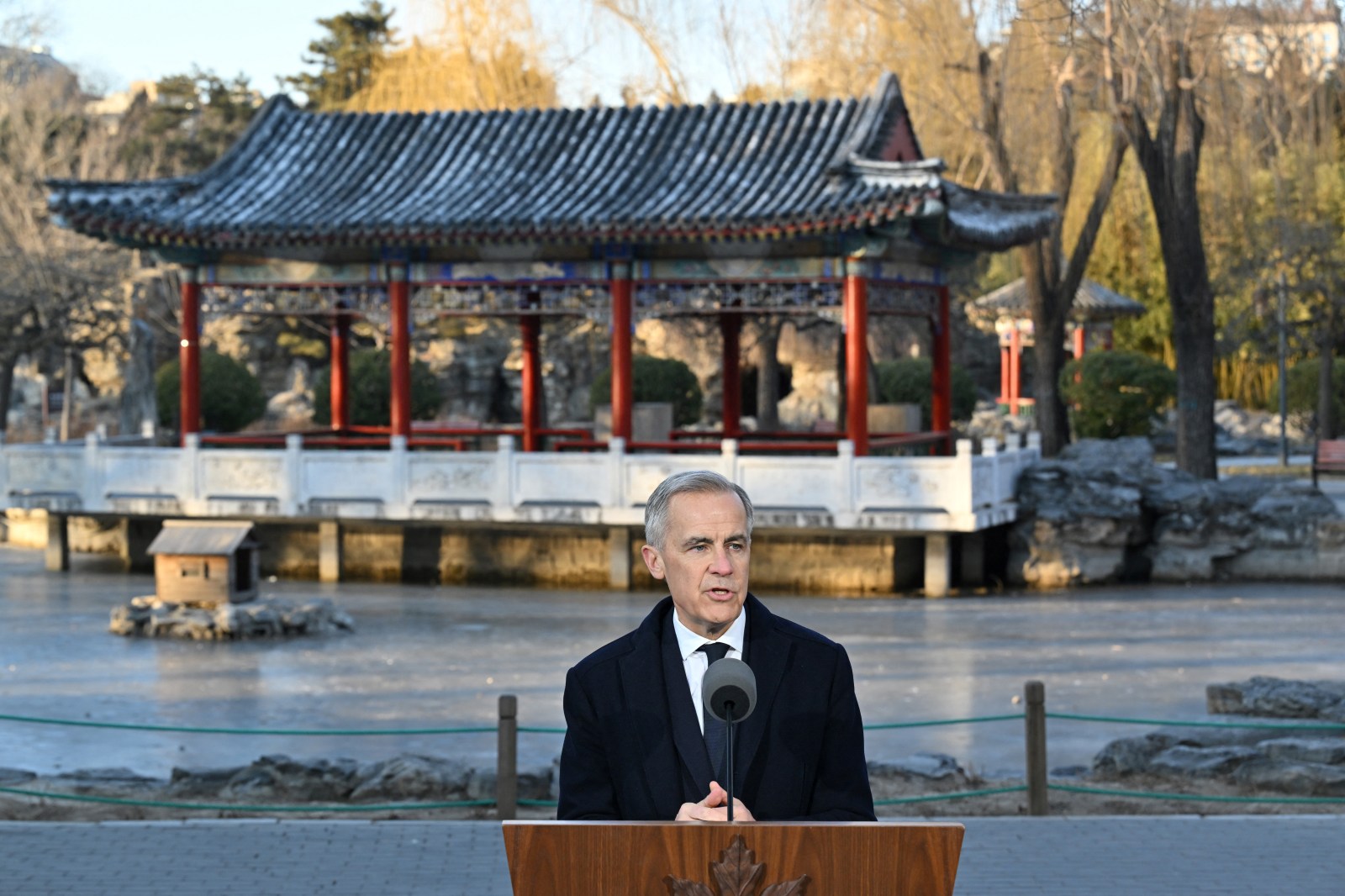
The Canadian government’s decision to significantly reduce tariffs on Chinese electric vehicles has sparked discussions. A dossier provided to Newsweek alleges that a businessman linked to China’s United Front system proposed policy changes to Ottawa before Prime Minister Mark Carney secured a deal with Beijing.
Canada decided in January to allow 49,000 Chinese-made electric vehicles to enter the country with a 6.1 percent tariff. This move replaced a 100 percent surtax that former Prime Minister Justin Trudeau imposed in 2024. The announcement came during Carney’s visit to China and was part of a larger trade agreement, including tariff relief from China for Canadian agricultural products like canola oil.
However, this decision diverges from the United States, which maintains restrictions on Chinese electric vehicles. It has heightened national security concerns in North America over technology from Chinese automotive industries.
A Canadian source provided a dossier indicating that a policy paper advocating for a “structural rethink of Canada’s 100% surtax on Chinese electric vehicles” was submitted to the Prime Minister’s Office and members of Parliament just before Carney’s trip to Beijing. The source and their association are not registered as lobbyists in Canada, based on a search in the country’s lobby registry.
Newsweek reached out to the Prime Minister’s Office for comments. The Privy Council Office responded by directing the inquiry to Global Affairs Canada, which Newsweek also contacted for clarification.
The dossier mentions Shui Shousong as the businessman involved. Shui, president of the Sino-Canada Entrepreneurs Association, known as SinoCann, has reported links to the United Front organization in China. Newsweek reviewed Chinese-language reports citing Shui’s involvement with the Chinese People’s Political Consultative Conference, a key United Front entity.
Attempts to reach Shui and SinoCann for comment were unsuccessful. The United Front Work Department, a Chinese Communist Party agency, seeks to influence non-CCP groups and overseas communities. Western governments increasingly scrutinize United Front-linked groups due to concerns about Beijing’s objectives abroad.
The Canadian source requested anonymity due to strained U.S.-Canada relations. They noted Shui’s extensive involvement with United Front activities and his appearances at events with Canadian politicians. Such events included praise from a Chinese consular official for supporting reunification, a core Chinese Communist Party goal involving Taiwan.
In August, Shui hosted the launch of a Canada-China EV association, introducing a service center aimed at creating a collaborative industrial platform between the two countries. The Canada-China Business Council, headed by Shui, organized the event, attended by Canadian parliament members, local government officials, and Chinese diplomats.
Newsweek contacted the Chinese consulate in Toronto and the embassy in Ottawa for their comments but received no immediate responses.
The source remarked that Canadian media hadn’t questioned who pushed the policy proposal to the Prime Minister’s Office.
The source characterized the situation not as a covert operation but as a potential influence channel overlooked. “This is not about a secret operation,” they stated. “It’s about unexamined access through ordinary channels by someone with publicly known affiliations, without registry or reporting, and uninvestigated by Canadian authorities.”
The debate over Chinese electric vehicles has become significant in North American trade and security discussions. The U.S. has barred Chinese EVs, citing risks to manufacturing strength and security vulnerabilities linked to connected vehicle technology. Leading Chinese EV companies like BYD have rapidly expanded internationally, heightening concerns about industrial capacities and data security in Western countries, particularly Germany.
In early September, U.S. Transportation Secretary Sean P. Duffy wrote to Ford Motor Company CEO Jim Farley, expressing concerns over Ford’s connections to Chinese companies. The letter highlighted Ford’s reliance on battery technology licensed from China’s CATL, involving Geely and other China-linked supply-chain issues.
While recognizing global competitive pressures, Duffy criticized Ford’s strategic decisions, suggesting the company was aligning with Chinese enterprises. Ford rejected this criticism, stating the letter was “wrongheaded” and reaffirming its support for U.S. innovation and manufacturing efforts.
Leave a Reply