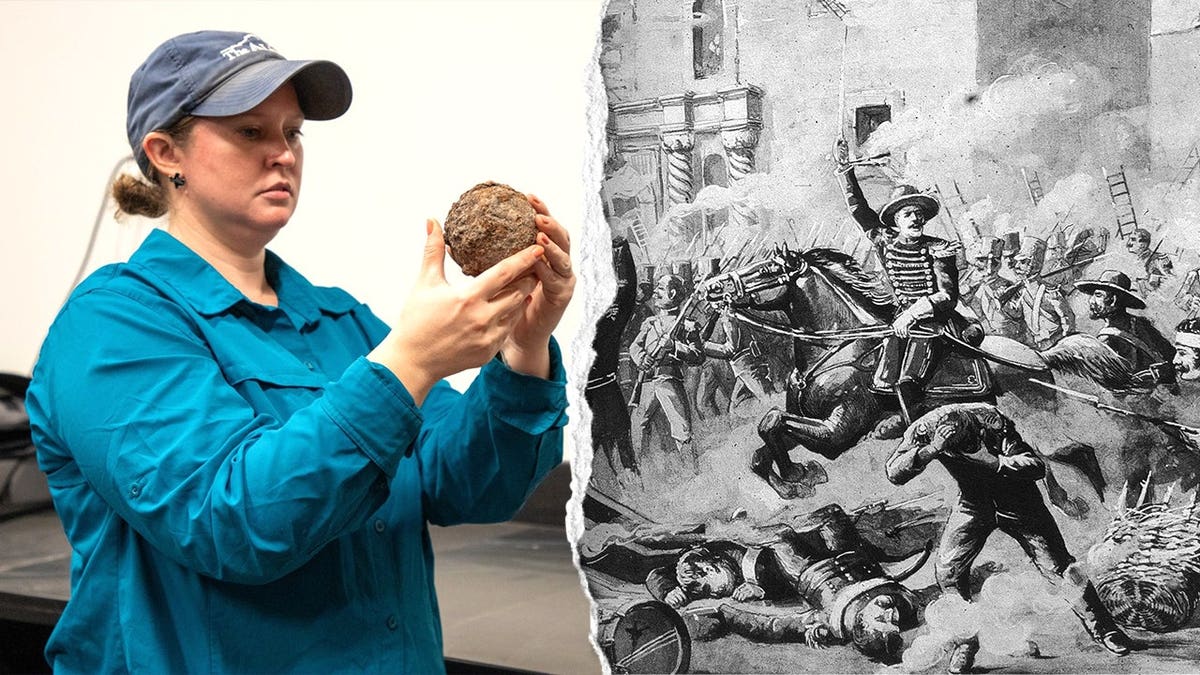
Archaeologists have made a significant discovery, uncovering a cannonball likely fired during the 1836 Battle of the Alamo. This came three months after they found a similar artifact. The cannonball was unearthed on June 2, and the Alamo Trust, which manages the Alamo Mission, announced this finding on June 16.
The Significance of the Cannonball Discovery
Found outside the northeast corner of the Alamo Church, the cannonball was located in an adjacent excavation unit where another similar artifact was discovered in March. Photos display the heavy rust on the iron cannonball, giving it an orange-brown hue. The depth at which both cannonballs were found suggests they remained untouched for nearly 190 years, according to Tiffany Lindley, director of archaeology at the Alamo.
So whenever they were dropped, the very first time—possibly in 1836—they haven’t been touched since,
Lindley stated.
Historical Context and Site Usage
The Battle of the Alamo is a critical event in Texas history, with Texian forces such as Davy Crockett and William B. Travis standing against a larger Mexican army. The discovery points to the possibility of more artifacts lying undisturbed beneath the historic site. Despite years of use by the U.S. military and commercial development affecting the area, finding these intact cannonballs was unexpected and remarkable.
The first cannonball was made of solid bronze, while this second discovery consists of solid iron, impacting its preservation. Nonetheless, it remains in good condition, and plans are in place to conserve both artifacts.
Ongoing Archaeological Efforts
Lindley expressed surprise at uncovering a second cannonball so soon. The continued excavation at the Alamo yields dozens of historic artifacts daily, enriching our understanding of the site’s history. These finds include broken and discarded items, like nails and bricks.
Although each artifact is small, every discovery contributes to a broader understanding of the site’s daily life throughout its history. Further analysis after excavation is expected to offer more insights into the lives of those who inhabited the area.
Leave a Reply