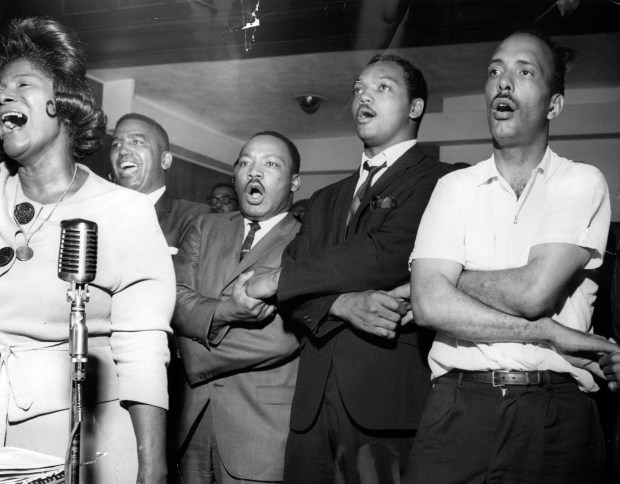
Albert “Al” Raby, born in 1933 in the South Side of Chicago, transformed his life from a school dropout to an influential civil rights organizer and educator. His journey from teaching at Hess Upper Grade Center to leading key civil rights initiatives has left a lasting impact on the city and beyond.
Raby played a pivotal role in the Chicago Freedom Movement. In 1963, he founded the Coordinating Council of Community Organizations. This group led the massive school boycott protesting segregation and overcrowding in Chicago Public Schools affecting Black neighborhoods. Three years later, he brought Rev. Martin Luther King Jr. to Chicago to protest against unfair housing, education, and employment conditions. During this time, King lived in a North Lawndale apartment for eight months.
Raby’s civil rights efforts extended to political campaigns. He managed Harold Washington’s mayoral campaign in 1983 and later became the director of the city’s Commission on Human Relations. His participation in the Illinois Constitutional Convention in 1970 and his role as the director of Peace Corps volunteers in Ghana from 1979 to 1982 highlighted his broad ambitions and global perspective.
On October 16, Raby’s legacy was celebrated with the unveiling of an honorary street sign at 6300 S. Cottage Grove Avenue. His family and admirers gathered for the event, where Mayor Brandon Johnson declared February 19th as “Al Raby Day.” The mayor emphasized Raby’s vision that every child should have access to quality education, every family should live in supportive neighborhoods, and governments should prioritize citizens’ interests.
Kathy Raby, Al’s daughter, expressed pride as the family continues his legacy through the Al Raby Foundation. They focus on community service, activism, and developing youth leadership in the city. “We just can’t believe it, it’s long overdue,” said Kathy, acknowledging her father’s deep ties to the Woodlawn area.
Chicago historian Shermann “Dilla” Thomas remarked on Raby’s influence, noting that he galvanized Chicago students to take collective action. A notable example is the famous photograph of Bernie Sanders being arrested, taken during a protest spurred by Raby’s advocacy.
The Al Raby Foundation continues to champion social justice initiatives. They recently collaborated with the Chicago History Museum to include Raby’s contributions in the “Facing Freedom” exhibit. They also run a “Family Chats” series, inviting personal narratives connected to the civil rights movement and Al Raby’s impact.
Kathy Raby’s video project “Learn With Me” further explores her father’s legacy, aiming to uncover and share inspirational stories. “My grandfather was a teacher first. He led a boycott in 1963 where 200,000 students demanded the education they deserved,” said Katanya Raby, highlighting the enduring change his actions set in motion.
Poet and Urban Gateways CEO Leslé Honoré paid tribute through a poem recognizing Raby’s dedication and lasting influence. She conveyed that Raby represented the relentless spirit of civil rights advocacy and stressed the importance of continued community engagement and dignity for all.
Leave a Reply