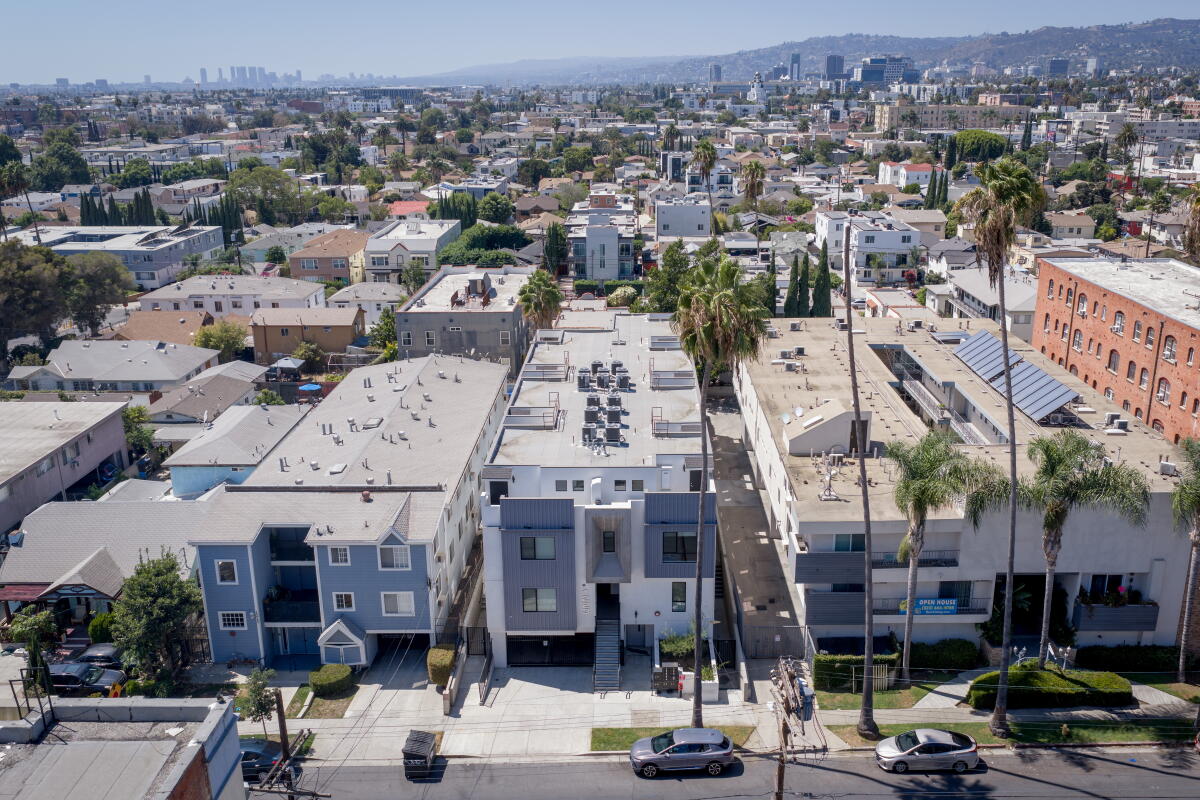
In 2021, developer Paul Schon sold a newly built 14-unit Hollywood apartment building for $6.5 million. However, the Los Angeles multifamily market saw a significant decline over the next five years. Recently, Schon repurchased the building for $4.75 million, exemplifying the market’s downturn.
Over five years, the value of apartment buildings in L.A. dropped by 30%. In 2022, the average sale price per unit was $397,289, according to Kidder Mathews, a commercial real estate firm. By 2026, that figure fell to $280,591.
Los Angeles faces a housing shortage amid calls for more construction. Mayor Karen Bass introduced measures to expedite the building process. Yet, developers, including Schon, find new apartment construction unfeasible.
Developers cite several reasons:
- High taxes reducing profits.
- Challenges in obtaining permits.
- Preference for smaller projects due to financial constraints.
The market struggles. Developers earn less, while tenants face high rents. Although rents briefly declined, demand and lack of supply keep housing prices high.
Schon commented, “People are scared to build in L.A. right now.” Properties and potential projects remain dormant, with construction at a standstill.
Darin Beebower of Kidder Mathews observed a continued decline in construction. Only 2,376 new apartment units were completed in the first half of the year, a 9% decrease from the previous year. The number of units under construction fell by 15%.
Paige Sterling, Mayor Bass’s spokesperson, emphasized efforts to alleviate developer concerns by expediting projects and cutting red tape. Despite efforts to fast-track nearly 50,000 affordable housing units, challenges persist.
Why Building in L.A. Is Challenging
Several factors affect the viability of new construction:
- High interest rates, making borrowing costly.
- Past policies like rent freezes and eviction moratoriums affecting revenue.
- The mansion tax, which imposes a tax on high-value sales, including significant multifamily properties.
Schon explained, “You’re subtracting 4 to 5% of the sale price, impacting profits.” Developers find it difficult to justify new projects to investors.
Developer Yoni Chriqui added insights, explaining that projects now fall under the mansion tax threshold. Previously, 20 to 30-unit projects are now much smaller.
Construction’s “soft costs” have grown since Chriqui began his career, from 10-12% to 20-25% of total budgets. Permit costs rise yearly, along with regulations and fees, making projects financially unfeasible.
In July, SB 79 aimed to make zoning laws more flexible near transit stops, but no proposals have been submitted under this bill in L.A.
Paul Darrow from Walker & Dunlop noted a decline in values and investor caution. Despite declines, some investors see lower prices as an opportunity to re-enter the market. “Investors are trying to figure out L.A.,” said Darrow.
Schon expressed cautious optimism about buying back his property. “I hope L.A. has bottomed out,” he said, acknowledging risks.
As land sits idle, opportunities for more housing continue unmet. Chriqui, opting for smaller developments, exemplifies this issue. He redirected projects to smaller single-family homes or reduced-unit buildings, leaving larger lots underutilized.
Leave a Reply