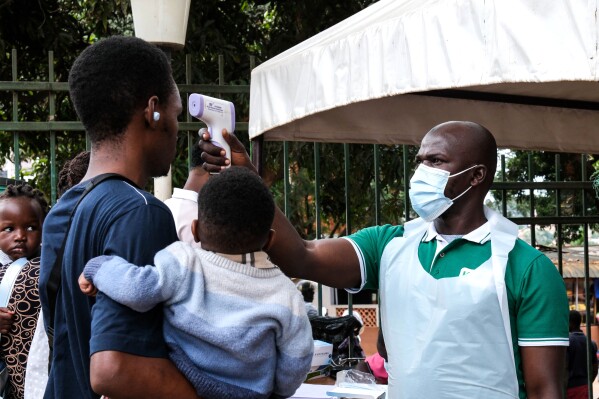
Arson attacks on Ebola treatment centers in eastern Congo highlight the challenges authorities encounter, including local community backlash, as they work to control a declared global health emergency.
Last week’s burning of centers in two towns central to the outbreak revealed anger in a region plagued by violence linked to armed rebel groups, population displacement, local government failures, and international aid cuts. Experts suggest these factors have weakened health facilities in vulnerable areas.
“A devastating set of emergencies are converging,” said Physicians for Human Rights.
Longstanding Crises in Eastern Congo
Eastern Congo has experienced attacks by numerous rebel and militant groups for years. Some groups have links to foreign countries or the extremist Islamic State group. The M23 rebels, backed by Rwanda, control parts of the region, although the Congolese government maintains a tenuous grip on the northeastern Ituri Province, the Ebola outbreak’s epicenter.
The Allied Democratic Forces, a Ugandan Islamist group linked to IS, stands out among the dominant rebel groups there, responsible for violent civilian attacks.
Doctors Without Borders indicated that recent insecurity in Ituri forced medical staff to flee, leaving overburdened health facilities and, in some areas, “catastrophic conditions.”
Displacement in Ituri
According to the U.N. humanitarian office, nearly a million people have been displaced from their homes in Ituri due to conflict. This circumstance complicates the Ebola outbreak response, which occurs amid existing insecurity, displacement, and fragile healthcare systems, said Gabriela Arenas of the International Federation of Red Cross and Red Crescent Societies.
The spread of the disease to large displacement camps near Bunia raises concerns, as are the outbreak’s implications in two other eastern provinces, North Kivu and South Kivu, which are under M23 rebel control, and in neighboring Uganda.
The Congo government, supported by some rebel authorities and a range of aid agencies, is handling the outbreak.
Impact of Aid Cuts
Health experts assert that aid cuts by the United States and other affluent nations last year severely affected eastern Congo, already grappling with multiple issues.
“The cuts reduced the capacity to detect and respond to infectious disease outbreaks,” said Thomas McHale of Physicians for Human Rights.
Congo has faced over a dozen previous Ebola outbreaks. Aid groups fighting the current outbreak lack essential equipment like face shields, protective suits, testing kits, and materials needed for safe burials of highly infectious victims.
Julienne Lusenge of Women’s Solidarity for Inclusive Peace and Development noted, “We have made requests to different partners, but we have not yet really received anything.”
Community Anger and Response Issues
Treatment centers burning in Rwampara and Mongbwalu, areas with high Ebola case numbers, exhibit community backlash complicating response efforts.
Colin Thomas-Jensen of the Aurora Humanitarian Initiative said the attacks might reflect “built-in skepticism and anger” over long-standing regional violence and government and peacekeeper failures.
Additional anger arises from strict Ebola-related burial protocols, which aim to prevent disease spread during traditional family-prepared funerals. According to witnesses and police, the first Ebola center burned in Rwampara involved local young men seeking a friend’s body, accusing the foreign aid organization of deception regarding Ebola.
Authorities in northeastern Congo have now banned funeral wakes and gatherings of more than 50 people, with armed forces guarding some burials conducted by aid workers.
Leave a Reply