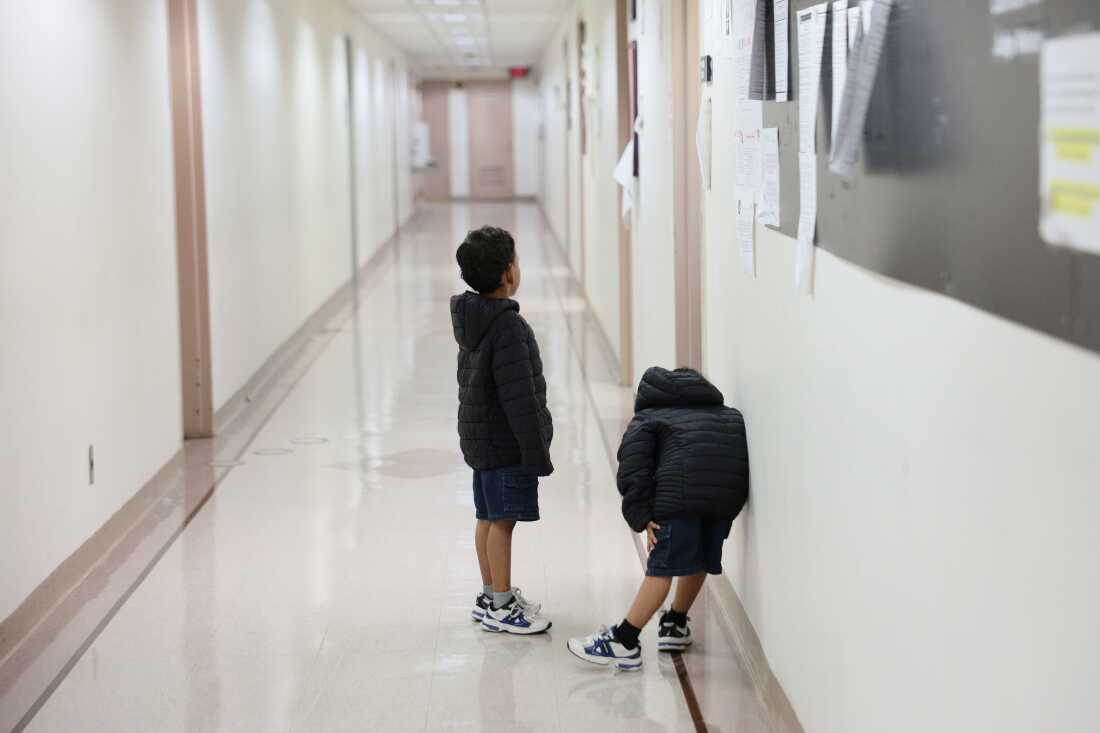
Thousands of children who entered the United States without parents or guardians face uncertainty as they may soon lose independent legal representation. On July 31, 2026, outside the Jacob K. Javits Federal Building in New York City, children waited for their court hearings amid concerns voiced by lawyers dedicated to representing them.
For over 20 years, the U.S. has been legally obliged to protect children crossing the border alone. These measures were implemented to prevent exploitation, abuse, or trafficking. Typically, unaccompanied children are transferred to the Office of Refugee Resettlement (ORR). Several legal groups, funded by Congress, offer legal services to these children. However, in November, ORR ceased payments for these services. Attorneys refused to disclose confidential information about the children, insisting it was protected by attorney-client privilege. The Acacia Center for Justice, managing the legal services contract with ORR, stated, “The government is withholding payment for work that has already been performed in order to extract confidential information about kids, information the government has no right to.”
As the ORR contract expired on Friday, concerns grew that many children might have to represent themselves in court. Alexa Sendukas, an attorney at the Galveston-Houston Immigrant Representation Project, highlighted the gravity of the situation. “We know that without a lawyer, unaccompanied children win the right to stay in the United States less than 1% of the time,” she said, expressing fear about the risks children face if represented inadequately.
Legal nonprofits had previously filed a lawsuit demanding the government pay them the $65 million owed and continue funding services. Due to lack of payments from ORR, organizations like ProBAR faced staff reductions. Lauren Fisher Flores from ProBAR lamented laying off more than 20% of their staff.
In late July, Acacia received a notice indicating ORR was contemplating a new contract, possibly involving different legal providers. Yet, details remained sparse. Bettina Rodriguez Schlegel of Acacia expressed concerns about the lack of clarity from ORR, stating, “It is not clear who the new contractor will be. They have not answered the questions that we have put to them.”
NPR’s requests for comments from ORR and the White House went unanswered. As of June, nearly 1,800 children were in ORR custody, held for an average of 194 days before being released to sponsors. Lawyers representing the children argue this duration is unusually long and detrimental to the children’s well-being.
For years, legal representatives have educated children in ORR care about their rights and eligibility for legal services. Special protections are afforded to children victimized by trafficking or abuse. The prospect of reduced services concerned attorneys, who vowed ethical commitment despite insufficient contract support. Mickey Donovan from Immigrant Defenders Law Center emphasized, “We have an ethical responsibility. We can’t just drop a case.” Attorneys plan to attend court, seeking to prevent undue deportations.
Leave a Reply