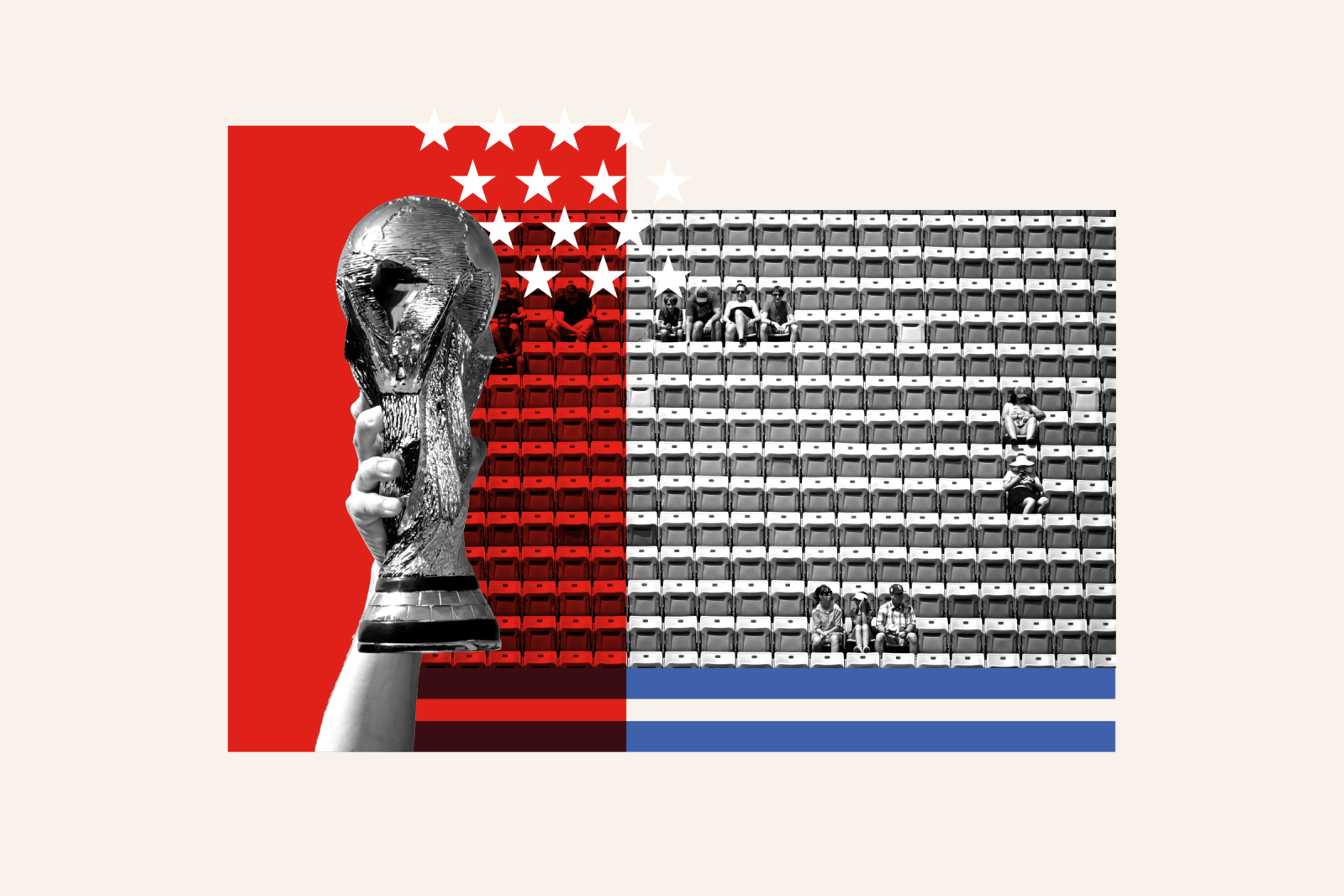
The 2026 FIFA World Cup organizers face challenges with lower-than-expected ticket demand and concerns over partially filled stadiums. This issue has plagued previous tournaments as well.
FIFA, the global governing body for soccer, insists that sales are robust, with demand justifying this year’s ticket prices. Lawsuits from fans and host-city investigations have accompanied these high costs. Some fans are skipping the event. Surveys of hoteliers in host cities indicate bookings are below forecasts.
Data from TicketData.com shows approximately 25,000 seats remain available through FIFA’s main ticketing platform. Recently, this number has fluctuated as FIFA released last-minute ticket batches. Around 17,000 seats for matches in the host nations are listed on the resale terminal, according to data shared with Newsweek.
Is This a New Problem?
Many games will likely have unfilled seats once the tournament begins, played in the U.S., Mexico, and Canada. This may worsen with the event’s expanded 48-team, 104-game format. However, empty seats are not a new issue for FIFA or the World Cup.
South Africa 2010
The 2010 World Cup saw strong attendance overall, with nearly 3.2 million attendees in South Africa, ranking third in history. Despite this, several group-stage games had noticeable empty seats.
“Pretty sad that there are empty seats, lots of them, inside the Free State Stadium for the hosts’ final game,” sports journalist Mark Ogden tweeted.
After a Greece and South Korea match also showed empty seats, FIFA investigated transport issues that may have prevented fans from attending. FIFA blamed corporate and government ticket holders, as well as overseas fans who did not attend despite having tickets.
Brazil 2014
Unlike South Africa and Qatar, Brazil has a strong soccer tradition. Yet, reports of underfilled arenas persisted, partially due to ticket prices potentially excluding local fans and FIFA’s failure to distribute returned tickets. A FIFA spokeswoman told ESPN that “most are uncollected tickets” from people not attending or reselling their tickets.
Russia 2018
The problem reoccurred in Russia, with visible empty blocks during the Uruguay and Egypt match. FIFA reported 5,000 unfilled seats in the Ekaterinburg Arena.
A FIFA spokesperson told The Guardian, “The actual attendance is lower than the number of allocated tickets… including ‘no shows’ on match day.”
Qatar 2022
Qatar’s decade-long preparation, spending more than $200 billion, couldn’t prevent reports of empty seats. Despite games selling out on FIFA’s platform, many seats remained empty, even during the final between Argentina and France.
This led to speculation about incorrect stadium capacity estimates.
Is FIFA Struggling to Sell Tickets?
In late May, FIFA claimed ticket sales for the 2026 tournament remained “strong” with high interest. More than 5 million tickets were sold. Tickets, available on a first-come basis at fifa.com/tickets, will continue being sold until the tournament ends as part of the Last-Minute Sales Phase.
Most remaining tickets are on the resale market, such as FIFA’s terminal or platforms like StubHub and SeatGeek. Prices on these sites dropped until mid-May, suggesting resellers struggled with inventory. Financial Times reported nearly 180,000 tickets still on the resale portal days before the tournament.
In late May, available ticket numbers directly from FIFA dropped by around 44,000. FIFA provided no explanation, leading to speculation of inventory shifts to lower resale costs.
A source shared with Newsweek that the tickets’ disappearance matched the surge on resale marketplaces, indicating a possible bulk shift from FIFA’s system. This is not confirmed as an intentional strategy by FIFA to influence sales or pricing.
Leave a Reply