Will County recently celebrated a significant milestone: 1,000 graduates from its problem-solving courts. Program leaders emphasize that these courts do more than reduce recidivism. They help individuals achieve sobriety and rebuild their lives.
“It’s transformational,” said Scott DuBois, coordinator of the problem-solving courts. He observed that these courts facilitate personal growth. Participants develop confidence and establish stable community relationships.
The impact extends beyond the graduates. “They work and live within a family system and in a community,” DuBois said. The program encourages individuals to redefine their lives. This achievement represents progress for the broader community as well.
Launched by Will County State’s Attorney Jim Glasgow in 1998, the initiative started with drug courts. An initial $30,000 in federal funds funded research into the link between drug use and crime. They expanded using additional grants, including $50,000 from the state and $500,000 from the U.S. Department of Justice. By 2000, Will County opened its first drug court.
The program has since expanded. Now, it includes mental health and veterans courts, along with the Redeploy Illinois program. Together, these units form the problem-solving courts. Their goal is to reduce incarceration, treat addiction, and aid reintegration into the community.
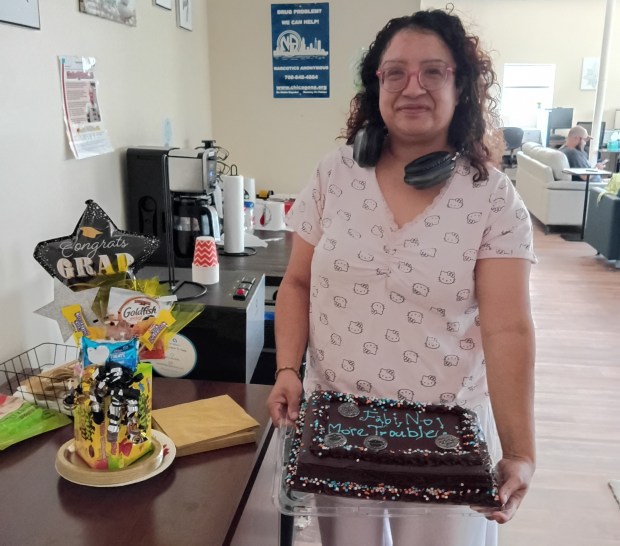
Fabiola Findlay, a participant in the mental health court, highlighted the program’s personal approach. “They treat you like a person,” she said. After 14 months, she no longer self-medicates with alcohol and now leads a recovery group.
Peer support plays a crucial role. “I share my experience with addiction,” Findlay said. “They gain knowledge, wisdom, and hope for recovery.” Findlay credits the program with helping her understand herself better. She plans to become a certified recovery coach.
Participants apply to the program through the judicial system. The crimes must be nonviolent, and a judge must approve their participation. The structured program includes five phases, starting with ending substance use and attending self-help meetings.
Case managers assist participants in various areas, including employment and education. By the end, participants attend court less frequently and work on their treatment plans. Recovery is individually paced, with some experiencing relapses.
Magdalena Campos, a 2024 graduate, has maintained sobriety for four years. “This is a program of chances,” she said. She now leads an alumni support group and organizes events to help graduates remain connected.
The program boasts an 80% graduation rate, significantly reducing repeat offenses. Graduates’ recidivism rates are around 14% in the first year and 24% within five years, compared to 75% for those not in the program.
The cost of the program is roughly $3,000 per participant annually, far less than the $52,000 needed for incarceration. “We’ve created a productive citizen instead of a jail inmate,” Glasgow said, praising the program’s effectiveness and its positive impact on the community.
He shared an inspiring story of a graduate who saved lives. “These are people we want as productive members of society,” Glasgow said. The problem-solving courts continue to demonstrate the potential for rehabilitation and community safety.
Leave a Reply