Adversity in Russian Regions Amid Conflict
Russia’s vast territory means that some citizens in remote areas might remain unaware of the ongoing conflict. However, residents in regions like Belgorod, situated next to Ukraine, cannot avoid reality. Belgorod faces regular Ukrainian drone attacks due to its strategic position, affecting the local population significantly.
Efforts to Protect Civilians
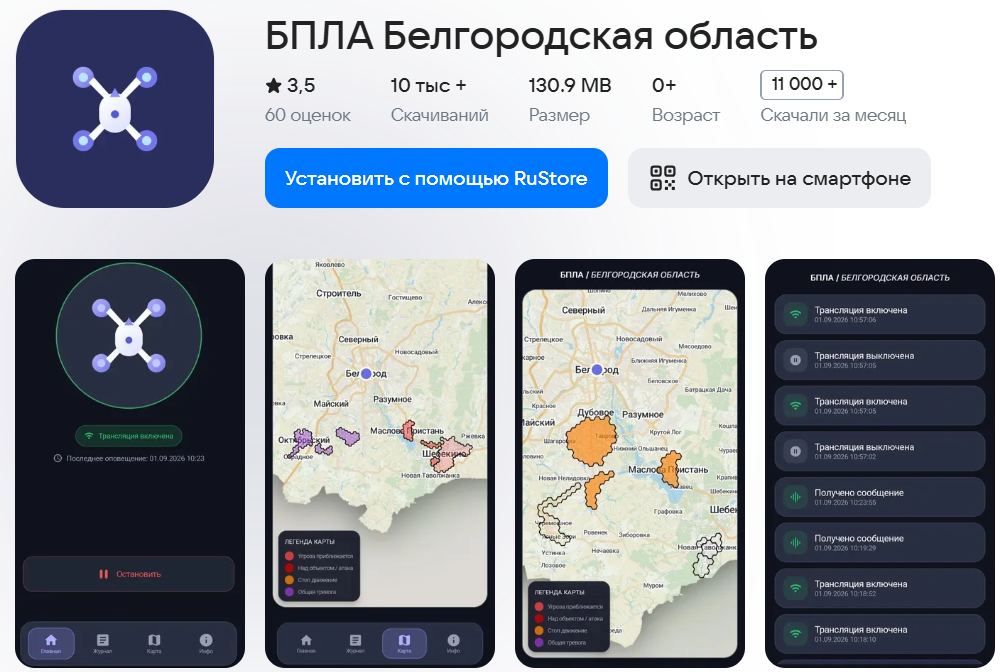
In response to these threats, Belgorod’s Digital Development Ministry launched an app intended to warn residents of incoming UAV strikes, displaying threatened areas on a map. The app, known as “BPLA Belgorod Region,” aimed to enhance civilian safety by providing timely alerts and mapping areas under threat.
App Launch and Internet Restrictions
The app, released on RuStore marketplace on September 1, has a straightforward design. It requires an internet connection to function, storing a map on the user’s device and issuing alerts. However, in Russia, widespread mobile internet restrictions pose a significant challenge to its operation.
The Russian government’s justification for these restrictions centers on security concerns. Officials argue that cellular data can aid drone navigation and communication. Nevertheless, this approach restricts civilian access to crucial updates and information online.
Impact on the Public
Belgorod’s residents expressed frustration over the app’s limitations. User reviews highlighted issues with mobile data connectivity, rendering the app ineffective when not connected to Wi-Fi. Requests for app whitelisting and enhanced offline functionality point to significant operational shortcomings.
Despite these challenges, authorities maintain control through limited internet access and whitelisting approved domains, keeping the populace informed yet restricted. This strategy aligns with broader internet control measures, including social media and VPN crackdowns.
Official Justifications vs. Reality
The claim that internet restrictions prevent drone incidents is contradicted by widespread shutdowns documented across Russia, even in areas without threat of drone attacks. Connectivity issues, app malfunctions, and compatibility problems with Android devices further reveal the app’s inadequacies.
Comparative Analysis: Ukraine’s Response
In stark contrast, Ukraine developed a national alert app within days of the conflict’s onset, showcasing rapid digital adaptation. Despite ongoing attacks, Russia’s delayed digital response has left regions like Belgorod with an inefficient alert system years into the conflict.
Adapting to New Realities
The Russian government has made more unconventional moves to address drone threats. The postal service is now authorized to engage in air defense, illustrating the extent of counter-drone measures. This adaptation highlights the unanticipated domestic impact of conflict on Russian territory.
The proximity of war has erased any illusion of distance for civilians, leaving regions like Belgorod grappling with the immediate consequences. The combination of technological shortcomings and restrictive internet policies illustrates the complexities of managing civilian safety in conflict zones.
Leave a Reply