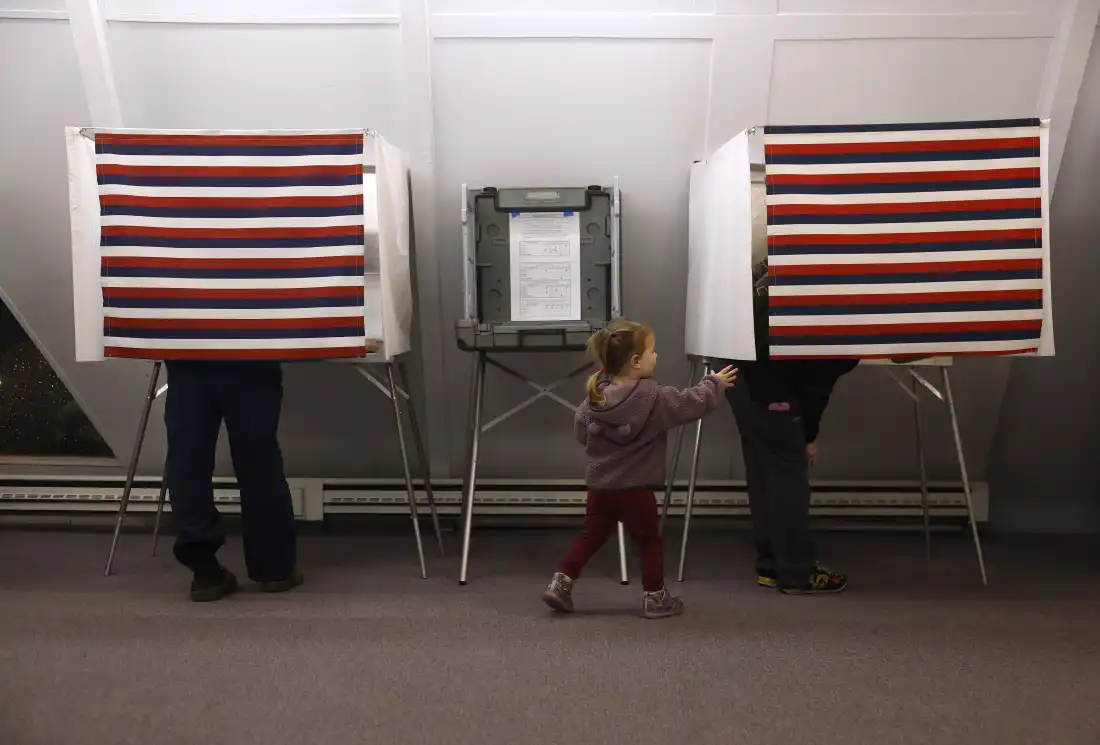
A toddler played hide and seek with her parents as they voted at Valley Bible Chalet in Indian, Alaska, on Nov. 3. As voters focused on affordability during the midterms, childcare became a significant topic of discussion. Politicians and voters alike showed increasing interest in expanding childcare options and addressing its affordability.
Some politicians won elections by promoting expanded childcare initiatives. In New Mexico, Democratic Governor-elect Deb Haaland plans to enhance the state’s universal childcare program. In South Carolina, Democrat Annie Andrews, the first pediatrician elected to the Senate, emphasized affordable childcare during her campaign. Voters in cities like Baltimore and San Antonio supported local childcare initiatives through approved ballot measures.
“This election in particular really felt different,” said Julie Kashen, founder and principal of Women’s Economic Futures. “This felt like a real momentum moment for childcare as an election issue.”
Childcare costs have skyrocketed, with the average annual cost reaching over $13,000 last year according to Child Care Aware of America. This has placed a severe financial burden on families. A First Five Years Fund poll in July revealed that 38% of parents ranked childcare among their top financial concerns, next to housing and groceries.
Politicians addressed these concerns during the latest election cycle. Bank Street College of Education data showed that 75% of gubernatorial candidates discussed or proposed childcare policies, including politicians from both parties. The Campaign for a Family Friendly Economy PAC spent more than $40 million on races supporting childcare affordability.
Melissa Boteach, chief policy officer of Zero to Three, noted that Americans increasingly view childcare as a systemic issue, not just a private family matter. “Twenty years ago, this was more of an outside, on-the-margins issue,” she said. “People have realized that this is a collective problem and that only collective action will solve it.”
The U.S. government has previously made national investments in childcare, such as during World War II and the COVID pandemic. Recent disruptions and political organizing have kept childcare in public focus, according to Kashen. “What we’re seeing now is the momentum over those years,” she added.
How Childcare Issues Played Out in the Midterms
The evolving public perception of childcare was evident in various regions across the U.S. In Washington, D.C., childcare gained prominence in the political debate, as Democratic Mayor-elect Janeese Lewis George pledged to cap childcare costs at 7% of household income and support the Early Childhood Educator Pay Equity Fund.
Childcare also featured in competitive congressional races, such as in Pennsylvania’s 1st District. Incumbent Republican Brian Fitzpatrick and Democratic challenger Bob Harvie highlighted childcare affordability. Although Fitzpatrick co-sponsored several childcare bills, he lost the race.
In Georgia, Democratic Governor-elect Keisha Lance Bottoms aimed to meet the state’s universal pre-K goal partly through casino gambling. Meanwhile, ballot measures to fund childcare succeeded in Boulder County, Colo., and Marin County, Calif. However, St. Louis, Mo., and Tempe, Ariz., voters rejected sales tax increases intended for childcare funding, and Florida’s property tax cut threatens local childcare programs.
Reversing “Attacks” on Childcare
Boteach expects the new Democratic majority to address what she termed “an attack and a retrenchment on childcare” by the Trump administration. This includes changes to the Head Start program that could weaken its impact and attempts to freeze childcare funding for certain states.
Democratic leaders have promised to counter these moves if they regain control. House Democratic Whip Katherine Clark emphasized the importance of reversing these changes, stating that they would “turn this ship around.” Additionally, the party plans to introduce new childcare policies focused on affordability.
Senate Minority Leader Chuck Schumer indicated that childcare would be a top five priority. Some incoming Democrats want to expand the Child Tax Credit to help families reduce their tax burdens. It’s uncertain if these proposals will receive support from President Trump, who has expressed a willingness to collaborate with Democrats but also intends to veto certain legislations.
Leave a Reply